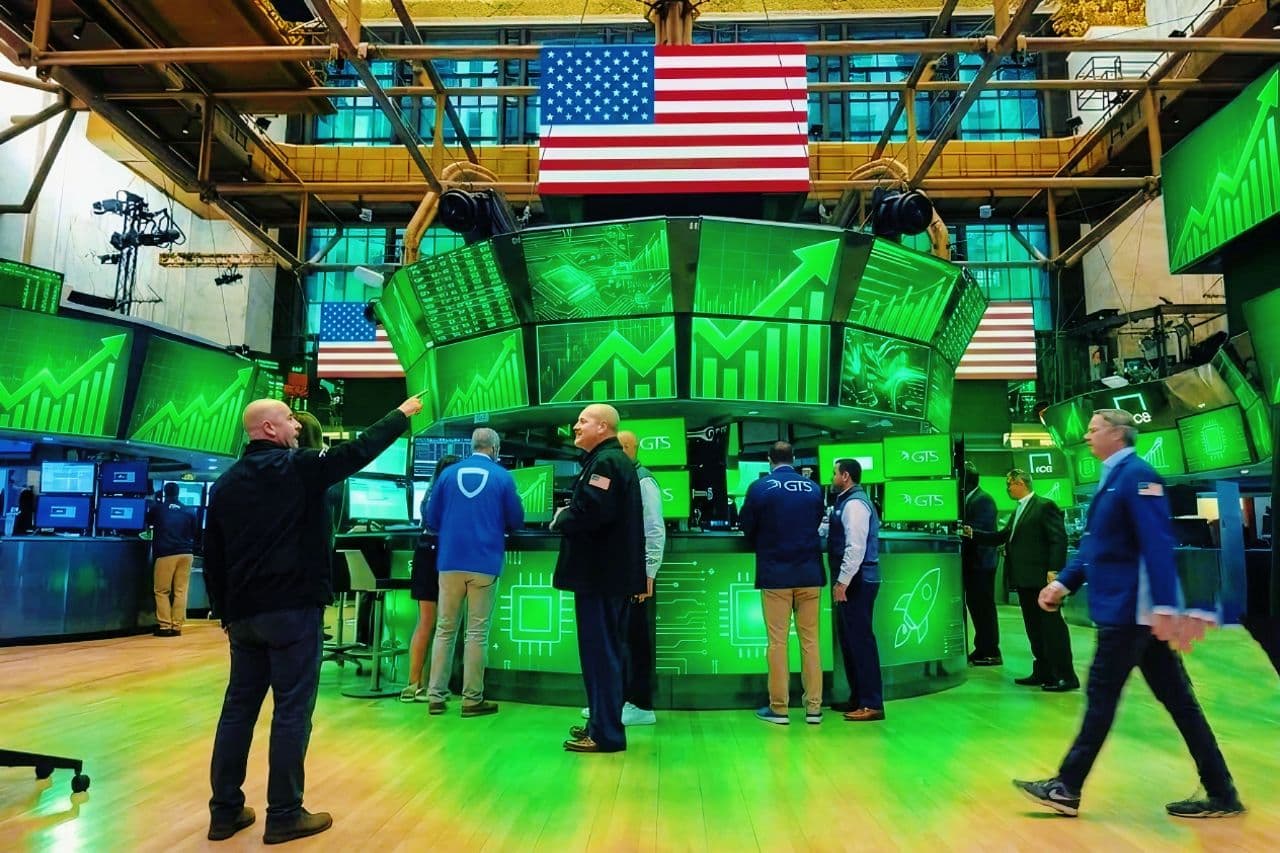
Dow Jones Falls 400 Points as Investors React to CPI Inflation Data and JPMorgan Earnings
- Dow Jones Retreats: The Dow fell about 400 points (‑0.8%), while the S&P 500 and Nasdaq each slipped 0.3%.
- Bank Earnings Kick Off: JPMorgan reported stronger adjusted profit but slightly weaker revenue; shares dropped 4%.
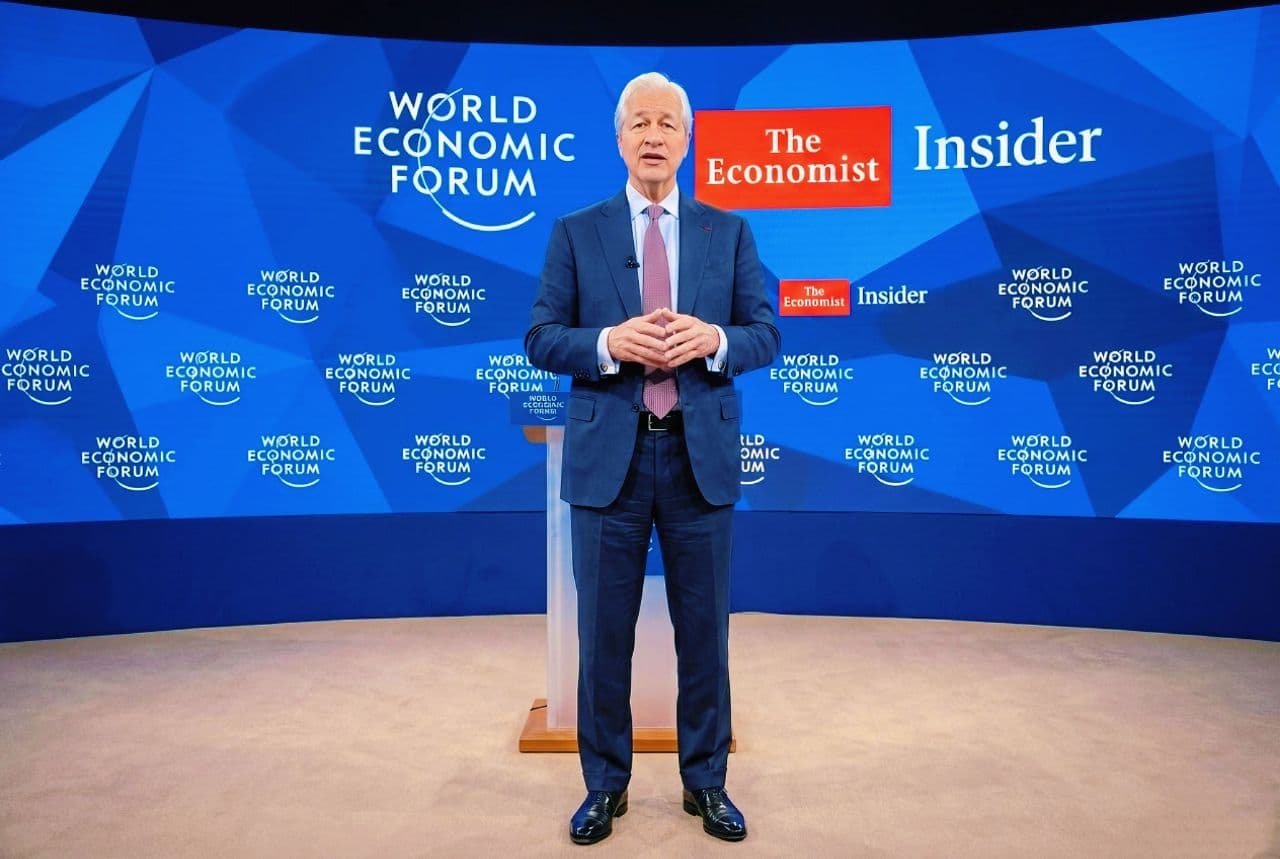
- Jamie Dimon’s Outlook: The JPMorgan CEO said the U.S. economy remains resilient, though risks like sticky inflation, elevated asset prices, and geopolitical tensions are underappreciated.
- Credit Card Rate Cap Proposal: Financial stocks slid after President Trump suggested capping credit card interest rates at 10%, with Visa and Mastercard down more than 3%.
- Inflation Data: December CPI rose 2.7% year‑over‑year, matching November’s pace and forecasts. Core CPI came in at 2.6%, below expectations.
- Commodities & Crypto: Gold eased to $4,600/oz after hitting a record high; silver reached a fresh record above $89/oz. Oil rose nearly 3% to $61.10/barrel. Bitcoin rebounded to ~$94,200.
Key Takeaways
Dow Jones Drops 400 Points as CPI Inflation Data and JPMorgan Earnings Pressure Markets
Major U.S. stock indexes retreated Tuesday, just a day after the S&P 500 and Dow Jones Industrial Average set fresh records, as investors weighed a consumer inflation report that aligned with forecasts and the kickoff of bank earnings season.
The Dow Jones Industrial Average fell 0.8%, shedding 400 points, while the S&P 500 and Nasdaq each slipped 0.3%.
December’s Consumer Price Index rose 2.7% year‑over‑year, matching November’s pace and economist expectations. Core CPI, which excludes food and energy, came in at 2.6%, below the 2.8% forecast. The 10‑year Treasury yield eased to 4.17% from 4.20% earlier in the day.
JPMorgan Chase reported stronger adjusted profit but weaker revenue in its fiscal Q4 results, sending shares down 4%. CEO Jamie Dimon noted the U.S. economy remains resilient but warned of risks tied to sticky inflation, elevated asset prices, and geopolitical tensions.
Markets also digested news of a Justice Department probe into Fed Chair Jerome Powell, though indexes had rallied Monday despite the development.
Financial stocks weakened after President Donald Trump proposed capping credit card interest rates at 10%, with Visa and Mastercard sliding more than 3%.
David Wagner of Aptus Capital Advisors cautioned that policy volatility from Washington could weigh on sentiment, even as earnings growth broadens.
Delta Air Lines fell 2.5% after issuing weaker profit forecasts, while chipmakers Intel and AMD surged 8.5% and 7%, respectively, leading Nasdaq gainers.
Gold slipped to $4,600 an ounce after hitting a record high Monday, while silver set a fresh record above $89. Oil prices jumped nearly 3% to $61.10 a barrel following Trump’s tariff warning on Iran trade. Bitcoin rebounded to around $94,200, and the U.S. dollar index rose 0.3% to 99.14.






Salesforce (CRM) shares continued their downward trend Tuesday, sliding about 6.5% and ranking as the weakest performer in the S&P 500. The decline followed the company’s latest product release, an update to its Slackbot virtual assistant, which failed to shift investor sentiment.
The new Slackbot feature will roll out to Business+ and Enterprise+ customers in phases through February, Salesforce announced. Co‑founder and CTO Parker Harris said the update integrates AI into company data, workflows, and Slack conversations, calling it a step toward realizing Agentforce 360 with enterprise‑grade AI.
Despite the innovation push, Salesforce shares have lost nearly 25% of their value over the past year, underscoring investor concerns about growth momentum and product adoption.






Trump’s $2,000 Tariff Rebate Checks Delayed Until Late 2026
Tariff rebate payments worth $2,000 remain part of President Donald Trump’s agenda, but their arrival may take longer than initially expected. Trump suggested he could bypass Congress to issue the checks, potentially easing political hurdles.
In an interview with The New York Times, Trump said the rebates would likely come “toward the end of the year.” He had previously announced on Truth Social that the payments would be funded by tariff revenues and targeted toward low‑ and middle‑income earners. Treasury Secretary Scott Bessent has speculated eligibility could be capped at incomes below $100,000.
Trump reiterated in November that the checks might be distributed “prior to probably in the middle of next year, a little bit later than that,” signaling shifting timelines for the rollout.






Moderna Stock Surges 16% After Boosted 2025 Sales Forecast, Tops S&P 500 Gainers
Moderna (MRNA) delivered upbeat guidance at the J.P. Morgan Healthcare Conference, sparking a sharp rally in its shares Tuesday.
The Cambridge‑based biotech firm’s stock jumped nearly 16%, leading all S&P 500 gainers, after CEO Stéphane Bancel raised the company’s 2025 sales projection.
Bancel said Moderna expects around $1.9 billion in sales for the year, $100 million above the midpoint of its prior $1.6 billion to $2.0 billion guidance, according to a transcript from AlphaSense.
With the surge, Moderna shares turned positive for the year, reversing earlier declines and reinforcing investor confidence in its growth outlook.






Near Retirement and Recently Laid Off? Smart Financial Moves to Protect Savings
If you’ve been laid off just as retirement approaches, the stress can feel overwhelming, especially if you were planning to boost savings before leaving the workforce. Even so, you still have practical options to safeguard your financial future.
By making the right financial decisions, you can protect your nest egg, reduce anxiety, and create a bridge toward retirement that supports your long‑term goals.
The first step after a layoff is to pause and process what happened. Avoid rushing to withdraw money from retirement accounts.
“You have to address the emotional part first before you can get into any numbers or findings,” says Crystal Cox, CFP and SVP at Wealthspire Advisors. “Things might look a little bit different, it’s a shift in perspective, but you will be ok.”
Assess your full financial picture: review savings, cut unnecessary expenses, check severance details, and explore unemployment benefits or other support.
The priority is to optimize cash flow before tapping long‑term savings. Taking part‑time or consulting work can help fill gaps, delay Social Security claims, and preserve retirement funds potentially saving thousands over time.






Trump’s 10% Credit Card Interest Rate Cap Could Shrink Rewards, Points and Miles Programs
President Donald Trump’s proposal to cap credit card interest rates at 10% could bring relief to some borrowers but also disrupt the lucrative rewards ecosystem. Experts warn that while lower rates may ease costs for certain cardholders, access to credit could tighten for Americans with weaker credit scores.
Tiffany Funk, co‑founder of flight rewards platform point.me, said the move would likely trigger a “chaotic contraction” in rewards programs. She expects banks to rebalance transfer rates between rewards and airline loyalty programs, reshaping how points and miles are earned.
Funk explained that rewards programs are funded in part by interest and fees. If capped, banks may respond with fewer card offerings, higher annual fees, and narrower customer targeting ultimately leading to diminished rewards for consumers.






Travere Therapeutics Stock Crashes 33% as FDA Seeks More Data on Kidney Drug Filspari
Travere Therapeutics (TVTX) shares plunged by nearly one‑third Tuesday after the company disclosed that the U.S. Food and Drug Administration requested additional information about its rare kidney disorder treatment.
The San Diego‑based biotech, valued at around $2 billion, said it had “recently received additional information requests from the FDA to further characterize the clinical benefit of FILSPARI” and has already submitted responses now under agency review.
Travere emphasized that if approved, Filspari (sparsentan) would become the first and only FDA‑approved therapy for FSGS, a rare kidney disorder that often leads to kidney failure.
Despite the sharp decline, Travere shares remain up about 25% over the past year, reflecting investor optimism about its pipeline potential.






L3Harris Stock Hits Record Highs on Pentagon Deal and $1B Missile Unit Spin-Off
L3Harris (LHX) shares climbed to fresh highs Tuesday after announcing plans to spin off one of its divisions with direct support from the U.S. government.
The defense contractor’s stock rose about 3% to $350, putting it on track to surpass Monday’s record close. L3Harris shares have already gained nearly 20% in 2026, underscoring investor confidence in its growth trajectory.
The company confirmed that the Pentagon will invest $1 billion in its missile solutions business, with the funding set to convert into equity once the unit debuts publicly in the second half of the year. L3Harris will maintain a controlling stake in the new entity, reinforcing its strategic position in the defense sector.






December CPI Rises 2.7% as Inflation Eases, Core Prices Below Forecasts
A key inflation measure rose less than expected in December, giving households some relief after years of steep cost‑of‑living increases.
The Consumer Price Index climbed 2.7% year‑over‑year, matching November’s pace and economist forecasts, according to the Bureau of Labor Statistics. Core CPI, which excludes food and energy, rose 2.6%, undershooting the 2.8% projection.
Inflation remains above the Federal Reserve’s 2% target, but flat readings mark an improvement compared to 2025. Last year’s CPI surge between April and September was largely attributed to President Donald Trump’s tariff campaign.
“Americans have waited for a long time since the pandemic, and now they’re starting to get relief on prices,” said David Russell, global head of market strategy at TradeStation.






Jamie Dimon Warns of Economic Hazards: Inflation, Geopolitical Risks, and Elevated Asset Prices
JPMorgan Chase CEO Jamie Dimon said Tuesday that while the U.S. economy remains “resilient,” investors should not overlook looming hazards.
His remarks came as JPMorgan reported quarterly results showing higher four‑quarter net revenue but a year‑over‑year decline in net income. The earnings release marked the unofficial start of reporting season, with stocks hovering near record highs.
Dimon cautioned that “markets seem to underappreciate the potential hazards,” pointing to complex geopolitical conditions, sticky inflation, and elevated asset prices. He has consistently flagged these risks, warning last year about persistent inflation and a “dangerous” global backdrop.






Mortgage Rates Fall to 15-Month Low at 6.23%—Should Homebuyers Lock In Now?
Mortgage rates finally offered a break this week, with 30‑year fixed loans for new home purchases drifting lower after months of elevated levels. The national average touched 6.23% mid‑day Monday, marking the lowest reading since October 2024.
Rates had hovered near 7% for much of the past year before beginning a gradual pullback. The drop is tempting buyers who have been waiting for affordability to improve, but timing the market remains tricky.
For those on the sidelines, today’s rate environment provides relief, yet predicting future moves is difficult. Mortgage rates can shift quickly with new economic data, investor sentiment, or broader market trends, and past lows haven’t always signaled lasting declines.
That uncertainty leaves many buyers weighing the same choice: hold out for clearer signals or lock in today’s rate to secure financing before conditions change.

Childhood Hardship Linked to 50% Lower Retirement Wealth, Boston College Study Finds
A new report from the Center for Retirement Research at Boston College highlights how childhood adversity can significantly reduce retirement security.
The December 2025 study found that adverse childhood experiences (ACEs) including abuse, parental divorce, emotional neglect, household mental illness, or alcoholism left adults aged 52 to 60 with far lower net worth compared to peers without such hardships.
Researchers analyzed data from a long‑running survey of more than 12,500 people spanning 1979 to 2018. Median net wealth for those without ACEs was $110,000, while those with childhood hardships had wealth levels 44% to 77% lower, even after controlling for parental income and education.
DOJ Probe Into Fed Chair Powell Raises Questions, But Interest Rate Outlook Holds Steady
The Justice Department’s criminal investigation into Federal Reserve Chair Jerome Powell has sparked concerns just weeks before the Fed’s next interest rate decision. While headlines suggest uncertainty, the probe is unlikely to alter the near‑term path of monetary policy.
Fed rate decisions directly affect household finances, shaping savings returns and borrowing costs on variable‑rate debt like credit cards. Yet the central bank’s process remains independent, and current expectations show little change in outlook.
Despite the DOJ development, investors continue to price in only a 5% chance of a rate cut at the Fed’s January 28 meeting, consistent with pre‑probe forecasts. Market sentiment points instead to potential easing later in the year, with futures suggesting June as the earliest likely window for a quarter‑point reduction.
Delta Stock Falls 6% as 2026 Profit Forecast Misses Analyst Expectations
Delta Air Lines (DAL) projected fiscal 2026 adjusted profit growth of 20% at the midpoint of its range, but investors were unimpressed.
Shares of the Atlanta‑based carrier dropped nearly 6% in premarket trading after guiding full‑year adjusted EPS of $6.50 to $7.50, with the midpoint below the $7.26 consensus forecast from Visible Alpha. Current‑quarter EPS guidance of $0.50 to $0.90 also trailed expectations.
The airline reported fiscal 2025 fourth‑quarter profit of $1.55, missing consensus by a penny, though operating revenue of $16.00 billion topped forecasts of $15.75 billion.
For fiscal 2025 overall, Delta earned $5 billion on $63 billion in revenue, aided by an 11% increase in remuneration from its American Express partnership. However, passenger operations remained unprofitable, with PRASM at 17.37 cents versus CASM at 19.31 cents, a slightly worse margin than in 2024.
Delta also announced a deal with Boeing to purchase 30 787‑10 widebody aircraft, with options for 30 more, scheduled for delivery beginning in 2031. CEO Ed Bastian said the investment will modernize the fleet, improve efficiency, and enhance customer experience.
The Bottom Line
December’s CPI report confirmed inflation is cooling, with headline prices steady at 2.7% and core inflation easing to 2.6%. That gave households some relief but left inflation above the Fed’s 2% target, keeping policymakers cautious.
The Dow Jones dropped 400 points as investors weighed the data alongside JPMorgan’s earnings miss and CEO Jamie Dimon’s warning about hazards like sticky inflation, elevated asset prices, and geopolitical risks.
Financial stocks also slid after President Trump floated a 10% cap on credit card interest rates, raising concerns about profitability and rewards programs. Meanwhile, chipmakers Intel and AMD surged, offsetting weakness in airlines and financials.
Commodities and crypto showed volatility: gold retreated from record highs, silver hit new peaks, oil jumped on tariff threats, and Bitcoin rebounded above $94,000.