Dow Jones Flat as S&P 500 Hits Record; Gold and Silver Reach New Highs
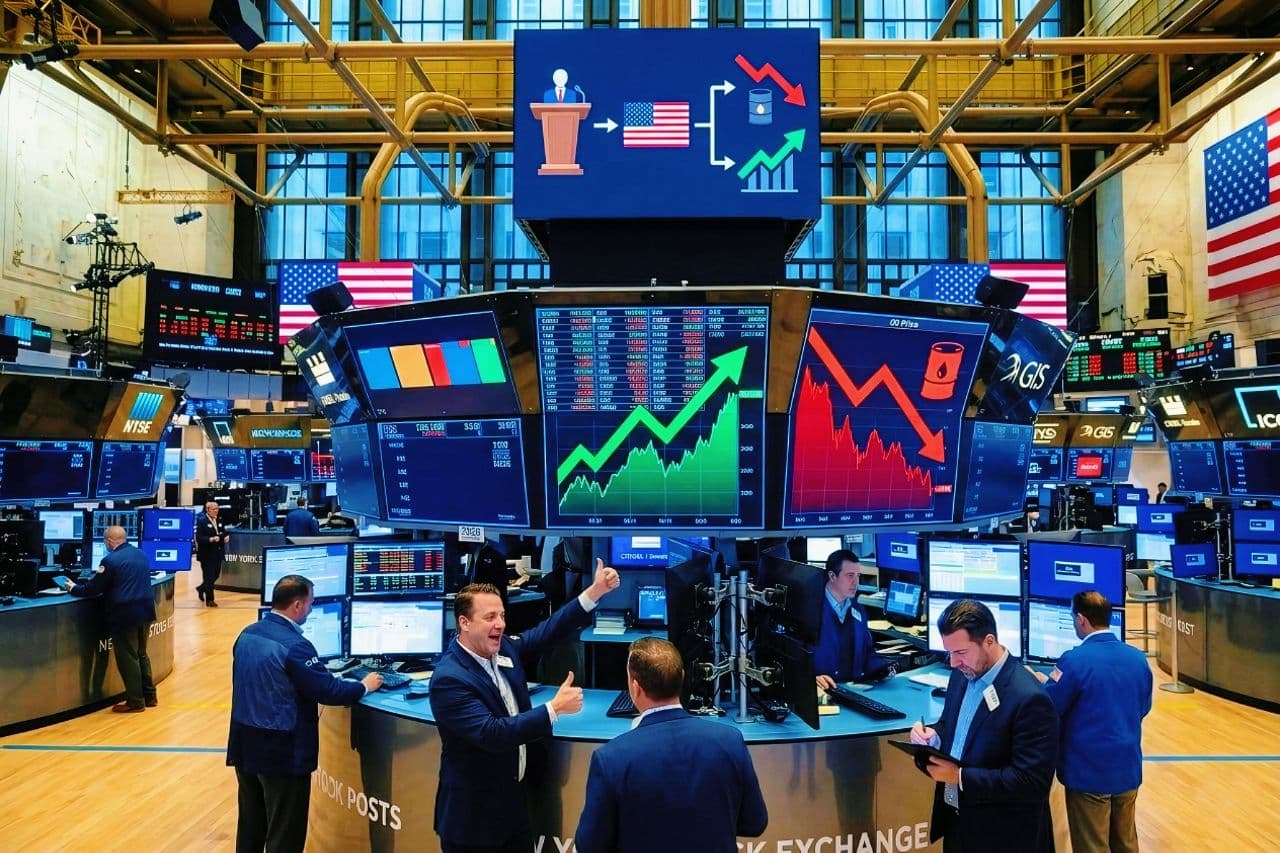
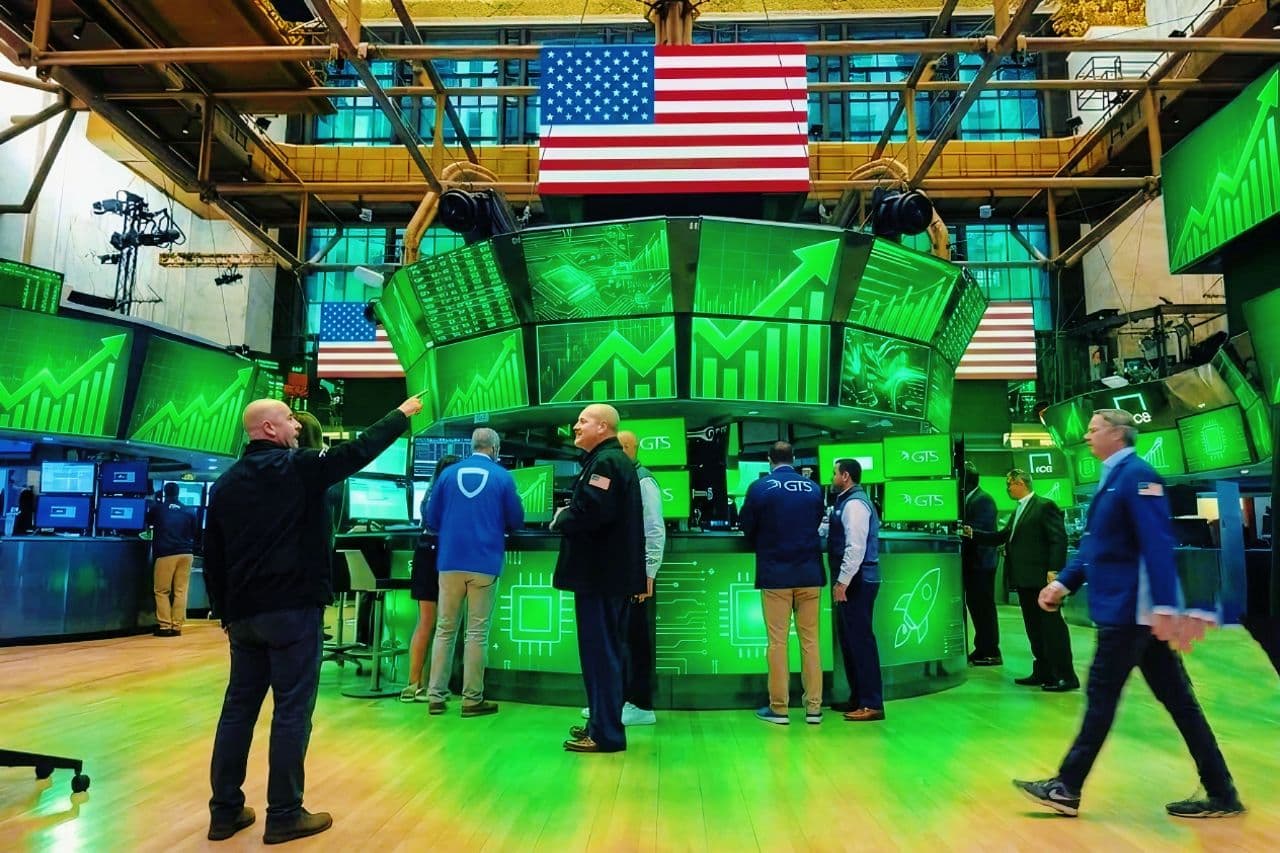
- Dow Jones slipped 0.1%, while the S&P 500 set a fresh intraday record and the Nasdaq held flat.
- Gold and silver futures hit new all-time highs at about $4,585 and $78.05 per ounce.
- Nvidia rose 1.7% after striking a $20B licensing and asset deal with Groq.
- Nvidia rose 1.7% after striking a $20B licensing and asset deal with Groq.
- Nvidia rose 1.7% after striking a $20B licensing and asset deal with Groq.
- Bitcoin traded around $87,400, off from an overnight high near $89,500.
- Crude oil (WTI) fell nearly 3% to $56.70 per barrel.
Key Takeaways
U.S. Markets Wrap: Stocks, Metals, and Crypto End Holiday Week
Major stock indexes closed out a positive week on a quiet note. The Dow Jones Industrial Average slipped 0.1%, while the S&P 500 set a fresh intraday high and the Nasdaq held flat after traders returned from the Christmas holiday.
The three indexes, which notched their fifth straight day of gains Wednesday, were all on track to post weekly advances of at least 1%.
Gold and silver futures hit new records Friday, climbing to $4,585 and $78.05 per ounce. Mining company Freeport-McMoRan (FCX) was among the S&P 500’s top performers, with shares up nearly 2%.
Nvidia (NVDA), the world’s most valuable public company, rose 1.7% after announcing a $20 billion licensing and asset deal with AI chipmaker Groq, reinforcing its leadership in the sector.
Target (TGT) stock gained 2.5% after reports that activist investor Toms Capital Investment Management had taken a stake in the retailer.
The 10-year Treasury yield edged up to 4.14%, slightly higher than Wednesday’s close of 4.13%, signaling continued pressure on borrowing costs.
Bitcoin traded around $87,400, down from an overnight high near $89,500, while the U.S. dollar index ticked higher to 98.05.
West Texas Intermediate crude oil fell nearly 3% to $56.70 per barrel, capping off a volatile week in energy markets.






If you’re receiving Social Security next year, several updates will shape your 2026 benefits. The first check will be issued on January 2 for those who began collecting before May 1997 and for Supplemental Security Income recipients. Retirement, spousal, and survivor benefits will follow a staggered schedule: January 14 for birthdays between the 1st and 10th, January 21 for birthdays between the 11th and 20th, and January 28 for birthdays between the 21st and 31st.
The annual cost-of-living adjustment (COLA) for 2026 will be 2.8%, adding about $56 per month to benefits. This adjustment, based on inflation data from the third quarter of 2025, is meant to offset rising living costs. However, experts caution that the increase may not be enough for many seniors.
One major concern is Medicare Part B premiums, which are projected to rise by 11.6% in 2026. This jump in healthcare costs is expected to cancel out the COLA increase, leaving many beneficiaries without meaningful net gains in monthly income.






Pell Grant Updates 2026: Key Changes Students Must Know
The “One Big, Beautiful Bill” will bring major updates to the Pell Grant program starting in the 2026-27 award year.
Passed by Congress this summer, the budget bill expands Pell Grant eligibility to include short certificate and licensing programs at trade schools. In addition, certain requirements for undergraduates have been modified, reshaping access to the nation’s largest federal grant program.
These changes officially take effect on July 1, 2026, and are already reflected in the Free Application for Federal Student Aid (FAFSA) for the 2026-27 academic year, which opened on September 24.






Target Stock 2025: Why Shares Are Rising Despite a Tough Year
Target’s sales numbers for the holiday season aren’t yet clear, but its shares are enjoying a holiday-week boost.
On Friday, the retailer’s stock climbed more than 2%, ranking among the S&P 500’s top gainers, after reports from the Financial Times revealed that hedge fund and activist investor Toms Capital Investment Management had taken a stake in the company.
It’s been a challenging year for Target investors, but the news of activist involvement has sparked optimism. While the size of the stake wasn’t disclosed, Target confirmed it maintains ongoing dialogue with the investment community.
In its statement, Target emphasized its focus on returning to growth through three priorities: strengthening merchandising authority, elevating the shopping experience, and leveraging technology. The company expressed confidence that executing this plan will deliver sustained, long-term value for shareholders.






Credit Scores Explained: Why They Differ and Which One Counts
Your credit score plays a major role in whether you’re approved for credit and the rates you’ll receive. A higher score boosts your chances of approval and better terms, but many people notice discrepancies one report might show 685 while another shows 715. That’s because not all credit scores are built the same, and lenders don’t all use the same model.
A credit score is a three-digit measure of your creditworthiness, shaped by factors like the length of your credit history, payment record, outstanding balances, number of accounts, lender inquiries, and any negative marks such as liens, judgments, or bankruptcies.
The three major credit bureaus Equifax, Experian, and TransUnion compile your information into reports, which are then used to generate scores. FICO and VantageScore, the two most widely used models, apply different formulas: FICO ranges from 580 to 800+, while VantageScore spans 300 to 850. Each weighs credit factors differently, which explains why your scores don’t always match.






E-Commerce Stock Coupang Surges After Cyberattack Update
An e-commerce stock is climbing Friday after the company reassured investors that a recent cyberattack did not compromise customer payment information.
Shares of Coupang (CPNG) jumped about 9% following its update on the breach at its South Korean subsidiary, which had exposed personal data from roughly 33 million customers.
Coupang reported that the hacker has been identified, all devices used in the leak were retrieved, and only limited data from 3,000 accounts was retained before being deleted.
The company’s shares had dropped sharply on Dec. 1 when the attack was first disclosed, hitting their lowest levels since April. With today’s rebound, Coupang’s stock is now up about 13% year-to-date.






Nvidia Stock Gains on Groq Deal as 2025 Ends
The trading year is nearly finished, but Nvidia continues to make headlines. Earlier this week, the chip leader announced a non-exclusive licensing agreement with inference chipmaker Groq. While Groq will remain independent, its founder Jonathan Ross, President Sunny Madra, and other team members are joining Nvidia to help scale the licensed technology.
The update lifted Nvidia’s shares on Friday, with the stock already up about 40% in 2025 adding more than 1% in morning trading.
Investor optimism grew further after reports suggested Nvidia is acquiring some of Groq’s assets in a deal valued at $20 billion, marking its largest acquisition to date. The move signals Nvidia’s continued push to expand opportunities in the AI sector as the year closes.





Housing Market Outlook 2026: Will Home Prices Keep Rising?
Will your home’s value increase in 2026? The answer depends largely on location and how inflation shapes the broader economy.
Several economists expect housing prices to climb next year. The National Association of Realtors projects a 4% rise in home values, with Chief Economist Lawrence Yun noting that nationwide prices are “in no danger of declining.”
This forecast outpaces inflation expectations from the Federal Reserve Bank of Philadelphia, which sees CPI inflation at 2.6% in late 2026. If accurate, housing wealth would grow faster than consumer prices.
Still, not all experts share the same optimism. Fannie Mae anticipates a modest 1.3% increase, while Zillow projects a 1.2% rise both below expected inflation levels, suggesting limited real gains for homeowners.
Precious Metals Hit Records as Mining Stocks Surge
Precious metals continue to climb to new highs, fueling a rally in mining stocks.
Freeport-McMoRan (FCX) and Southern Copper (SCCO) gained nearly 2% and 1.2% respectively in early Friday trading. Freeport-McMoRan shares are up close to 40% in 2025, including a 25% jump over the past month, while Southern Copper has soared 70% this year.
Gold and silver futures reached fresh records Friday, rising to $4,568 and $75.84 per ounce, underscoring strong demand in the commodities market.
6 Best Buys After Christmas for Maximum Savings
Holding off until after Christmas can actually help you save more. Experienced shoppers recommend waiting for January inventory turnover, when retailers slash prices on electronics, clothing, and other seasonal items.
Delaying purchases means you’ll wait longer for certain products, but the discounts make it worthwhile. Deep markdowns appear across categories as stores clear shelves for new stock, offering some of the year’s best deals.
Planning ahead is key. By creating a list of target items, you can maximize savings during post-holiday sales and avoid impulse buys.
Holiday Returns 2025: Why Gift Send-Backs Are Surging
It’s return season again, with shoppers gathering up unwanted socks, accessories, and holiday gifts. Adobe Analytics data shows returns are trending about 2.5% lower than mid-season 2024, but the late-December spike remains strong. Analysts suggest this is less about better gift choices and more about people delaying their send-backs.
Schorr Packaging calls returns “a holiday tradition,” noting half of shoppers return items within a week and another quarter within two to three weeks. Flexible return policies introduced during the pandemic have only fueled this trend.
The National Retail Federation reports companies expect 16% of 2025 sales to be returned slightly below last year but double the 2019 rate. Despite the rise of e-commerce, most Americans still prefer the traditional route of bringing items back to stores, ahead of drop-off sites or mailing products.
Wage Growth Outlook 2026: Raises Likely to Stay Modest
Employers in 2026 are expected to remain cautious, avoiding major hiring sprees and keeping pay increases restrained due to weak worker demand.
Forecasts and employer surveys point to a continuation of recent labor market trends, with hiring slowed compared to prior years. Companies are hesitant to expand aggressively, but also wary of mass layoffs, as tariff-driven economic uncertainty complicates long-term planning.
According to payroll software firm Payscale, U.S. employers plan to offer average raises of 3.3% in 2026, slightly below the 2025 average.
Job market forecasters at Indeed expect openings to stabilize, unemployment to rise modestly, and wage growth to remain subdued. Unlike 2022, when labor shortages fueled sharp pay hikes, current conditions don’t support significant raises.
Indeed also reports that advertised salaries in job postings have cooled over the past year, reinforcing expectations of slower wage growth.