Dow Jones & S&P 500 Hit Record Highs as Markets Rally Despite Powell DOJ Probe
- S&P 500 and Dow Jones closed at record highs for the second straight session.
- Nasdaq also ended higher, with all three major indexes erasing early declines.
- Gains were supported by a stronger‑than‑expected drop in the U.S. unemployment rate for December.
- Fed Chair Jerome Powell confirmed the DOJ served subpoenas tied to his June Senate testimony about Fed building renovations.
- Powell called the investigation “pretexts,” saying criminal charges stem from the Fed’s refusal to follow presidential preferences on interest rates.
- Despite the probe, markets shrugged off political uncertainty.
Key Takeaways
Dow Jones & S&P 500 Rally to Record Highs as Markets Shake Off Powell DOJ Probe
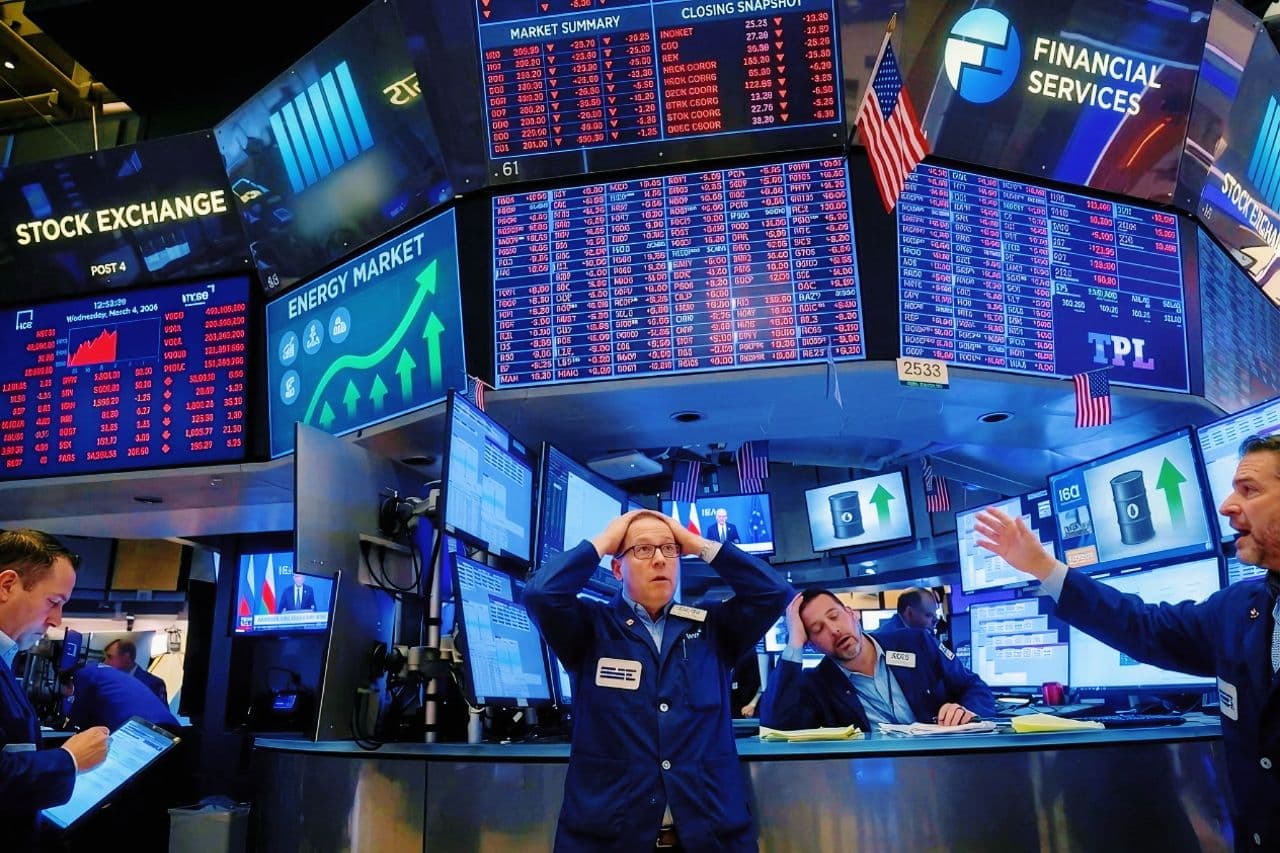
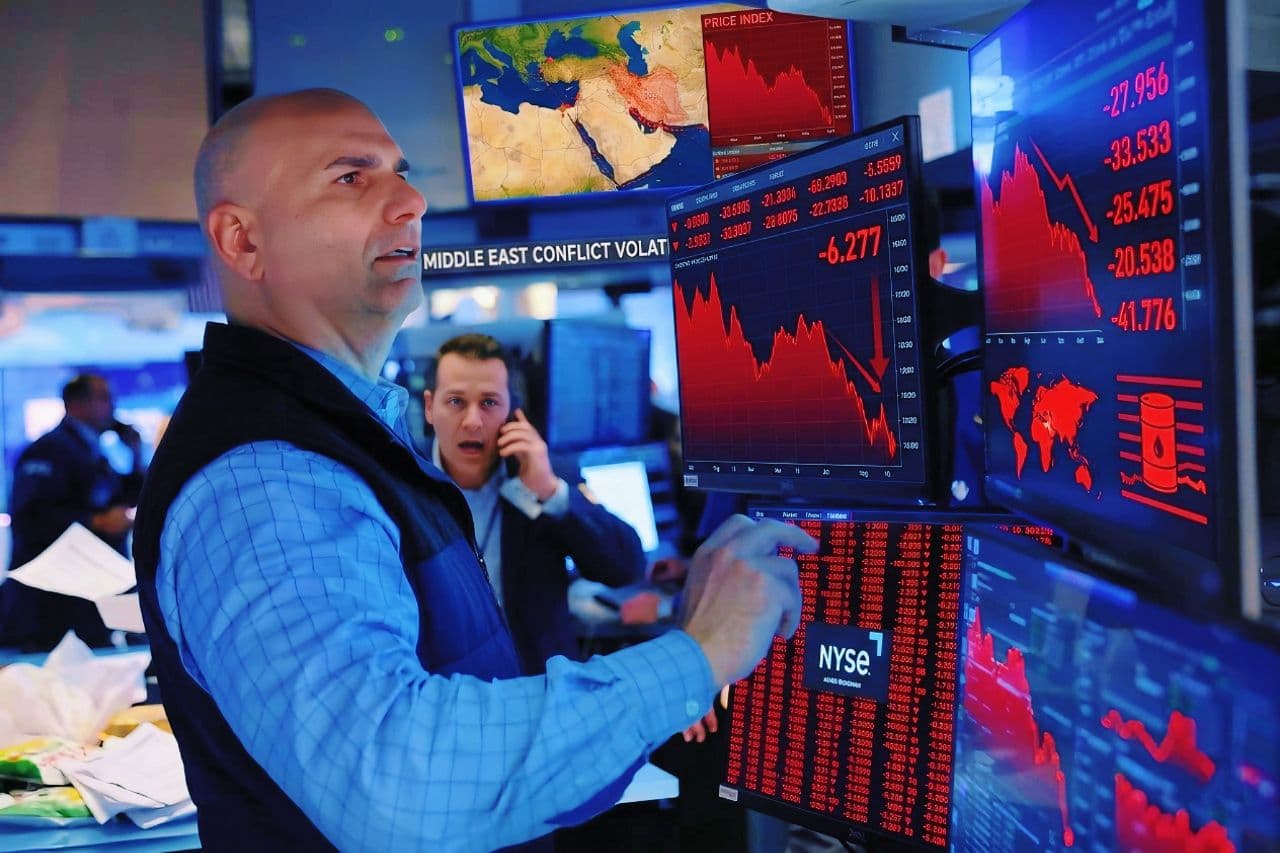
Major U.S. stock indexes brushed aside headlines of a Justice Department probe into Federal Reserve Chair Jerome Powell, with both the S&P 500 and Dow Jones Industrial Average closing at record highs for the second consecutive session.
Powell, in a video statement Sunday night, confirmed that the DOJ issued grand jury subpoenas tied to his June testimony before the Senate Banking Committee regarding renovations at the Fed’s headquarters. He stressed that the threat of criminal charges stems from the Fed’s decision to set interest rates based on economic evidence rather than presidential preferences.
Despite early weakness, the Nasdaq, S&P 500, and Dow Jones all finished higher up 0.3%, 0.2%, and 0.2% respectively. The S&P 500 surpassed its intraday record, while both the benchmark index and the Dow topped their closing highs from last Friday, buoyed by a stronger‑than‑expected drop in the December unemployment rate.
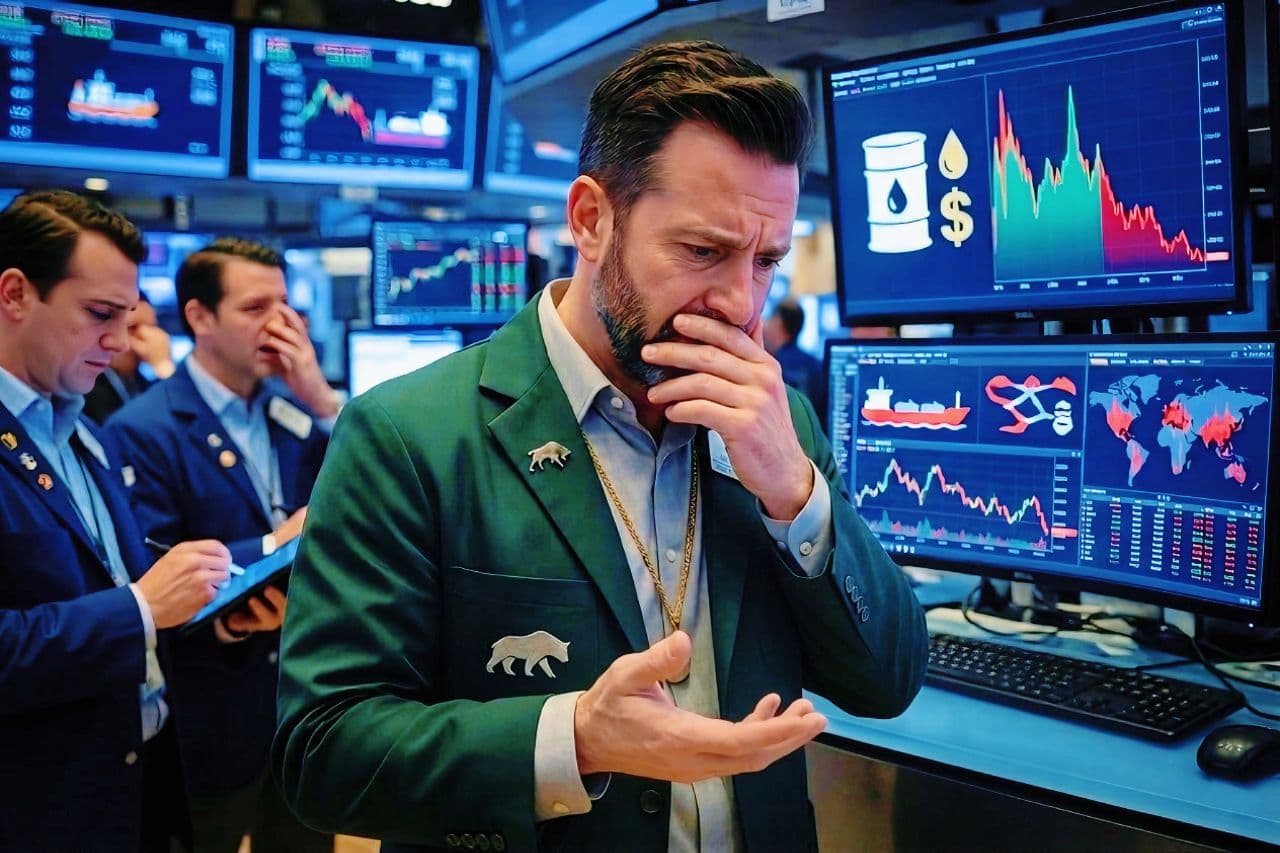
Safe‑haven assets surged, with gold futures hitting a record $4,640 an ounce before closing at $4,610 (+2.5%). Silver futures jumped 7.5% to $85.40 after reaching $86.34. Meanwhile, the U.S. dollar index slipped 0.3% to 98.88, and the 10‑year Treasury yield edged up to 4.19%.
Bitcoin rebounded to around $91,400 after dipping near $90,000 earlier in the day. Crude oil also gained, with West Texas Intermediate futures rising 0.6% to $59.45 per barrel.
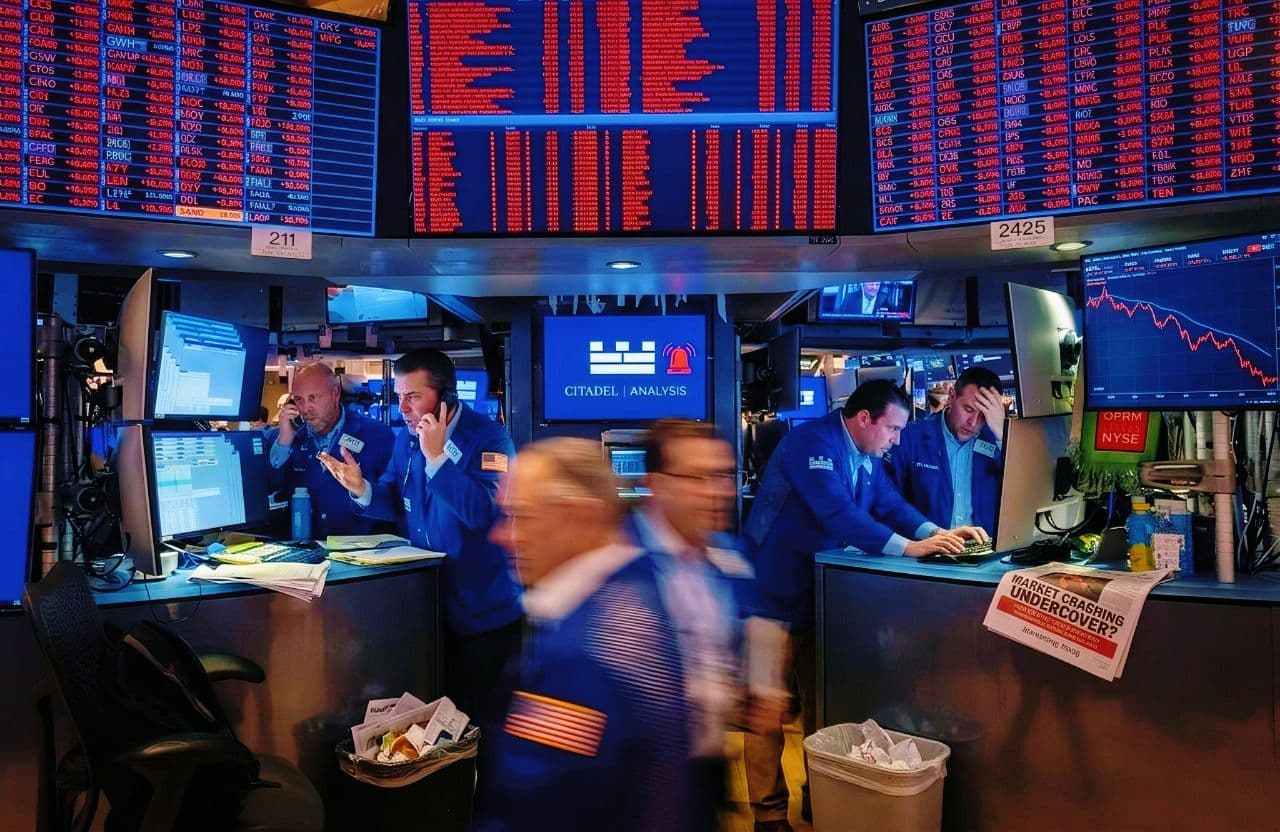
Financial stocks fell sharply after President Donald Trump announced plans to cap credit card interest rates at 10% for one year. Synchrony Financial dropped over 8%, Capital One slid 6%, while American Express and Citigroup lost 4% and 3%. Shares of JPMorgan, Bank of America, and Wells Fargo also declined ahead of earnings reports this week.
Alphabet (GOOGL) crossed the $4 trillion market cap milestone, rising 1% after Apple confirmed it will use Google’s Gemini AI to power Siri. Apple shares added 0.3%.
Walmart (WMT) led the Dow with a 3% gain after announcing it will join the Nasdaq 100 on Jan. 20 and partner with Google’s Gemini AI to enhance shopping experiences, building on its earlier collaboration with OpenAI’s ChatGPT.
Airline stocks diverged as Sun Country Airlines surged nearly 11% following Allegiant Travel’s $1.5 billion acquisition deal, which includes $400 million in debt. Allegiant shares fell 6% on the news.






Artificial intelligence is set to reshape online shopping, with analysts pointing to fintech stocks that could benefit most. As AI agents begin managing the full shopping journey from product discovery to payment Mastercard (MA) and Visa (V) are seen as leading players, outpacing rivals like PayPal (PYPL), Stripe, and Adyen.
The rise of “agentic commerce” hinges on steady consumer spending, which has remained resilient despite layoffs and slower job growth. Analysts favor payment firms with global revenue diversity and less reliance on specific customer segments, giving Mastercard and Visa an edge in adapting to shifting spending patterns.
Oppenheimer fintech analysts, led by Rayna Kumar, noted that agentic commerce is still in its early stages but could become a defining theme by 2026. They expect AI agents to play a central role in online shopping, offering personalized recommendations and enabling seamless in‑app transactions through integrated payment processors.






Meta Appoints Dina Powell McCormick as President, Expands AI Investments and Energy Partnerships
Meta Platforms (META), parent of Facebook, Instagram, and WhatsApp, announced Monday that Dina Powell McCormick has been named president and vice chairman. The company said she will help steer strategy, oversee execution, and strengthen partnerships to ensure its multi‑billion‑dollar AI investments deliver on long‑term goals.
Powell McCormick, who joined Meta’s board last year, previously worked at merchant bank BDT & MSD Partners. She also served as deputy national security advisor under President Donald Trump and assistant secretary of state during the George W. Bush administration. Trump praised her on social media as “a fantastic, and very talented, person.”
Meta, valued at about $1.65 trillion according to Visible Alpha, remains one of the most valuable companies in the S&P 500 and a member of the Magnificent Seven tech stocks. Shares edged lower Monday but are up roughly 5% over the past year, reflecting investor confidence in its AI spending strategy.
Last week, Meta announced agreements with three nuclear energy firms to power its expanding data center network. Analysts at Bank of America noted that securing long‑term energy partnerships will help lock in capacity and pricing, supporting Meta’s AI infrastructure growth for the next decade.
The company is also advancing its smart‑glasses business, seen as a potential gateway to AI technology, while continuing to refine its approach to teen safety online.






Walmart Joins Nasdaq 100, Reinforces Tech Identity With AI‑Driven Retail Transformation
Walmart is gaining recognition for its e‑commerce strength as it prepares to enter the Nasdaq 100 before markets open on Jan. 20. The retail giant (WMT) has emphasized its marketplace and delivery services in recent months, fueling speculation about its inclusion in the tech‑heavy index.
The company will replace AstraZeneca (AZN), marking another milestone after Walmart’s recent shift from the New York Stock Exchange to Nasdaq, home to tech leaders like Alphabet (GOOG, GOOGL), Amazon (AMZN), and Meta (META). Executives say Nasdaq better reflects Walmart’s tech‑centric strategy, which now focuses on delivery innovation, automated fulfillment centers, and its growing third‑party marketplace.
CEO Douglas McMillon told investors in November that Walmart’s progress is powered by technology and data, highlighting new platforms and automation. He also praised the “digital acumen” of John Furner, head of Walmart U.S., who will succeed him and lead the company through an AI‑driven transformation.






Gold Hits Record $4,640 as Powell DOJ Probe Sparks Fed Independence Concerns
Gold prices surged to fresh highs Monday as investors sought safety amid renewed fears that the Federal Reserve’s independence could be compromised.
The Justice Department threatened Fed Chair Jerome Powell with criminal indictment tied to his June Senate testimony, according to a statement released Sunday. Powell dismissed the probe as “pretexts” designed to pressure the Fed into lowering interest rates at the president’s request.
Powell emphasized that criminal charges reflect the Fed’s refusal to set rates based on political preferences rather than economic evidence. President Trump denied knowledge of the investigation during remarks Sunday.
Gold futures climbed nearly 2.7% to $4,625 an ounce after touching an all‑time high of $4,640 earlier in the day. The rally follows a 4% gain last week, fueled by investor anxiety over persistent inflation and expectations of further Fed rate cuts this year, according to Oppenheimer strategist John Stoltzfus.






Airline Earnings to Reveal 2026 Travel Demand Outlook as Delta, United, Alaska, and Southwest Report
Investors are watching closely as major airlines begin reporting earnings this week, offering an early look at travel demand trends for 2026. Delta Air Lines (DAL) will release results Tuesday, followed by United Airlines (UAL) on Jan. 21, Alaska Airlines (ALK) on Jan. 23, and Southwest Airlines (LUV) on Jan. 29.
UBS analysts told clients that forecasts for 2026 will matter more than fourth‑quarter numbers, which were disrupted by a government shutdown and severe winter weather. They expect airlines to deliver relatively bullish guidance, supported by lower fuel costs and a rebound in demand after the shutdown ended.
Industry earnings last year highlighted financial pressures on many Americans, weighing on travel demand. Higher‑income consumers, however, continued spending, prompting airlines like Delta to expand premium offerings. Bank of America analysts said this “K‑shaped” spending pattern is likely to persist, with premium revenue growth outpacing basic cabin sales.
Morgan Stanley analysts cautioned that airlines may temper optimism in their 2026 outlooks, preferring conservative guidance they can exceed later in the year.






Financial Stocks Slide as Trump Credit Card Rate Cap Proposal Hits S&P 500 Sector
On Monday, financial stocks led declines in the S&P 500 after President Donald Trump posted about capping credit card interest rates at 10% for one year.
The S&P 500 Financials Sector dropped 1.1%, making it the weakest performer among the 11 tracked industries.
Credit card issuers were among the hardest hit, with Synchrony Financial (SYF) down 8.5%, Capital One (COF) off 6.5%, American Express (AXP) sliding 4.1%, and Citigroup (C) falling 3.7%.
The sharp declines followed Trump’s Truth Social post, which reignited investor concerns about regulatory pressure on lending and profitability in consumer finance.






Powell Confronts Trump ‘Intimidation’ as DOJ Probe Raises Alarms Over Fed Independence
Federal Reserve Chair Jerome Powell took the unusual step of directly accusing President Donald Trump’s administration of trying to intimidate the central bank. His remarks, released in a video Sunday, followed the Justice Department’s criminal investigation and grand jury subpoenas tied to his June Senate testimony about renovations at Fed headquarters.
The probe marks the latest escalation in Trump’s push to assert control over the Fed, which was designed by Congress to operate independently of the White House. Trump has repeatedly demanded steep interest rate cuts, while Powell and the Fed’s policy committee have opted for gradual reductions to support employment without fueling inflation.
Powell, who has long defended the Fed’s independence without directly addressing Trump’s attacks, shifted tone Sunday. He vowed to remain in his role despite the investigation, dismissing the charges as “pretexts” and stressing that the Fed sets rates based on public interest and economic evidence not presidential preferences.






Warren Buffett Warns Frequent Trading Costs Keep Investors From Bigger Gains
Most day traders lose money over time, while passive index investing often delivers stronger results. Warren Buffett has long argued that the real issue isn’t timing or skill but the hidden costs of trading too often.
In his 2016 annual letter, the Berkshire Hathaway (BRK.A, BRK.B) chairman explained that active investors face layers of management, performance, and transaction fees that erode returns. As a result, their net gains fall behind passive investors who avoid those expenses.
Buffett’s message is clear: the more you buy and sell, the more you enrich Wall Street instead of yourself. Brokerage commissions, bid‑ask spreads, and taxes steadily chip away at profits, even when stock picks look strong on paper.
He divides investors into two camps passive indexers and active traders. Since both groups collectively represent the market, their gross returns should be similar. The difference comes from costs. Active funds pay for research teams, portfolio managers, marketing, and trading spreads, which Buffett warns can “skyrocket,” turning market‑matching gross returns into market‑lagging net performance.
Alphabet Market Cap Tops $4 Trillion, Joins Elite Tech Giants With AI Momentum
Alphabet Market Cap Tops $4 Trillion, Joins Elite Tech Giants With AI Momentum
Alphabet (GOOGL) became the fourth publicly traded company to cross the $4 trillion market cap milestone Monday morning. Shares rose 0.4% after Apple (AAPL) announced it would use Alphabet’s Gemini AI to power Siri, reinforcing Alphabet’s leadership in artificial intelligence.
Alphabet recently overtook Apple to claim the No. 2 spot in global market cap rankings, trailing only Nvidia (NVDA) at $4.5 trillion. Nvidia was the first company to surpass $4 trillion last July, followed by Microsoft (MSFT) weeks later and Apple in October.
As of midday Monday, Apple ranked third with a market cap of $3.85 trillion, while Microsoft stood fourth at $3.56 trillion, underscoring the dominance of big tech in equity markets.
QXO Stock Climbs 3% as Temasek and Apollo Boost Equity Investment to $3 Billion
QXO (QXO) gained ground Monday even as broader markets slipped, rising 3% after announcing that its previously disclosed $1.2 billion equity investment led by Apollo Global Management has been upsized to $3 billion.
The Greenwich, Conn.-based roofing and waterproofing company said the additional $1.8 billion was led by Temasek, Singapore’s sovereign wealth fund, alongside Apollo. Management emphasized that the expanded capital base enhances QXO’s financial flexibility and positions the firm to pursue strategic acquisitions.
Shares of QXO, guided by serial entrepreneur Brad Jacobs, have surged nearly two‑thirds over the past year, underscoring investor confidence in its acquisition‑driven growth strategy.
Bank Stocks Drop as Trump Pushes Credit Card Rate Cap, Earnings Season Looms
Banking and financial stocks slid Monday after President Donald Trump suggested capping credit card interest rates at 10% for one year. Trump argued Americans are being “ripped off” by rates as high as 20% to 30%, though details on how such a cap would be enforced remain unclear.
Capital One Financial (COF) shares fell more than 5%, while Citigroup (C) and American Express (AXP) each dropped about 3%. JPMorgan Chase (JPM), Bank of America (BAC), and Wells Fargo (WFC) declined between 1% and 2%. Synchrony Financial (SYF) plunged nearly 7%, and Visa (V) along with Mastercard (MA) lost about 3%.
Executives from these institutions will have an opportunity to address the proposal as big banks begin reporting earnings this week, starting with JPMorgan on Tuesday.
Financial stocks also faced pressure from the Trump administration’s latest clash with the Federal Reserve. Fed Chair Jerome Powell confirmed Sunday that the DOJ issued subpoenas tied to his testimony last year, calling the investigation politically motivated after the Fed resisted lowering rates as quickly as Trump wanted.
Abercrombie & Fitch Stock Drops 19% as 2025 Sales Outlook Disappoints Investors
Abercrombie & Fitch (ANF) shares plunged 19% Monday morning after the retailer slightly revised its fiscal 2025 guidance. The New Albany, Ohio‑based company now expects full‑year net sales growth of “at least 6%,” down from the prior range of 6% to 7%. Earnings per share guidance was narrowed to $10.30 $10.40, compared with the earlier $10.20 $10.50 range.
Analysts had anticipated stronger results, with Visible Alpha consensus projecting 6.49% net sales growth and EPS of $10.37. The weaker outlook rattled investors, who have already seen Abercrombie & Fitch shares lose about 37% of their value over the past year.
Trump Orders $200B Mortgage Bond Buy to Cut Rates, Homebuyers See Relief
President Donald Trump announced a sweeping plan to lower mortgage costs by directing Fannie Mae and Freddie Mac to purchase $200 billion in mortgage bonds. The move is designed to push borrowing rates down and make monthly payments more affordable for prospective homeowners who have been sidelined by high costs.
Trump emphasized on Truth Social that the bond purchases would “drive Mortgage Rates DOWN, monthly payments DOWN, and make the cost of owning a home more affordable.” Federal Housing Finance Agency Director William Pulte confirmed the directive, saying both Fannie Mae and Freddie Mac will carry out the bond acquisitions.
Markets reacted immediately, with the average 30‑year mortgage rate falling to near 6% on Friday its lowest level since early 2023, according to Mortgage News Daily. Analysts say the policy could provide a boost to housing demand, though questions remain about how the cap will be implemented and its long‑term impact on lending markets.
Trump’s Second Year in Office Raises Stock Market Cycle Questions for 2026 Investors
The second year of President Donald Trump’s second term is stirring debate among investors about whether historical election cycle patterns will hold true. Market data suggests challenges ahead, but analysts caution that history alone doesn’t dictate outcomes.
According to the “Presidential Election Cycle Theory,” coined by Stock Trader’s Almanac founder Yale Hirsch, U.S. stocks often struggle in the first two years of a presidential term before rebounding in the latter half. Early policy reactions and political uncertainty ahead of midterms are typically cited as reasons for weaker performance, while efforts to boost the economy later in the cycle often lift returns.
Bank of America analysts recently warned that historical averages point to underperformance in 2026, with the S&P 500 posting just 4.2% gains in second years since 1940 compared to a 9% annual average overall. Still, they noted the possibility of a late‑year “Santa Claus rally” that could help markets close stronger heading into 2027.
Sun Country Stock Jumps 13% as Allegiant Announces $1.5B Leisure Airline Merger
Sun Country Airlines Holdings (SNCY) surged 13% in premarket trading Monday after announcing a merger with Allegiant Travel Company (ALGT) to form what executives call a “leading leisure‑focused U.S. airline.”
Las Vegas‑based Allegiant will acquire Minneapolis‑based Sun Country in a $1.5 billion cash‑and‑stock deal, which includes $400 million of net debt. Allegiant shares slipped 3% before the bell, reversing earlier gains.
The merger, expected to close in the second half of 2026, will leave Allegiant shareholders with about 67% of the combined company and Sun Country investors with 33%. Operations will remain separate until the Federal Aviation Administration grants a single operating certificate.
Allegiant CEO Gregory Anderson will lead the new company, while Sun Country CEO Jude Bricker will join the board and serve as an advisor. The headquarters will remain in Las Vegas, but the airline pledged to maintain a significant presence in Minneapolis‑St. Paul.
Executives said the merger will create one of the most adaptable airline models in the industry, capable of responding to shifting market conditions, traveler demand, and charter or cargo opportunities. They emphasized benefits for customers, employees, and partners through enhanced stability, expanded opportunities, and continued investment.
Regulatory hurdles are expected to be minimal, as Allegiant primarily serves small‑city routes with limited competition, while Sun Country focuses on cargo flights for Amazon (AMZN), charter services, and scheduled routes across the U.S. and international destinations in Mexico, Canada, Central America, and the Caribbean.
The Bottom Line
Markets are signaling resilience even as political pressure on the Federal Reserve intensifies. The DOJ probe into Jerome Powell has revived concerns about Fed independence, yet investors pushed the S&P 500 and Dow Jones to record highs. Safe‑haven demand sent gold to new peaks, while financial stocks slumped on Trump’s proposed credit card rate cap. Tech giants like Alphabet and Walmart continue to reinforce their AI‑driven strategies, and airline consolidation highlights shifting travel dynamics. The overarching takeaway: investors are balancing political risk with optimism around AI, consumer spending, and sector‑specific growth, creating a volatile but opportunity‑rich environment.