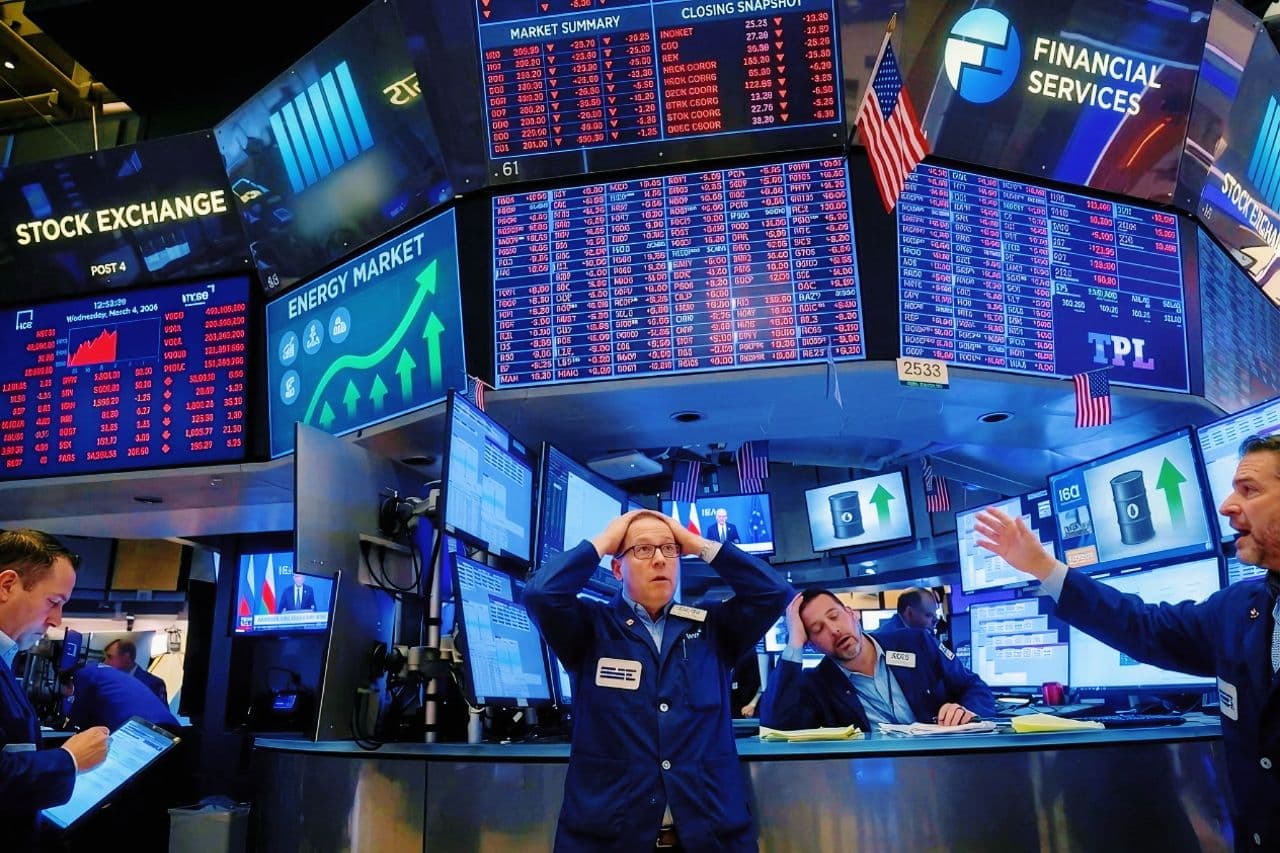
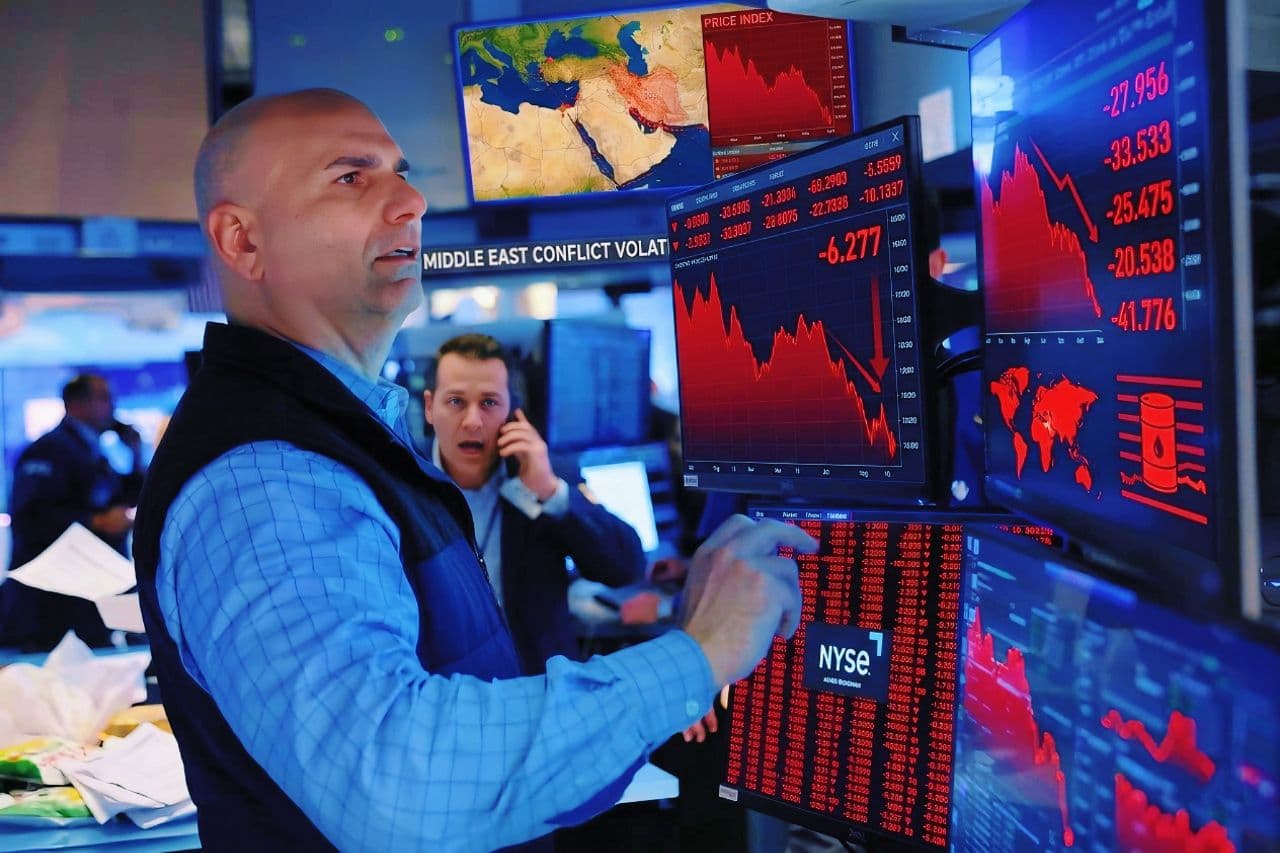
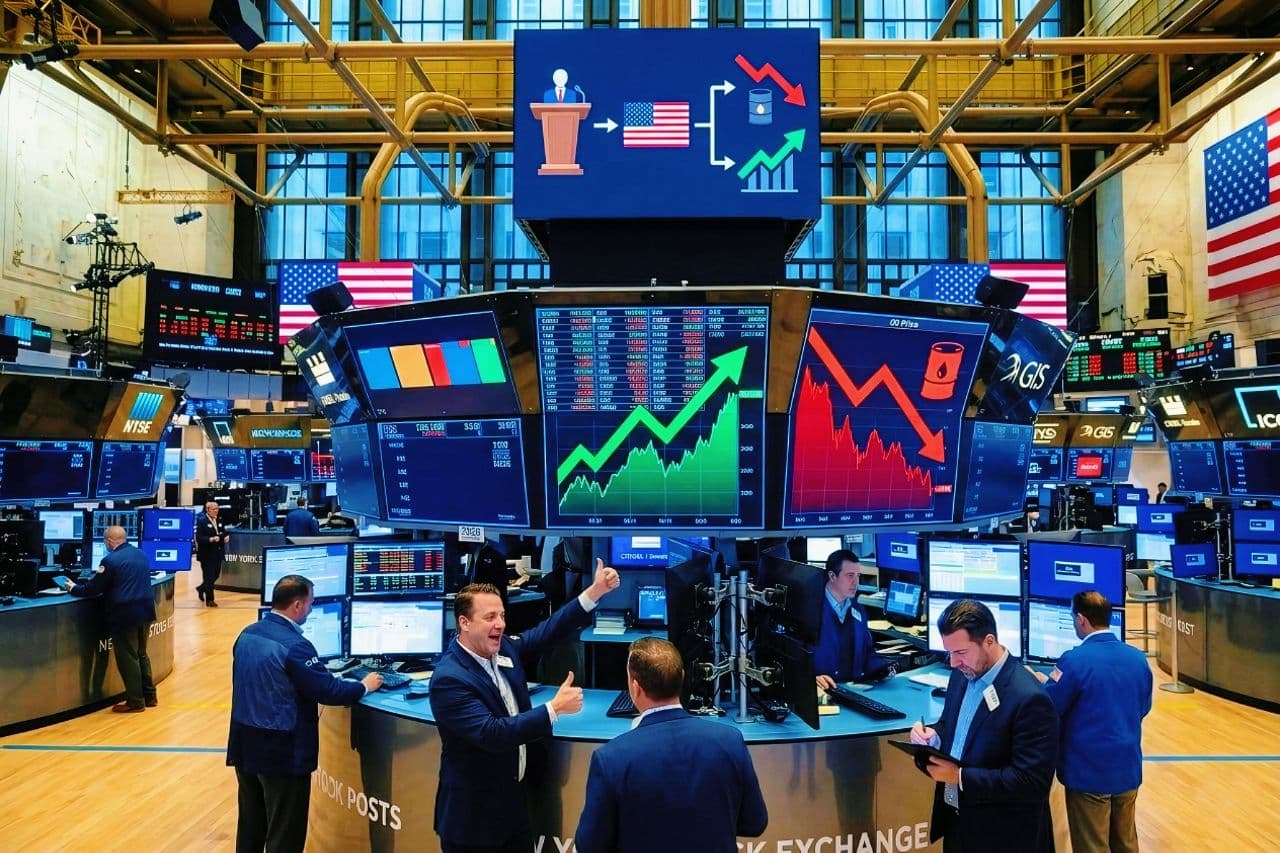
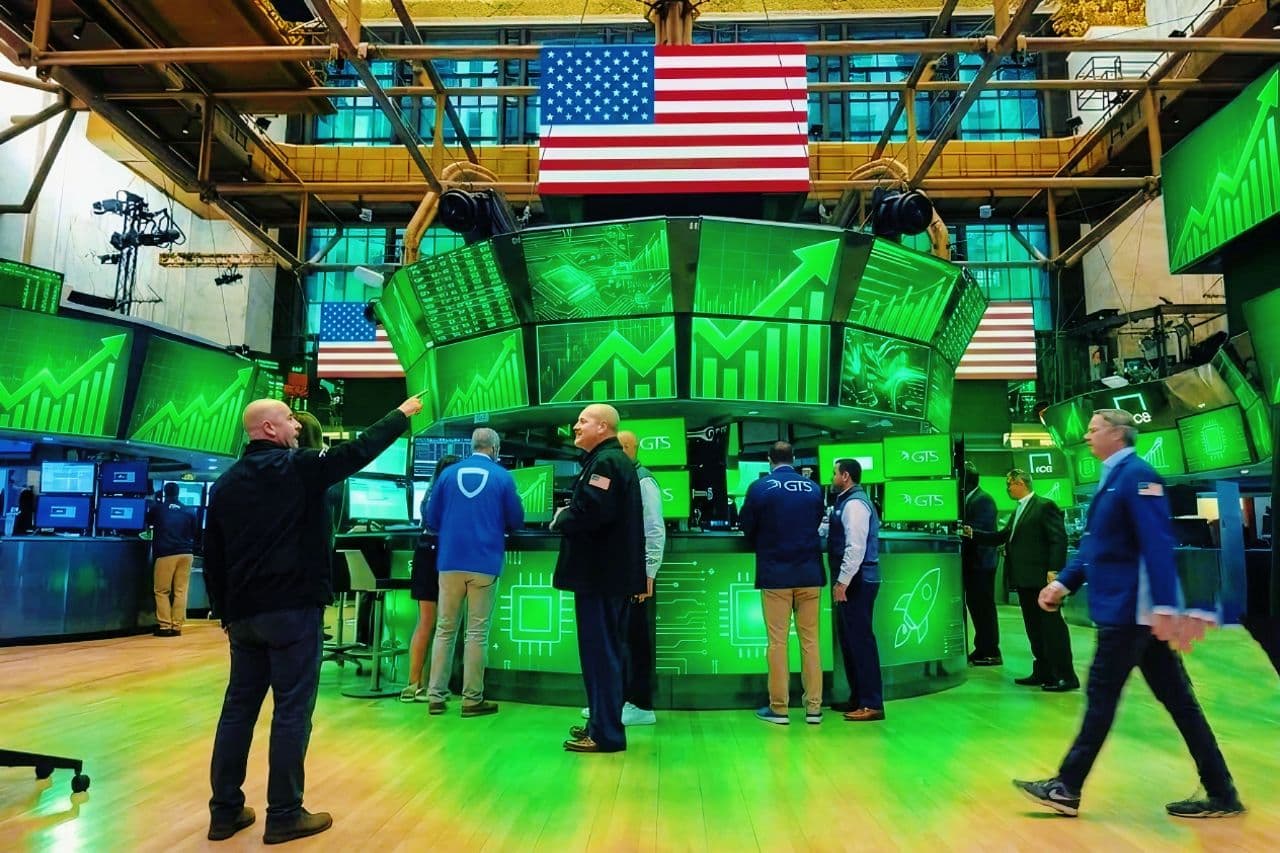
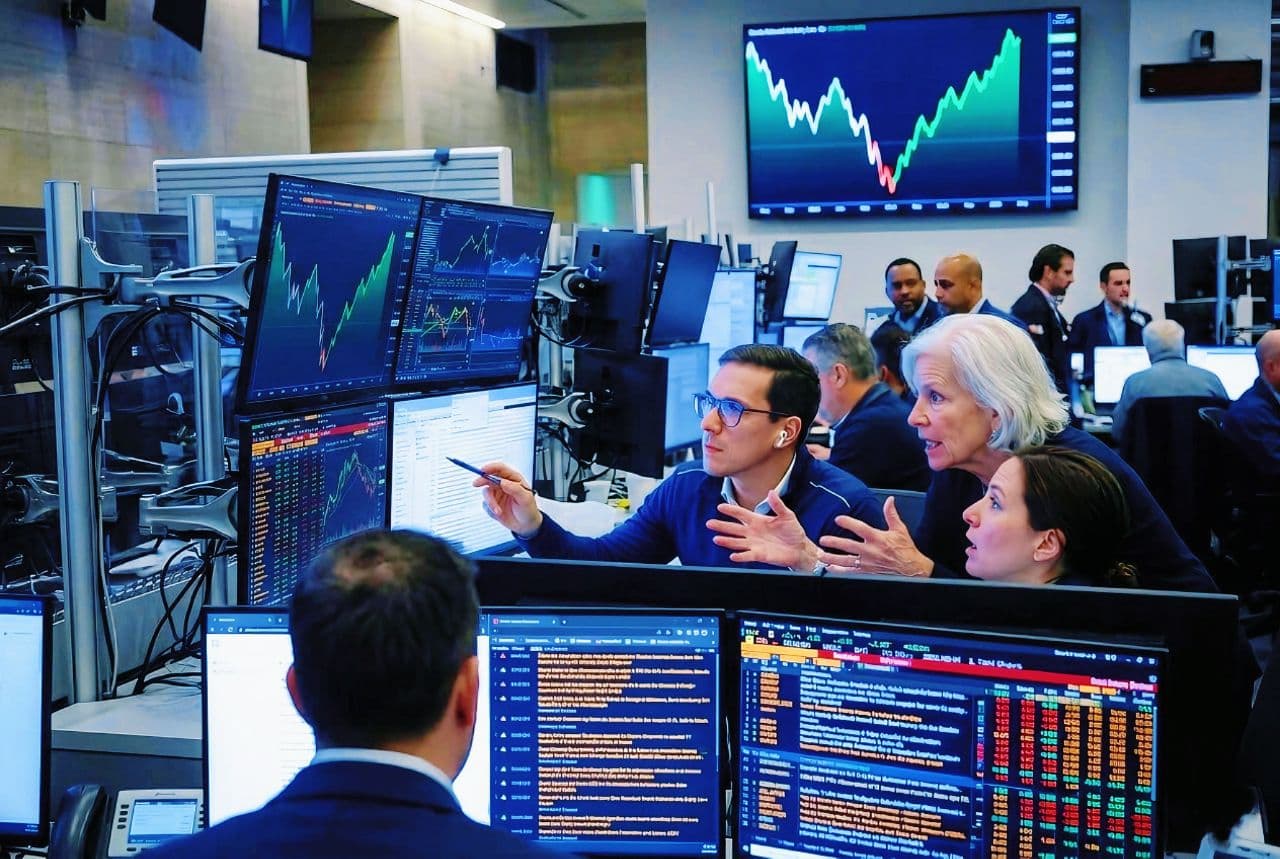
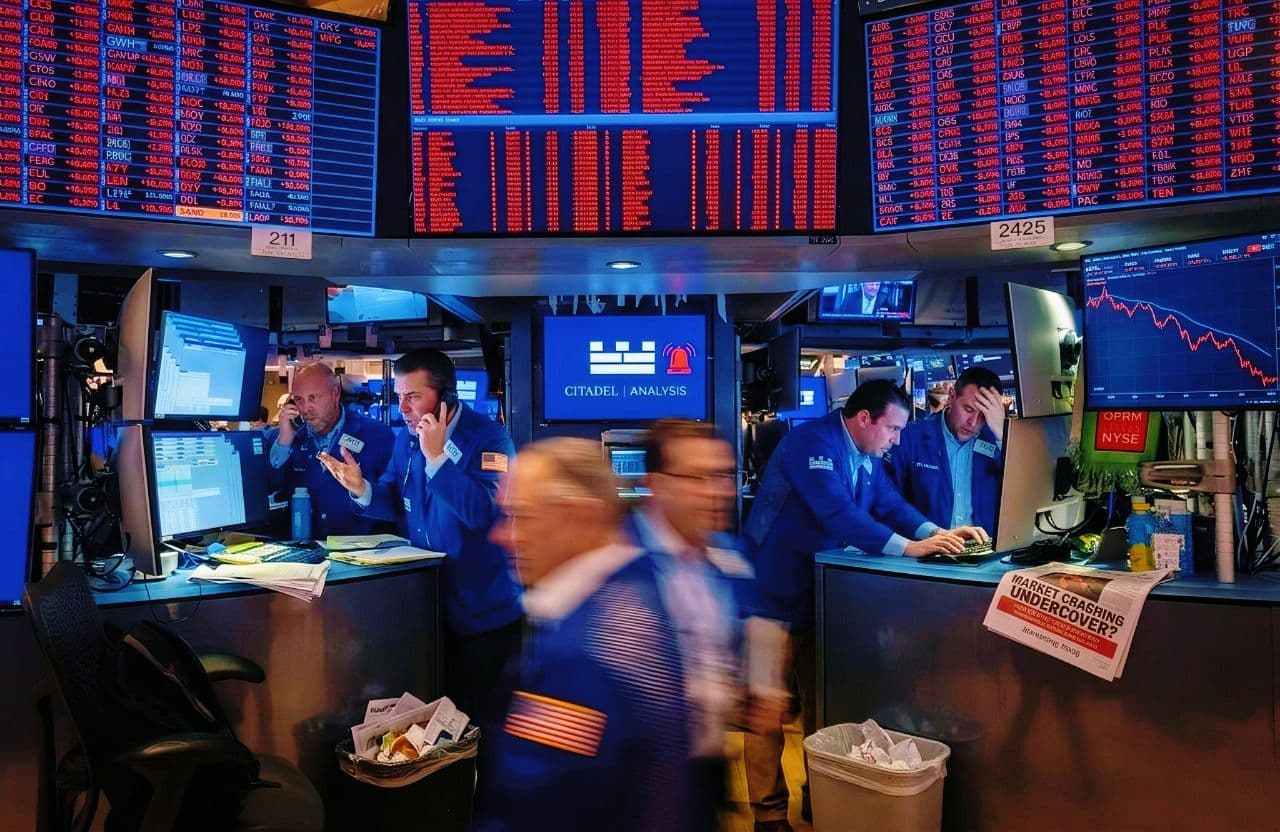
Dow Jones Surges 550 Points as S&P 500 Nears Record; US–India Trade Deal Boosts Markets
- Dow Jones Industrial Average jumped 550 points (+1.1%), while the S&P 500 rose 0.6% and the Nasdaq gained 0.7%.
- Caterpillar (CAT) led the Dow with a 4.5% advance.
- Memory stocks SanDisk (+16%) and Western Digital (+9%) were top S&P 500 performers.
- President Trump announced a U.S.–India trade deal: India will stop buying Russian oil, and the U.S. will lower reciprocal tariffs from 25% to 18%.
- The January jobs report release is delayed due to a partial government shutdown.
- The ISM manufacturing index showed U.S. factory activity expanded for the first time in a year, beating expectations.
- Nvidia (NVDA) slipped 1.5% after reports its $100B investment in OpenAI stalled.
- Oracle (ORCL) plans to raise $45–50B in 2026 to expand cloud capacity, stock down 0.8% after initial gains.
- Apple (AAPL) rose 3%, while Alphabet (GOOGL) and Amazon (AMZN) gained ahead of earnings.
- Disney (DIS) fell nearly 7% despite strong earnings, as investors focused on CEO succession.
Key Takeaways
Dow Jones Surges 550 Points; S&P 500 Nears Record as US–India Trade Deal Lifts Markets
Major U.S. stock indexes kicked off February trading with strong gains, led by the Dow Jones Industrial Average climbing 550 points and the S&P 500 approaching a record close. The Nasdaq also advanced, reflecting broad market strength. Memory chipmakers Sandisk and Western Digital were standout performers, while Caterpillar led the Dow with a notable rise. The rally followed last week’s mixed performance as investors weighed President Trump’s nomination of Kevin Warsh to succeed Jerome Powell as Fed Chair.
Trump’s announcement of a U.S. India trade deal added momentum, with India agreeing to halt Russian oil purchases in exchange for reduced tariffs. Meanwhile, the Bureau of Labor Statistics delayed the January jobs report due to a partial government shutdown. Economic data showed U.S. manufacturing activity expanding for the first time in a year, exceeding expectations.
Tech stocks were mixed: Nvidia slipped after reports its $100B OpenAI investment stalled, while Oracle fell after outlining plans to raise $45 50B for cloud expansion. Apple led the Magnificent Seven with a 3% gain, while Alphabet and Amazon rose ahead of earnings. Disney dropped nearly 7% despite strong results, as investors focused on CEO succession. Other notable moves included declines in IDEXX and gains in Palantir.
Commodities and currencies reflected shifting sentiment. Crude oil fell 5% to $62 a barrel amid geopolitical tensions with Iran. Gold futures dropped 1.5% after Friday’s sharp selloff, while silver rebounded slightly. Bitcoin traded near $78,400 after dipping to multi-month lows, and the U.S. dollar index rose 0.8% but remained near four-year lows. Treasury yields edged higher, with the 10-year at 4.28%.


The Bureau of Labor Statistics confirmed Monday that the release of critical economic data including this Friday’s jobs report on employment and unemployment will be postponed until the government shutdown ends. Emily Liddel, associate commissioner at the bureau, said in a statement that all data collection, processing, and dissemination would be suspended, with releases rescheduled once funding resumes.
This marks another disruption caused by the partial shutdown that began Saturday. While the blackout underscores the impact of political gridlock on economic transparency, there may be relief soon: the Senate passed a compromise measure over the weekend, and the House could vote as early as Tuesday to reopen the government.


Social Security February Update: Workflow Changes, Staffing Cuts, and Benefit Access Amid Shutdown
The Social Security Administration is rolling out new workflow changes beginning March 7 to address staffing shortages after cutting more than 7,000 employees in 2025 and an additional 450 so far in 2026. Agents will shift from handling only local cases to managing claims nationwide, a move designed to improve efficiency and expand support for beneficiaries both in person and over the phone.
SSA officials emphasized that community-based Field Offices will continue serving as the front line for more than 330 million Americans, while specialized teams take on complex cases. These adjustments come as questions remain about how benefits are managed during the ongoing government shutdown, underscoring the importance of operational resilience in the face of reduced workforce capacity.


Oracle Stock Rises as $50B AI and Cloud Expansion Plan Fuels Investor Optimism
Oracle announced plans to raise between $45 billion and $50 billion this year through debt and equity financing, with funds directed toward expanding its cloud infrastructure to meet surging demand from major clients such as Nvidia, Meta, OpenAI, and TikTok. The move underscores Oracle’s aggressive bet on artificial intelligence and cloud computing, positioning the company to capture growth in one of the most competitive areas of tech.
Investor sentiment turned positive following the announcement. Oracle shares, which had slipped in premarket trading, jumped more than 3% at the open and were recently up about 2%. The rally comes amid broader strength in tech stocks, particularly memory and semiconductor names that continue to drive the AI trade in 2026.


Bitcoin Price Drop Puts Michael Saylor and Strategy Under Investor Scrutiny
Bitcoin’s sharp decline to around $78,000 has reignited concerns about the aggressive buying strategy of Michael Saylor and his company, Strategy (MSTR), the largest publicly traded holder of the cryptocurrency. Shares of Strategy fell more than 2% Monday, hitting levels not seen since 2024, as investors questioned whether the firm’s massive bitcoin stockpile could soon turn unprofitable.
The selloff rippled across crypto-linked equities, with Coinbase, Circle, Gemini, and BitMine Immersion Technologies all sliding 3% or more. Analysts warn that if bitcoin drops further, Strategy’s purchases could move into the red, intensifying scrutiny of Saylor’s high-risk bet on digital assets.


Few Americans Retire With $1 Million; Survey Shows Reality of Retirement Savings
Many Americans aspire to retire with a million-dollar nest egg, often believing $1.5 million is necessary for financial security. Yet the reality is far more modest. According to the Federal Reserve’s Survey of Consumer Finances, updated in 2022 and released in 2025, only about 2.5% of Americans have $1 million or more saved in retirement accounts. This stark contrast highlights the gap between expectations and actual savings outcomes.
Among retirees, the numbers are only slightly higher, with 3.2% reaching the million-dollar mark. The data underscores how rare it is to achieve this milestone, despite widespread portrayals in financial media of average Americans building massive portfolios. For most, retirement planning requires realistic expectations and strategies that account for far less than the idealized $1 million benchmark.


Super Bowl Indicator: Seahawks Win Could Signal Stock Market Gains
Wall Street folklore known as the “Super Bowl Indicator” suggests that the outcome of Sunday’s game could hint at how the stock market performs in 2026. According to the theory, victories by National Football Conference teams are linked to stronger market years, while American Football Conference wins often precede declines. With the Seattle Seahawks representing the NFC against the New England Patriots in Super Bowl LX, investors rooting for stocks might prefer a Seahawks victory.
If the indicator holds true, a Seahawks win could mean a bullish year for equities, while a Patriots win might signal headwinds for the market. Though widely regarded as superstition rather than science, the Super Bowl Indicator remains a popular talking point among traders and investors looking for lighthearted correlations between sports and Wall Street.


Disney Stock Falls Despite Earnings Beat as CEO Succession Looms
Disney shares dropped sharply Monday morning even after reporting fiscal first-quarter results that exceeded Wall Street expectations on both revenue and profit. The decline reflects investor focus on leadership uncertainty following reports that CEO Bob Iger plans to step down earlier than expected, with a successor decision imminent.
According to The Wall Street Journal, Iger has indicated he will leave before his contract ends in late 2026. Bloomberg reported that Disney Experiences Chairman Josh D’Amaro is a leading candidate to succeed him, with a board meeting expected this week to finalize the decision. The succession timeline accelerates Disney’s earlier plan, announced in November 2024, to name a new CEO in early 2026.


Free Tax Filing Options for 2026: What Cost-Conscious Filers Should Know
The IRS has officially opened the 2025 tax return season, giving taxpayers several ways to file online without paying fees. While the IRS Direct File program previously available in 25 states was discontinued ahead of the 2026 season, filers still have access to multiple free tax preparation services. These include IRS Free File partnerships and nonprofit organizations that provide online and in-person assistance, ensuring that cost-conscious taxpayers can still complete their returns without added expenses.
The changes highlight a shift in how free filing options are delivered, but the IRS continues to emphasize accessibility. Taxpayers can explore free online platforms or community-based programs to get help with returns, making sure they avoid unnecessary costs while staying compliant. For those seeking affordable solutions, these alternatives remain a reliable way to file taxes in 2026.


Rare Earth Stocks Surge as Trump’s $12B ‘Project Vault’ Mineral Stockpile Plan Gains Momentum
Shares of USA Rare Earth and Idaho Strategic Resources rallied Monday, climbing 8% and 5% respectively, after reports surfaced that President Trump is preparing to launch a $12 billion critical mineral stockpile. Critical Minerals also advanced 3.5% following Bloomberg’s report that the initiative, dubbed “Project Vault,” aims to shield U.S. manufacturers from supply shocks while reducing reliance on Chinese rare earths and metals.
The proposed stockpile would target minerals such as gallium and cobalt, essential for batteries, jet engines, and consumer electronics like iPhones. Bloomberg noted that the plan would mark the first private-sector mineral reserve of its kind in the U.S., with more than a dozen companies including Google, Boeing, and General Motors already signed on to participate.


Retirement Contributions by Age: How Your Savings Rate Compares and Why It Matters
Many workers struggle to know if they’re contributing enough to their retirement accounts, often setting rates early in their careers 5%, 6%, or 7% and leaving them unchanged for years. These seemingly small decisions have a powerful impact on long-term retirement readiness, shaping whether savings will be sufficient decades down the line.
Employer-sponsored defined contribution plans such as 401(k)s, 403(b)s, and 457s remain the backbone of retirement savings in the U.S., yet most people lack visibility into how their contributions compare with peers. Because dashboards emphasize balances rather than contribution behavior, workers rarely benchmark themselves against others. This lack of context makes it harder to know if you’re on track, even though modest increases in contribution rates can compound into significant gains over time.


Only 14% of Workers Max Out 401(k) Contributions—Here’s Why It Matters for Retirement Security
Most Americans continue to under-save for retirement, with just over one-third of non-retirees believing their savings plan was on track in 2023, according to Federal Reserve data. Yet among participants in defined contribution plans such as 401(k)s and 403(b)s, only 14% contributed the annual maximum in 2024, based on Vanguard’s records. This highlights how rare it is for workers to fully leverage tax-advantaged retirement accounts, even though doing so can significantly boost long-term financial readiness.
Income levels play a major role in hitting this milestone. Nearly half of workers earning more than $150,000 annually contributed the maximum, compared with just 2% of those making between $75,000 and $99,999. For 2026, the annual maximum stands at $23,500, rising to $31,000 for those over 49, and up to $34,750 under SECURE 2.0 Act provisions. While saving less than the maximum doesn’t necessarily mean falling short, consistently reaching this target can provide a stronger foundation for retirement security, especially for workers with fewer years left to save.


Super Bowl Party Costs $140 in 2026 as Food Prices Shift but Wages Rise
Hosting a Super Bowl party for 10 guests will cost about $140 this year, according to Wells Fargo’s Agri-Food Institute. That’s just $2 more than last year, reflecting a 1.6% increase slower than the 2.4% grocery inflation rate reported in December’s Consumer Price Index. The modest rise is partly due to lower chicken wing prices, which help offset increases in other popular game-day foods like pizza and snacks.
While food costs have edged higher, stronger wages are giving hosts more flexibility. Average hourly earnings climbed 3.8% to $31.99, meaning many households can absorb the slight uptick in party expenses without straining budgets. The report suggests that despite inflationary pressures, Americans can still enjoy football’s biggest night without breaking the bank.


2026 Labor Market Outlook: Fewer Jobs, Rising Unemployment, and Employer Struggles
The U.S. labor market is entering 2026 with challenges on both sides. Job seekers face fewer openings and longer periods of unemployment, with the long-term unemployment rate reaching its highest level since late 2021. At the same time, employers are struggling to fill positions, particularly in industries like homebuilding where labor shortages remain acute. This imbalance has contributed to a slowdown in job creation, with two months in 2025 actually posting net job losses a rare occurrence since the pandemic.
Economists surveyed by the Federal Reserve Bank of Philadelphia project that the economy will add just 57,000 jobs per month in the first quarter of 2026, a sharp decline from pre-tariff averages of 147,000 jobs per month. Since the introduction of President Trump’s “Liberation Day” tariffs, job growth has slowed dramatically to just 38,600 per month, underscoring the strain on both workers and employers as the new year unfolds.


Kevin Warsh’s Fed Record: Crisis-Era Hawk Turned Dovish Rate-Cut Advocate
Kevin Warsh, President Trump’s nominee to lead the Federal Reserve, brings a complex track record from his tenure as Fed governor between 2006 and 2011. During the 2008 financial crisis, Warsh supported the Fed’s emergency measures but pushed for a faster rollback once panic subsided, earning him a reputation as a hawk. That stance reflected caution about prolonged intervention, even as markets stabilized.
More recently, Warsh has shifted toward a dovish outlook, aligning with Trump’s preference for lower interest rates. Analysts expect him to favor rate cuts in 2026, though questions remain about whether his crisis-era hawkish instincts could resurface. Market watchers see this duality as central to how Warsh may shape monetary policy over his four-year term after succeeding Jerome Powell in May.


.jpg&w=828&q=75)
The Bottom Line
- Stocks surged to start February: the Dow jumped 550 points, the S&P 500 neared a record close, and the Nasdaq also gained.
- Sector leaders: Sandisk and Western Digital soared on memory chip strength, Caterpillar led the Dow, while Apple outperformed among the Magnificent Seven.
- Policy backdrop: Trump announced a U.S.–India trade deal, lowering tariffs in exchange for India halting Russian oil purchases.
- Economic data: The January jobs report is delayed due to the government shutdown, but manufacturing activity expanded for the first time in a year.
- Tech movers: Nvidia slipped on stalled OpenAI investment plans; Oracle outlined a massive $45–50B cloud expansion; Disney fell despite strong earnings amid CEO succession concerns.
- Commodities: Oil dropped 5% to $62, gold and silver swung sharply after last week’s volatility, and Bitcoin rebounded slightly from multi-month lows.
- Rates & currency: The 10-year Treasury yield ticked up to 4.28%, while the U.S. dollar index rose but stayed near four-year lows.