Experts Recommend Credit Card Stocks: 2026 Market Outlook Despite Trump Policy Risks
- Credit card stocks dropped earlier this week after President Trump suggested capping card interest rates at 10% for one year and backed legislation that could disrupt Visa and Mastercard’s payment network dominance.
- Analysts at William Blair and Citigroup remain confident that the long-term effect on credit card stocks will be limited, despite short-term volatility.
- While uncertainty around payment network reform weighed on financial stocks during the Global Financial Crisis, card issuers adapted by recouping lost revenue. Over the past 15 years, credit card stocks have significantly outperformed the S&P 500.
Key Takeaways
Credit Card Stocks Drop: Trump’s 2026 Interest Rate Cap & Payment Network Reform Impact
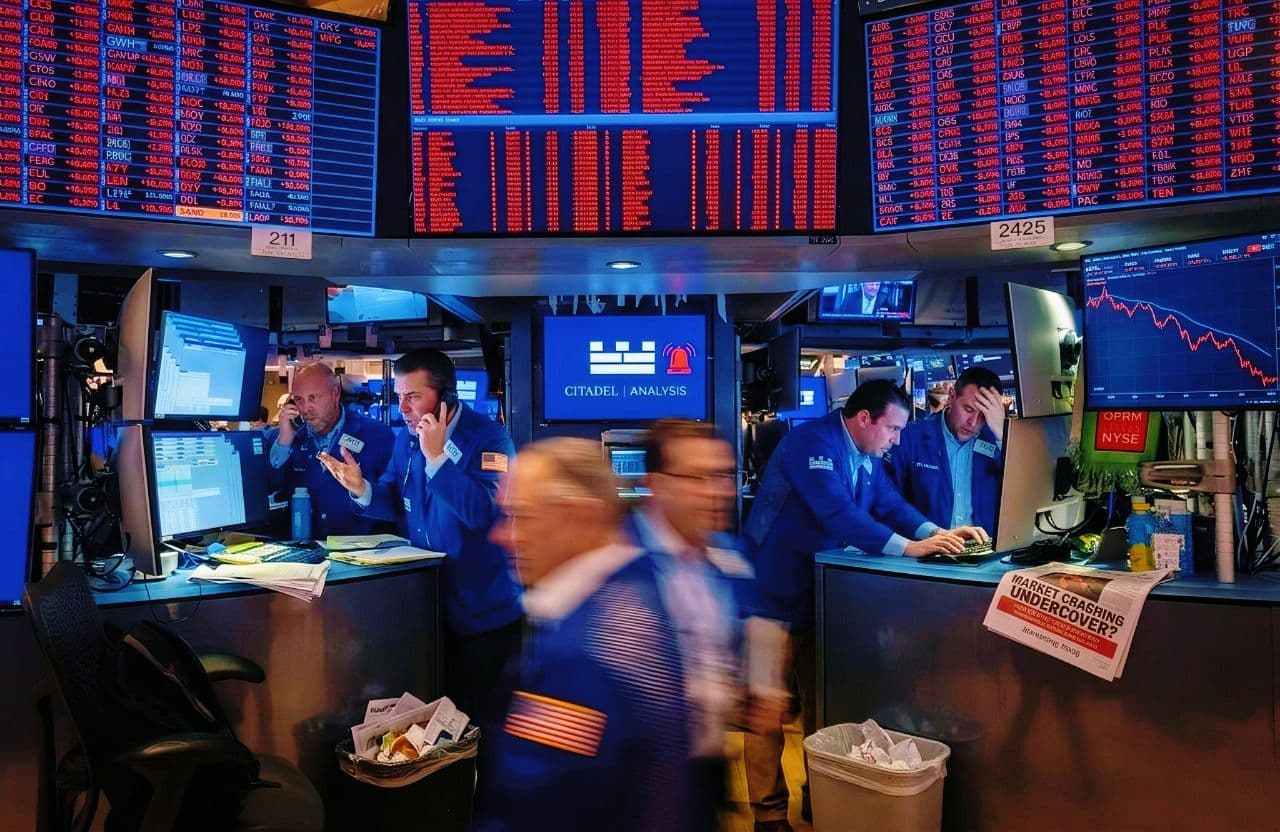
Credit card stocks are sliding this week after President Trump criticized the industry, claiming it “ripped off” U.S. consumers with excessive interest rates and swipe fees.
On Friday night, Trump proposed a one-year cap on credit card interest rates at 10% beginning January 20. He escalated pressure Tuesday morning by endorsing the Credit Card Competition Act, which would force large banks to support at least two payment networks only one of which could be Visa or Mastercard, the nation’s largest providers.
Shares of Visa (V) and American Express (AXP) have dropped 7% and 5% respectively since the start of the week, ranking among the worst performers in the Dow Jones Industrial Average. Mastercard (MA) has also declined about 5% over the same period.
Experts this week voiced skepticism about whether Congress or the Trump administration can successfully enforce an interest rate cap or overhaul payment networks. Historically, markets have tended to exaggerate the financial impact of such reforms, creating opportunities for investors who buy during dips.






William Blair analysts advised long-term investors to accumulate Visa, Mastercard, and American Express shares during periods of weakness driven by uncertainty. They believe Visa and Mastercard can offset lower processing fees and lost volume, though they expect near-term pressure to compress stock multiples, creating potential 10%-20% downside.
The firm noted that fintech investments may be “challenging” in the short run, but they anticipate no material change to the overall U.S. payment system economics.
Citigroup analysts echoed this confidence, stressing that the long-term impact on credit card stocks should remain limited. They highlighted that historically, buying into sell-offs tied to fears of business model changes has proven beneficial for investors.
They pointed to the Durbin Amendment within the Dodd-Frank Act, which capped debit card transaction fees and introduced network requirements similar to those in the Credit Card Competition Act. Ahead of its enactment in July 2010, uncertainty weighed on Visa and Mastercard shares, but both companies ultimately adapted and recovered.






Visa & Mastercard Stock Growth: Lessons From Dodd-Frank and 2026 Reform Risks
Ultimately, Jefferies analysts noted that “despite requiring two unaffiliated networks on all debit cards, interchange rates have not been competed down” following the Durbin Amendment. Visa and Mastercard managed to recoup lost fees through alternative strategies, approaches they could expand if similar rules are applied to credit cards.
Visa and Mastercard shares surged double digits in the year after Dodd-Frank was enacted. Fifteen years later, Visa stock has climbed about 1,700% and Mastercard about 2,600%, far outpacing the 550% return of the S&P 500 over the same period.






The Bottom Line
Despite sharp declines in Visa, Mastercard, and American Express shares this week, analysts stress that long-term fundamentals remain intact. While Trump’s push for a 10% interest rate cap and payment network reform has rattled markets, history shows card issuers adapt quickly to regulatory changes. Past reforms like the Durbin Amendment initially weighed on financial stocks, but Visa and Mastercard ultimately rebounded and delivered massive gains over the following decade. For investors, current weakness may present a buying opportunity rather than a lasting threat.