Stock Market Outlook: Futures Slip, Bitcoin Below $70K
- U.S. stock futures pointed lower Monday after a volatile week that saw the Dow Jones Industrial Average break above 50,000 for the first time.
- The Nasdaq remained under pressure, extending its losing streak to four weeks, while the S&P 500 fell for the third time in four weeks. Nvidia and Caterpillar helped power Friday’s rally, but both stocks were mixed pre-market.
- Amazon ticked lower after disappointing earnings, while Novo Nordisk surged on legal action against Hims & Hers over copycat weight-loss drugs.
- Kroger gained on reports of a new CEO, and STMicroelectronics jumped on an expanded AWS partnership.
- Bitcoin slipped back beneath $70,000, trading near $68,900 after a wild swing that saw it drop to just above $60,000 before rebounding.
- Crypto-linked stocks including Coinbase, Marathon Digital, and MicroStrategy were down after sharp gains last week.
- Gold and silver futures also retreated from recent highs, while Treasury yields edged higher and oil prices ticked up.
- Bitcoin slipped back beneath $70,000, trading near $68,900 after a wild swing that saw it drop to just above $60,000 before rebounding. Crypto-linked stocks including Coinbase, Marathon Digital, and MicroStrategy were down after sharp gains last week. Gold and silver futures also retreated from recent highs, while Treasury yields edged higher and oil prices ticked up. The U.S. dollar index weakened, adding to the mixed tone across markets.
Key Takeaways
Market Recap: Futures Lower, Bitcoin Retreats
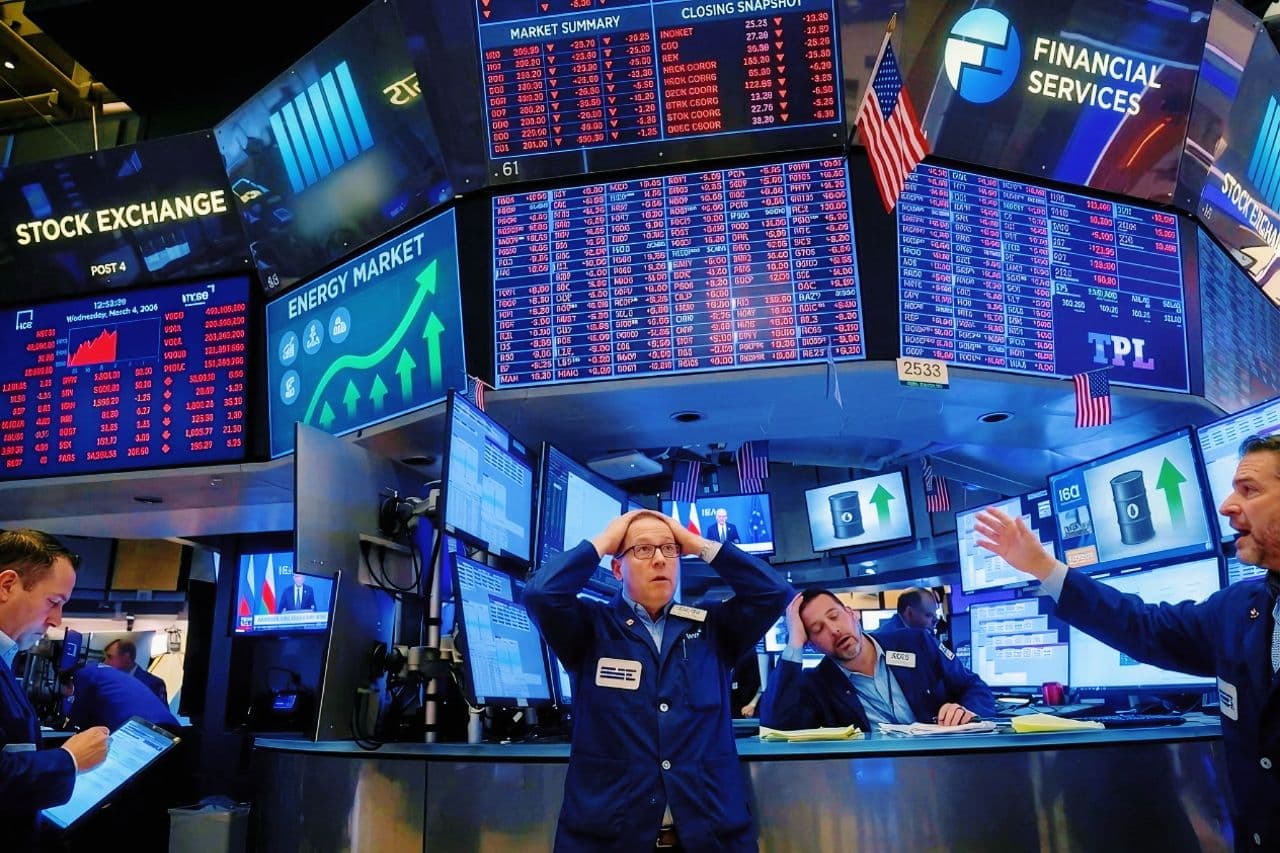
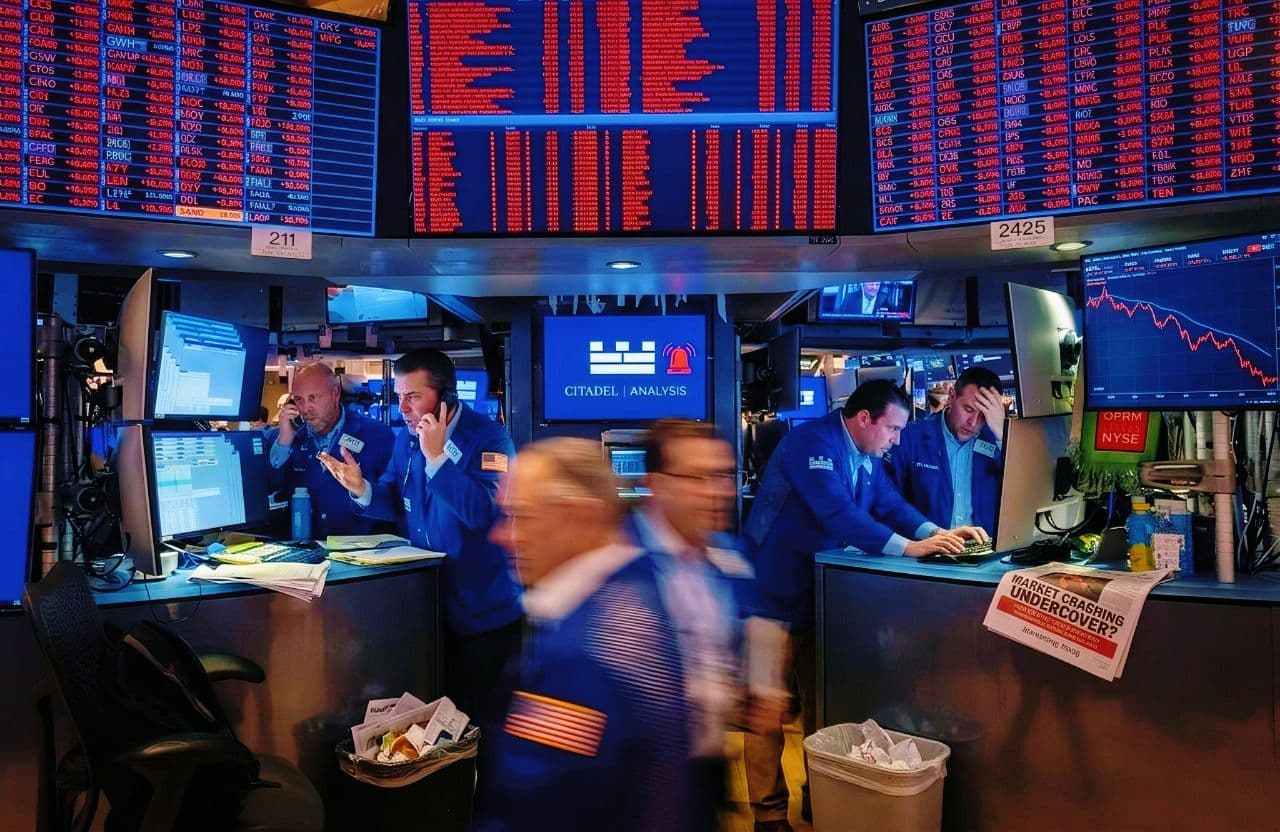
Stocks were set for a weaker open Monday after a volatile week that ended with the Dow Jones Industrial Average breaking above 50,000 for the first time. Futures for the Nasdaq 100, S&P 500, and Dow pointed down 0.2%, 0.1%, and 0.1% respectively. Major indexes rebounded sharply Friday, with the Dow surging more than 1,200 points to snap a three-week losing streak, while the Nasdaq extended its skid to four weeks and the S&P 500 fell for the third time in four weeks. Nvidia and Caterpillar, which powered Friday’s rally, were mixed pre-market, while Amazon ticked lower after disappointing earnings.
Novo Nordisk shares rose after announcing legal action against Hims & Hers over copycat weight-loss drugs, sending HIMS stock down sharply. Kroger gained on reports of a new CEO, and STMicroelectronics jumped on an expanded AWS partnership. Bitcoin slipped back to around $68,900 after wild swings last week, dragging crypto-linked stocks lower. Gold and silver futures retreated from recent highs, Treasury yields edged up, oil prices advanced slightly, and the U.S. dollar index weakened, adding to the mixed tone across global markets.


A new Zillow report highlights how steep mortgage rates continue to keep housing out of reach for many buyers. Nationwide, rates would need to fall more than 4% to make the typical home affordable for a median-income family. With the current average 30-year fixed mortgage rate at 6.11%, affordability remains a challenge even with a 20% down payment. The study defines affordability as spending less than 30% of household income on monthly mortgage payments.
In high-cost cities like New York, Los Angeles, and Miami, homes would remain unaffordable even if mortgage rates dropped to 0%, given average values near or above $800,000. Boston and Seattle would require borrowing costs below 1% to achieve affordability. Meanwhile, markets such as Dallas, New Orleans, and Nashville would need rates to decline by more than two percentage points to bring housing within reach. The findings underscore how affordability pressures remain a stubborn issue, particularly for younger buyers navigating the 2020s housing market.


.jpg&w=828&q=75)
Monday.com Shares Slide on Weak Guidance
Monday.com stock plunged 15% in pre-market trading after the Tel Aviv-based AI work platform issued softer-than-expected guidance for both the current quarter and full year. The company projected fiscal Q1 2026 revenue between $338 million and $340 million, with adjusted operating income of $37 million to $39 million below analyst expectations of $342.6 million and $45.3 million. For the full year, Monday.com forecast revenue of $1.452 billion to $1.462 billion and adjusted operating income of $165 million to $175 million, missing consensus estimates of $1.47 billion and $219 million.
Despite topping estimates in Q4 2025 with adjusted earnings of $1.04 per share and revenue of $333.9 million, the company has struggled with foreign exchange pressures and margin headwinds. CFO Eliran Glazer emphasized that fundamentals remain healthy, citing record net adds of customers with more than $100,000 in annual recurring revenue. Still, shares have lost a third of their value in the past month and are down more than 60% over the past year, underscoring investor concerns about growth momentum.
AI Boom, But Data Jobs Shrink
Despite record-breaking investment in artificial intelligence and data infrastructure, the industry has shed jobs rather than created them. RBC estimates $427 billion was poured into AI and data centers in 2025, yet Bureau of Labor Statistics data shows employment in “Computing Infrastructure Providers, Data Processing, Web Hosting, and Related Services” fell by 6,700 year-over-year, dropping to 477,700 workers in December 2025.
The paradox is clear: while companies like Digital Realty and Elon Musk’s xAI project are building massive data centers some even exploring nuclear power and space-based facilities these operations require relatively few employees once operational. Economists have labeled the trend a “jobless profit boom,” as firms increasingly cut headcounts while expanding AI use. The debate now centers on whether AI is displacing jobs faster than it creates them, leaving workers sidelined in the very industry driving the boom.
The Bottom Line
Stocks are set for a softer open after last week’s sharp rebound, with futures for the Dow, S&P 500, and Nasdaq all pointing slightly lower. The Dow’s surge above 50,000 was historic, but momentum remains fragile as investors weigh earnings misses from Amazon against strength in Nvidia and Caterpillar. Novo Nordisk’s legal battle with Hims & Hers, Kroger’s CEO shake-up, and STMicroelectronics’ AWS partnership add corporate drama to the mix.
Bitcoin’s retreat below $70,000 after wild swings highlights ongoing volatility in crypto markets, dragging Coinbase and other crypto-linked stocks lower. Meanwhile, gold and silver are off recent highs, Treasury yields are edging upward, and oil prices are ticking higher. The dollar’s weakness rounds out a mixed global picture, leaving investors cautious as they navigate a week packed with economic data and earnings reports.