Stocks Sink in Worst Week of 2026 Despite Inflation Relief
- Markets Slide: Tech sector jitters outweighed encouraging inflation and jobs data, dragging major indexes lower.
- Dow & S&P 500: Both posted losses, marking the worst weekly performance of 2026 so far.
- Nasdaq Pressure: Tech-heavy Nasdaq bore the brunt of investor concerns, reflecting sector volatility.
- Mixed Signals: Softer inflation and strong payrolls offered macroeconomic optimism, but sector-specific worries dominated sentiment.
- Investor Outlook: The divergence highlights how broader economic progress can be overshadowed by concentrated market fears.
Key Takeaways
Stocks Mixed as Inflation Relief Fails to Offset Tech Selloff in 2026
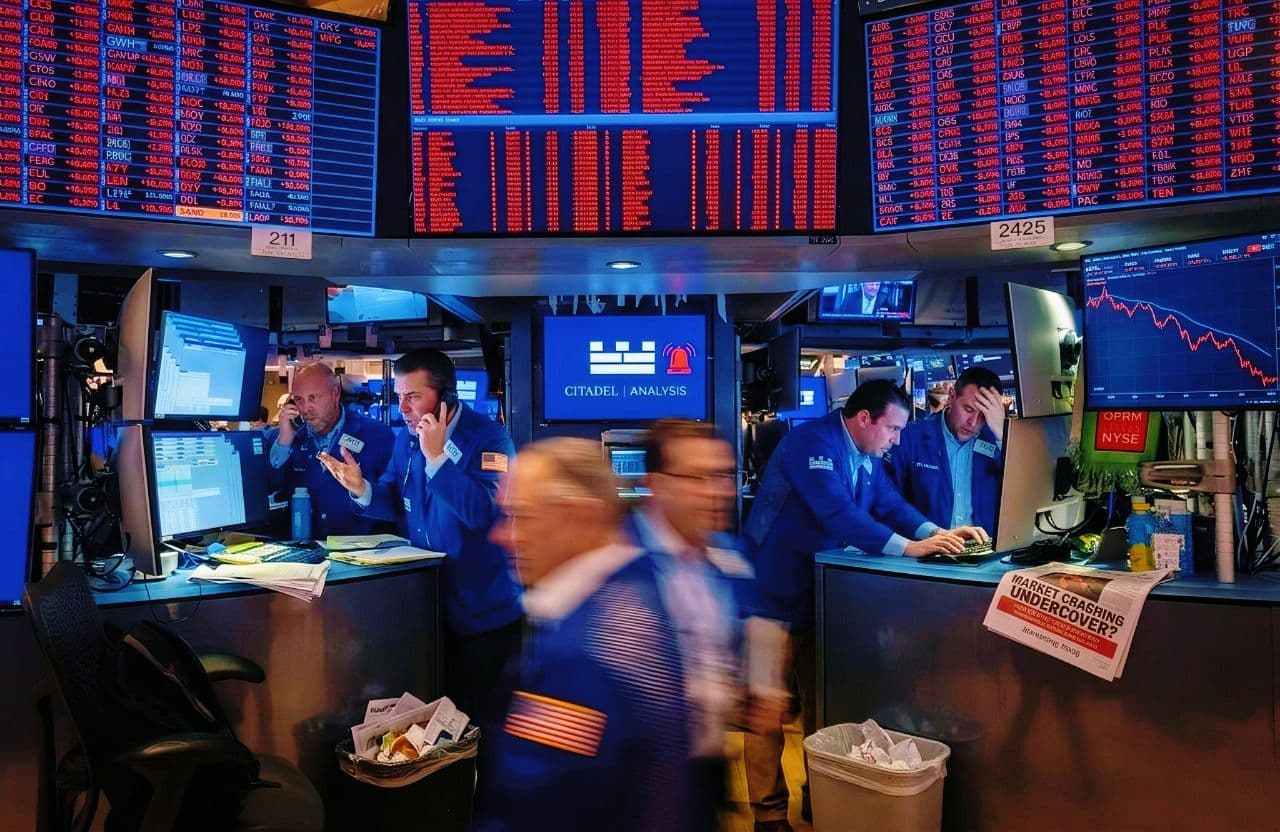
Stocks ended a turbulent week with mixed results after inflation data came in softer than expected. The S&P 500 and Dow Jones Industrial Average each edged up 0.1% on Friday, while the Nasdaq Composite slipped 0.2%. Despite the modest Friday gains, all three indexes logged their worst weekly losses of 2026, with the Dow and S&P down more than 1% and the Nasdaq losing over 2%. The selloff was fueled by renewed AI jitters, echoing last week’s “SaaSpocalypse.”
Inflation slowed to 2.4% in January, its lowest since May, while core inflation fell to 2.5%, the weakest since March 2021. Treasury yields dropped, with the 10-year at 4.05%, down from 4.11%. Corporate earnings drove sharp moves: Coinbase surged 17%, Applied Materials rose 8%, and Arista Networks gained 5% on AI demand, while Pinterest plunged 17% and DraftKings fell 14%. Big tech stocks remained under pressure, with Nvidia and Apple down more than 2%. Commodities and crypto were mixed gold rebounded to $5,050/oz, oil slipped to $62.70/barrel, and Bitcoin recovered to ~$69,000.


Pinterest Stock Plunges as Tariffs Hit Ad Spend in 2026
Pinterest shares tumbled nearly 20% Friday after the company warned that tariffs are squeezing its top retail advertisers, cutting into ad budgets and weighing on quarterly results. CEO Bill Ready told investors that tariffs are “disproportionately affecting ad spend from our top retail advertisers,” highlighting how rising costs are reshaping digital ad strategies. The company reported adjusted earnings of 67 cents per share on $1.32 billion in revenue, both narrowly missing analyst expectations. Its first-quarter outlook of $951 $971 million also fell short of projections, prompting JPMorgan and Bank of America to downgrade the stock.
The fallout underscores how tariff-driven inflation is spilling into the advertising sector. Analysts warned that pressure from large retailers’ ad spend could worsen in the current quarter. Pinterest’s stock has now lost more than 40% of its value year-to-date and over 60% in the past 12 months. Other social media stocks like Snap and Meta saw brief declines but recovered, with Ready noting Pinterest’s heavier reliance on large retailers compared to peers.


DraftKings Stock Drops as 2026 Revenue Forecast Misses Wall Street Expectations
DraftKings shares fell 13% Friday after the company’s full-year revenue guidance disappointed investors. The sports betting operator projected revenue between $6.5 billion and $6.9 billion for 2026, well below Wall Street’s consensus of $7.3 billion. The weak forecast overshadowed otherwise strong fourth-quarter results, with revenue up 43% to $1.99 billion and a swing to profit of $136 million, or 25 cents per share, compared to a $135 million loss a year earlier.
The outlook was particularly concerning given DraftKings’ push into prediction markets, a fast-growing niche increasingly competing with traditional sportsbooks. Bank of America estimated that about 20% of all Super Bowl-related betting last weekend occurred on prediction platforms. DraftKings was the fifth-most downloaded app during the game, while rival Kalshi ranked second with nearly $900 million in trading volume. CEO Jason Robins told shareholders the company plans to invest heavily in building its Predictions business, targeting hundreds of millions in annual revenue over the long term.


Coinbase Rises as Bitcoin Struggles Under $70K in 2026
Crypto markets remain volatile, with Bitcoin stuck below $70,000 and altcoins like ether and solana showing similar weakness. Retail investors appear hesitant, but industry players are stepping in. Coinbase Global (COIN) announced it will continue to “buy the dip” in Bitcoin and its own stock. That optimism has yet to lift crypto prices meaningfully, but crypto-linked equities surged Friday, with Coinbase up 18% and Gemini climbing 12%. MicroStrategy and Circle also posted modest gains.
Some analysts caution the rebound in crypto stocks may be short-lived. One bank warned of further downside ahead, citing a lack of new buyers entering the market. The divergence between crypto asset prices and crypto-related equities underscores the uncertainty facing investors: while whales and exchanges are betting on recovery, broader demand remains fragile.


Arista Networks Stock Climbs on Earnings Beat and Strong AI Outlook in 2026
Arista Networks shares rose about 6% Friday after the company reported fourth-quarter results that topped expectations and delivered its first-ever quarter with net income above $1 billion. Adjusted earnings came in at $1.05 billion, or 82 cents per share, up nearly 25% from a year earlier, while revenue jumped 29% to $2.49 billion. CEO Jayshree Ullal highlighted that Arista exceeded both AI networking and campus expansion goals, driving profitable growth and $9 billion in annual revenue.
The company guided current-quarter revenue to $2.6 billion and forecast gross margins between 62% and 63%, a sharp contrast to competitor Cisco, which warned of margin pressure from soaring memory component costs. Cisco shares fell 12% earlier this week on that outlook. Arista’s stock, which has traded sideways since November’s earnings dip, is still up about 30% over the past year. Wall Street remains bullish, with 8 of 9 analysts rating the stock a “buy” and an average price target of $178.63 roughly 25% above Friday’s intraday level.


Rivian Stock Surges on R2 SUV Launch Plans and 2026 Sales Forecast
Rivian shares soared more than 25% Friday after the EV maker posted stronger-than-expected fourth-quarter results and outlined ambitious plans for 2026. Revenue came in at $1.29 billion, narrowly topping estimates, while adjusted losses of 54 cents per share were smaller than analysts had forecast. The company confirmed its R2 SUV a lower-cost model compared to its current lineup remains on track for a second-quarter launch, with more details expected at a March 12 event.
Rivian expects to deliver between 62,000 and 67,000 vehicles in 2026, a more than 50% jump from last year’s 42,247 deliveries. Analysts at Wedbush reiterated confidence in Rivian’s long-term transformation, highlighting streamlined R1 production and ramped R2 output. Despite Friday’s surge to $17.70 per share, Rivian stock remains down over 10% year-to-date after hitting a two-year high in December.


Applied Materials Stock Surges as AI Chip Demand Fuels Profit Growth in 2026
Applied Materials shares jumped 9% Friday after the semiconductor equipment maker reported a sharp profit increase driven by booming demand for advanced chips. First-quarter profit surged more than 70% to $2.03 billion, or $2.45 per share, while revenue slipped 2% to $7.01 billion. CEO Gary Dickerson said the need for higher-performance, energy-efficient chips is fueling growth in leading-edge logic, high-bandwidth memory, and advanced packaging. He expects the company’s semiconductor equipment business to expand more than 20% this year.
The AI data center buildout has created a surge in demand for powerful semiconductors, benefiting companies like Applied Materials whose technology enables chip fabrication. Dickerson projected global semiconductor industry revenues could reach $1 trillion in 2026, underscoring the scale of opportunity. The company forecast current-quarter revenue between $7.15 billion and $8.15 billion, with adjusted earnings per share between $2.44 and $2.84. At the upper end, both metrics would show double-digit growth, reinforcing investor confidence in Applied Materials’ AI-driven momentum.


Apple Stock Falls as AI Delays and FTC Warning Pressure 2026 Outlook
Apple shares slumped 5% Thursday after the Federal Trade Commission issued a warning letter over its Apple News service, adding to investor concerns. Reports also surfaced that Apple is once again delaying the release of certain AI-powered Siri features, fueling worries that the company’s artificial intelligence capabilities are lagging behind peers. The setback comes as Apple and its “Magnificent Seven” tech peers face mounting pressure in 2026, with hyperscalers like Alphabet, Microsoft, Amazon, and Meta weighed down by fears of overspending on AI infrastructure. Even chipmaker Nvidia, a key beneficiary of data center spending, has struggled amid valuation concerns.
Apple’s stock had briefly turned positive for the year after announcing in January that it would integrate Alphabet’s Gemini into future AI features, including Siri. The company also reported record holiday-quarter results, with iPhone and services revenue beating expectations. Shares rose nearly 8% in the week following that earnings report, but Thursday’s slump erased most of those gains. Apple stock slipped another 0.8% Friday morning, leaving it down about 4.5% year-to-date.


Softer Inflation Strengthens Fed’s Wait-and-See Approach in 2026
January’s inflation slowdown gives the Federal Reserve more room to pause before cutting rates. According to the CME FedWatch Tool, traders now see a 70% chance of a rate cut at the June meeting, up from 66% before the CPI release. The tool tracks fed funds futures to forecast policy moves, and the shift reflects growing confidence that inflation is cooling without derailing growth.
Economists note that the combination of softer inflation and strong payroll data supports Fed officials who favor holding off on easing for now. As Moody’s Analytics economist Matt Colyar put it, the latest data “support the FOMC members who think the easing cycle should remain on hold in the coming months.” This positions the Fed to balance inflation progress with labor market strength as it weighs its next steps.


.jpg&w=828&q=75)
January CPI Falls to 2.4%, Lowest Since May 2026
Inflation cooled more than expected in January, with the Consumer Price Index rising 2.4% year-over-year, down from December’s 2.7% increase. That marks the lowest reading since May and signals a stronger-than-anticipated slowdown in price pressures. Core inflation, which excludes volatile food and energy costs, eased to 2.5% from 2.6% in December, its weakest level since March 2021. Economists view core inflation as a more reliable gauge of underlying trends, reinforcing optimism that inflation is steadily moving closer to the Federal Reserve’s 2% target.
The softer data strengthens the case for patience at the Fed, as policymakers weigh inflation progress against labor market resilience. With headline and core inflation both hitting multi-year lows, markets are increasingly confident that rate cuts could arrive later this year, though officials remain cautious about declaring victory too soon.
The Bottom Line
Stocks closed out a volatile week with mixed results after inflation data came in softer than expected. The S&P 500 and Dow Jones Industrial Average each gained 0.1% Friday, while the Nasdaq Composite slipped 0.2%. Despite the modest moves, all three indexes posted their largest weekly losses of the year, with the Dow and S&P down more than 1% and the Nasdaq losing over 2%. The selloff was driven by renewed AI jitters, echoing last week’s “SaaSpocalypse.” Inflation slowed to 2.4% in January, its lowest since May, while core inflation fell to 2.5%, the weakest since March 2021.
Treasury yields dropped, with the 10-year falling to 4.05% from 4.11%. Corporate earnings fueled sharp moves: Coinbase soared 17%, Applied Materials rose 8%, and Arista Networks gained 5% on AI demand, while Pinterest plunged 17% and DraftKings fell 14%. Big tech stocks remained under pressure, with Nvidia and Apple down more than 2%. Commodities and crypto were mixed gold rebounded to $5,050/oz, oil slipped to $62.70/barrel, and Bitcoin recovered to ~$69,000.