Tech Earnings Shake Wall Street as Alphabet Surges, Meta and Microsoft Slide; Nvidia, Chipotle, and Sprouts Tumble on Outlook Warnings
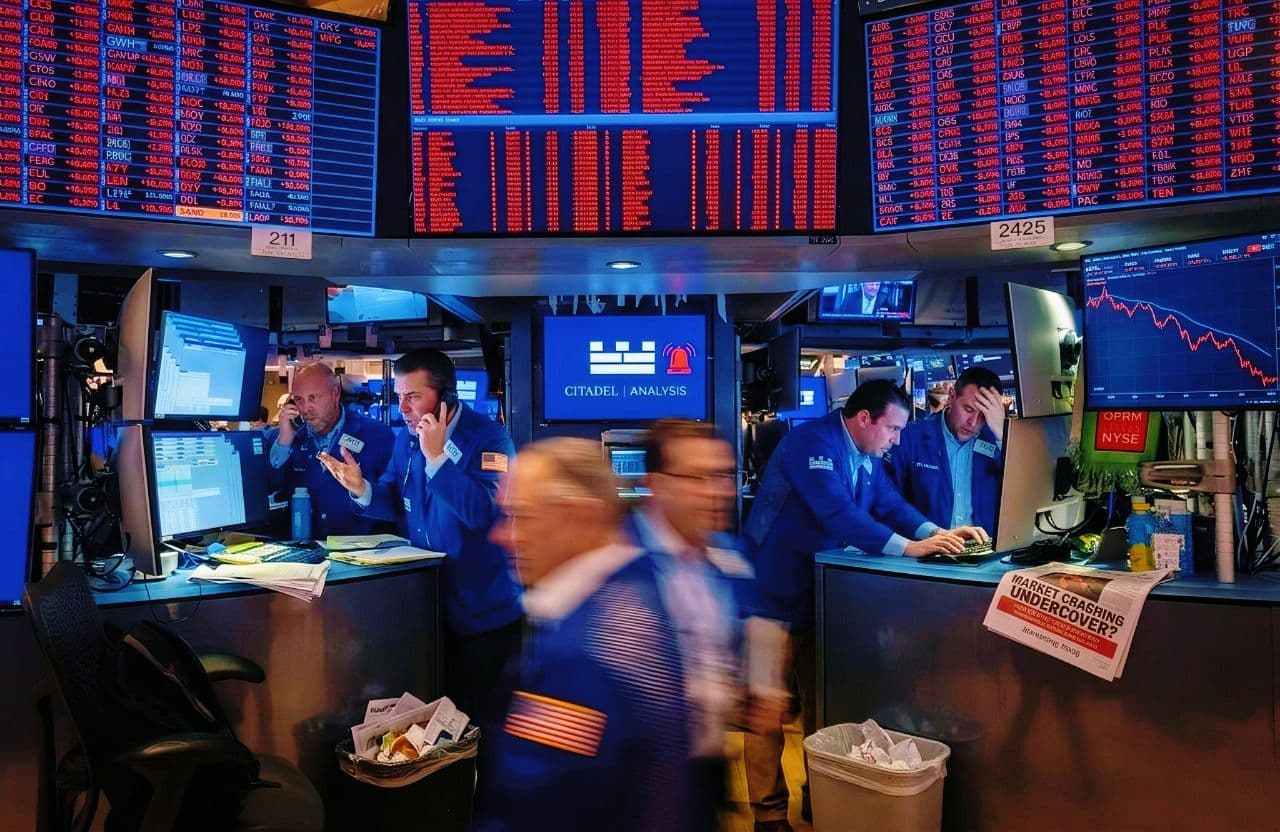
U.S. stock markets retreated Thursday as investors absorbed a wave of earnings reports from major tech firms. The Nasdaq dropped 1.6%, the S&P 500 fell 1%, and the Dow Jones Industrial Average slipped 0.2%. This pullback followed a day of fresh intraday highs, spurred by the Federal Reserve’s quarter-point rate cut. However, Fed Chair Jerome Powell tempered expectations, stating that another cut in December “is not a foregone conclusion.”
After Wednesday’s closing bell, Microsoft (MSFT), Meta Platforms (META), and Alphabet (GOOGL) released quarterly results. Alphabet stock climbed 2.5% to a record high after surpassing $100 billion in quarterly revenue for the first time. In contrast, Meta and Microsoft shares fell 11% and 3%, respectively, dragging down broader indexes.
Apple and Amazon Earnings Spark After-Hours Rally
Apple (AAPL) and Amazon (AMZN), two key players in the Magnificent Seven tech group, released earnings Thursday evening. Apple edged up 0.6% during regular trading to a record close, while Amazon slipped 3%. Both stocks rebounded in after-hours trading, driven by strong quarterly results and optimistic forward guidance, reinforcing investor confidence in cloud infrastructure and consumer tech demand.
Global trade developments added a layer of complexity to market sentiment. President Donald Trump met with Chinese President Xi Jinping in Busan, South Korea, announcing a 10% tariff cut on Chinese imports. In exchange, China pledged to curb fentanyl-related chemical exports, ease rare-earth restrictions, and ramp up purchases of U.S. soybeans moves that could reshape supply chains and commodity flows.
Bond and commodity markets signaled cautious optimism. The 10-year Treasury yield rose to 4.09%, while the U.S. dollar index ticked up 0.3% to 99.54. Bitcoin retreated to $106,500 after peaking at $111,800 earlier in the day. Gold futures climbed 0.9% to $4,040 per ounce, and WTI crude dipped 0.3% to $60.30 a barrel, reflecting mixed investor sentiment across asset classes.
In corporate news, Nvidia (NVDA) fell 2% despite becoming the first company to hit a $5 trillion market cap, as investors weighed valuation risks. Chipotle Mexican Grill (CMG) plunged 17% after slashing its comparable-restaurant sales outlook, citing reduced foot traffic among younger consumers. Sprouts Farmers Market (SFM) dropped over 25% following soft same-store sales and a weak forecast, signaling pressure in the grocery retail segment.
On the upside, Eli Lilly (LLY) rose nearly 4% after boosting its full-year outlook, driven by surging demand for its weight-loss drugs Zepbound and Mounjaro. Align Technology (ALGN) gained 5% after delivering stronger-than-expected quarterly results, supported by resilient demand in the dental tech sector.






Meta Platforms (META) led Thursday’s tech selloff with an 11.3% drop after missing earnings expectations due to a $16 billion one-time tax charge tied to the One Big Beautiful Bill. The company also raised its 2025 capital expenditure floor and warned of sharply rising costs, sparking investor concerns over its aggressive artificial intelligence spending.
Chipotle Mexican Grill (CMG) plunged 18.2%, the steepest decline in the S&P 500, after reporting weaker-than-expected Q3 revenue and cutting its full-year outlook for comparable-restaurant sales. The company cited reduced visits from 25- to 34-year-olds earning under $100,000 a key demographic shifting toward home-cooked meals amid economic headwinds.
EMCOR Group (EME) fell 16.6% despite beating top- and bottom-line estimates. Investors reacted negatively to shrinking operating margins and a narrowed full-year forecast, signaling caution around the mechanical and electrical construction sector.
eBay (EBAY) dropped 15.9% after issuing soft holiday quarter guidance, even though it beat Q3 revenue and profit targets. The e-commerce platform flagged slowing import volumes from key markets following the removal of the de minimis exemption, which had previously allowed duty-free shipments under a certain value.
On the upside, C.H. Robinson Worldwide (CHRW) soared 19.7%, topping the S&P 500. The logistics firm credited AI automation for streamlining operations, reducing costs, and improving shipment tracking. The company also reported a 10% year-over-year drop in headcount, reflecting its tech-driven efficiency gains.
Cardinal Health (CAH) jumped 15.4% after beating fiscal Q1 estimates and raising its full-year guidance. Strong demand for high-margin specialty pharmaceuticals and branded medications fueled the distributor’s performance, reinforcing its position in the healthcare supply chain.
Moderna (MRNA) surged 13.9% amid speculation of a major partnership or acquisition deal with a large pharmaceutical company. The vaccine maker is seeking strategic options as COVID-19 vaccine sales decline, though no formal details have been disclosed.






Apple Stock Surges on Record iPhone Sales and Holiday Forecast
Apple (AAPL) extended its rally Thursday, climbing over 3% in after-hours trading after beating Wall Street expectations and forecasting its strongest holiday season yet. CEO Tim Cook projected 10% to 12% revenue growth for the December quarter, citing momentum from the iPhone 17 launch and record services revenue.
In its fiscal Q4 report, Apple posted earnings per share of $1.85 and revenue of $102.47 billion, up 8% year-over-year. Services revenue hit a new high of $28.75 billion, while iPhone sales rose 6% to $49.03 billion, marking a September-quarter record for the product line.
Cook’s bullish outlook followed a meeting with President Donald Trump in Tokyo, where trade policy and tech expansion were discussed. The company’s strong performance and guidance pushed its market cap above $4 trillion, securing its spot as the world’s second-most-valuable company behind AI leader Nvidia (NVDA).






Amazon Stock Surges on Cloud Revenue and AI Expansion Forecast
Amazon (AMZN) shares soared over 13% in after-hours trading Thursday, hitting $252 and marking their first all-time high since February. The e-commerce and cloud computing leader posted third-quarter earnings of $1.95 per share, up from $1.43 a year earlier, and well above analyst expectations. Revenue climbed 13% year-over-year to $180.2 billion, driven by a 20% surge in Amazon Web Services sales, which reached $33 billion.
CEO Andy Jassy credited artificial intelligence for accelerating performance across Amazon’s operations, highlighting strong demand for AI infrastructure and core cloud services. He emphasized the company’s focus on scaling capacity to meet enterprise needs.
Amazon projected fourth-quarter revenue between $206 billion and $213 billion, outpacing Wall Street’s $208.66 billion estimate. Despite the upbeat forecast, the company announced plans to cut approximately 14,000 jobs its largest layoff round to date as part of a broader cost-trimming strategy amid heavy AI investment.
Year-to-date, Amazon shares had gained less than 2% through Thursday’s close, with investor sentiment previously dampened by tariff concerns and slower cloud growth. This earnings beat and bullish guidance signal renewed momentum heading into the holiday quarter.






Holiday Retail Spending Expected to Rise Despite Inflation and Job Market Concerns
Even with rising inflation, a sluggish labor market, and lingering trade tensions, American consumers are still expected to spend aggressively this holiday season. Economists say the emotional toll of economic uncertainty may actually fuel spending, as households seek comfort and normalcy through retail purchases.
October’s consumer confidence survey showed a dip in sentiment, largely tied to recent tariff announcements and employment worries. The Conference Board’s report highlighted concerns about future wages, job availability, and overall business conditions. Despite this, Wells Fargo projects holiday retail sales will grow between 3.5% and 4% compared to last year.
Economists argue that sentiment surveys don’t always predict actual spending behavior. In fact, they suggest that the stress of inflation and political gridlock may push consumers toward “retail therapy” as a coping mechanism. This behavioral trend could drive stronger-than-expected sales across retail categories, especially in seasonal goods and comfort-driven purchases.






Starbucks Sales Rebound as Loyalty Program and Turnaround Strategy Gain Traction
Starbucks is showing signs of a successful comeback. After a prolonged slump, the coffee giant reported year-over-year growth in same-store sales during its fiscal fourth quarter, marking a key milestone in its year-long turnaround effort. CEO Brian Niccol confirmed that the “Back to Starbucks” campaign is driving renewed engagement, especially among Starbucks Rewards members and occasional customers.
The company’s strategy focuses on reactivating its core customer base while attracting new foot traffic through targeted promotions and operational improvements. Executives highlighted that the recent uptick in sales reflects growing momentum and validates the effectiveness of the brand’s revamp.
Starbucks Sales Momentum Builds as U.S. Transactions Turn Positive
Starbucks reported a key shift in performance, with U.S. comparable sales turning positive in September and maintaining growth through October. CEO Brian Niccol credited transaction volume for the rebound, noting that the company’s turnaround strategy is gaining traction across its core markets.
In North America, same-store sales were flat for the quarter ending September 28, breaking a six-quarter streak of declines. Globally, Starbucks posted a 1% year-over-year increase in same-store sales, marking the first positive result after an extended slump. The data signals early success for the brand’s operational revamp and loyalty-driven engagement strategy.






CH Robinson Stock Soars on AI-Driven Logistics Efficiency and Upgraded Profit Forecast
C.H. Robinson Worldwide (CHRW) surged nearly 20% to a record high Thursday, leading the S&P 500 after posting stronger-than-expected Q3 earnings and raising its fiscal 2026 profit outlook. The logistics and freight forwarding firm reported adjusted earnings of $1.40 per share, beating analyst estimates of $1.30 despite revenue falling 11% year-over-year to $4.14 billion.
CEO Dave Bozeman attributed the revenue dip to global transportation headwinds but emphasized the company’s scalable cost-to-serve model and its expanding use of artificial intelligence. He highlighted automation across the quote-to-cash cycle as a key driver of future efficiency and margin improvement.
CFO Damon Lee reinforced the bullish outlook, citing disciplined execution and strategic momentum. The company raised its 2026 operating income forecast by $50 million to a range of $965 million to $1.04 billion, with the lower end implying $6 in earnings per share well above the $5.62 consensus.






Apple Earnings Preview: iPhone 17 Sales Momentum Fuels Holiday Forecast Optimism
Apple (AAPL) is scheduled to release its fiscal Q4 earnings after the market closes today, with analysts anticipating strong performance across revenue and profit metrics. Early signs of robust demand for the iPhone 17 lineup have prompted JPMorgan and Morgan Stanley to raise their expectations, suggesting Apple could deliver an upbeat outlook for the holiday quarter.
Wall Street is watching closely for confirmation that iPhone sales and services revenue are accelerating, which could reinforce Apple’s position heading into the peak retail season. Analysts expect the results to reflect solid consumer demand and strategic pricing, potentially driving Apple stock higher in the short term.
Apple Stock Eyes Breakout as AI Features and Foldable iPhone Rumors Fuel Investor Optimism
Apple’s upcoming earnings call could be a catalyst for a major stock move, with traders pricing in a potential 3% swing either way. Analysts say investor enthusiasm is building around anticipated artificial intelligence upgrades and early signals of a foldable iPhone launch in 2026 two developments that could reshape Apple’s product roadmap and boost long-term growth.
So far in 2025, Apple shares have gained about 8%, trailing the S&P 500’s 17% rise. The stock spent part of the year in negative territory due to concerns over its AI strategy. However, recent momentum has been fueled by strong iPhone 17 demand, improved trade relations with the Trump administration, and easing tariff pressures factors that have helped Apple regain investor confidence heading into the holiday season.






Amazon Earnings Preview: Cloud Revenue and AI Investment in Focus
Amazon (AMZN) is set to release its third-quarter earnings after the market closes Thursday, with analysts projecting revenue of $178 billion up 12% year-over-year and adjusted earnings of $1.95 per share. While e-commerce remains Amazon’s core business, investor attention is locked on its cloud segment and artificial intelligence infrastructure spending.
Amazon Web Services (AWS) posted 17.5% growth in Q2, beating internal targets but trailing the blowout cloud results from Microsoft (MSFT) and Alphabet (GOOG). With both rivals again exceeding expectations this week, Amazon faces pressure to deliver a standout performance in cloud and AI to maintain competitive momentum.
Amazon Capex Forecast in Spotlight as AI Infrastructure Spending Accelerates
Investors are closely watching whether Amazon (AMZN) will raise its capital expenditures guidance following similar moves by Alphabet and Meta Platforms (META). In Q2, Amazon reported capex of $32.2 billion roughly 25% above analyst expectations underscoring its aggressive push into artificial intelligence and cloud infrastructure.
Wedbush analysts project Amazon’s full-year capital spending to reach $119 billion, signaling a 10% increase between the first and second halves of 2025. With rivals ramping up AI investments, Amazon’s updated guidance could serve as a key signal of its competitive positioning in the cloud and AI infrastructure race.






Core Scientific Stock in Focus After Shareholders Reject $9B CoreWeave Merger
Core Scientific (CORZ) announced Thursday that its shareholders voted against the proposed $9 billion all-stock acquisition by CoreWeave, signaling concerns over valuation. The decision came during a special meeting where the merger agreement failed to secure the required approval, halting plans for consolidation between the data center and AI infrastructure firms.
The rejection reflects investor sentiment that CoreWeave’s offer may have undervalued Core Scientific’s long-term potential, especially amid rising demand for GPU hosting and AI compute services.
Core Scientific Stock Climbs as Shareholders Reject $9B CoreWeave Merger Offer
CoreWeave’s proposed $9 billion all-stock acquisition of Core Scientific (CORZ) was rejected by shareholders Thursday, following criticism from Institutional Shareholder Services (ISS) that the offer undervalued the company. ISS noted that “the market believes the company’s value is greater than the offer,” signaling investor confidence in Core Scientific’s standalone potential.
After the vote, Core Scientific shares rose 4% and are now up over 50% year-to-date, reflecting bullish sentiment around its data center and GPU hosting business. Meanwhile, CoreWeave (CRWV) which rents access to Nvidia (NVDA) GPUs saw its stock fall 5%, though it remains up more than 3x since its IPO in March.






Alphabet Stock Hits All-Time High on $100B Revenue, Cloud and AI Surge
Alphabet (GOOGL) soared to a record high Thursday after reporting Q3 earnings that beat Wall Street expectations, with revenue surpassing $100 billion for the first time. The jump was fueled by a 34% year-over-year surge in Google Cloud revenue, as enterprise customers ramp up AI infrastructure and data analytics investments.
Legacy ad revenue also rose 13%, signaling resilience in the digital ad market despite economic headwinds. Alphabet raised its full-year capital expenditure forecast to $91 $93 billion, citing booming demand for AI capabilities across its platforms.
Alphabet Stock Leads Magnificent Seven with 50% YTD Gain, Breaks Out on AI and Cloud Momentum
Alphabet (GOOGL) shares surged nearly 5% to $288, extending their lead as the top-performing Magnificent Seven stock of 2025 just ahead of AI powerhouse Nvidia (NVDA). The rally follows strong Q3 earnings, a breakout from a bullish flag pattern, and investor optimism around Alphabet’s AI infrastructure, cloud growth, and resilient ad business.
The stock’s technical setup shows confirmed momentum, but its relative strength index (RSI) is now in overbought territory, suggesting potential for short-term consolidation or profit-taking. Still, Alphabet’s antitrust win securing Chrome browser dominance and its $100B+ quarterly revenue milestone continue to fuel long-term bullish sentiment.






Fox Stock Jumps on Strong Earnings, Driven by Tubi and NFL Ad Growth
Fox Corp. (FOX) surged 6.5% Thursday after reporting fiscal Q1 earnings that beat expectations, fueled by strong performance in its Tubi streaming platform and NFL-driven sports advertising. The company posted adjusted earnings of $1.51 per share on $3.74 billion in revenue, topping analyst forecasts of $1.08 and $3.57 billion.
Advertising revenue rose 6% year-over-year, supported by higher pricing in news and sports, despite a decline in political ad spending. CEO Lachlan Murdoch highlighted growing audience engagement across Fox’s portfolio, reinforcing advertiser demand in entertainment, live sports, and AVOD.
With this rally, Fox shares are now up over 25% year-to-date, reflecting investor confidence in its diversified media strategy.






Boeing Stock Slides Again on $4.9B 777X Charge, Still Up 17% YTD
Boeing (BA) led Dow decliners for the second consecutive day, falling 3.3% Thursday after reporting weaker-than-expected earnings and a $4.9 billion charge tied to delays in 777X certification. The charge weighed heavily on investor sentiment, extending the stock’s recent pullback.
Despite the setback, Boeing shares remain up 17% year-to-date outpacing the Dow’s 12% gain driven by earlier momentum in commercial aircraft demand and defense contracts. The latest dip reflects near-term pressure as the company navigates regulatory hurdles and adjusts its delivery timeline.






Eli Lilly Stock Pops on Blowout Mounjaro and Zepbound Sales, Full-Year Outlook Raised
Eli Lilly (LLY) surged 4% in premarket trading Thursday after reporting Q3 earnings that crushed expectations, driven by explosive growth in its weight-loss drugs Mounjaro and Zepbound. Revenue jumped 54% year-over-year to $17.60 billion, with adjusted EPS of $7.02 well above analyst forecasts.
Mounjaro sales more than doubled to $6.52 billion, while Zepbound nearly tripled to $3.59 billion, both beating Wall Street estimates. In response, Lilly raised its full-year revenue guidance to $63.0 $63.5 billion and boosted its EPS outlook to $23.00 $23.70.
Despite trailing the S&P 500’s 17% gain with just 5% YTD growth entering Thursday, this earnings beat and bullish guidance signal renewed momentum for the pharma giant.






Chipotle Stock Drops 17% as Inflation Hits Young Diners, Sales Outlook Cut
Chipotle Mexican Grill (CMG) plunged 17% in premarket trading Thursday after slashing its full-year comparable-restaurant sales forecast. The fast-casual chain now expects sales to decline in the low-single-digit range, down from its previous “about flat” guidance, citing inflationary pressure on core customers aged 25 34 earning under $100K.
Q3 revenue rose 7.5% year-over-year to $3.00 billion but missed the $3.06 billion consensus. Adjusted earnings of $0.29 per share met expectations. CEO Scott Boatwright noted a “significant pullback” in visits from younger consumers, who are increasingly opting for groceries and meals at home amid economic strain.






AI Bubble Risks Tied to Fed Policy, Not Just Silicon Valley Hype
Wall Street’s growing concern over a potential AI bubble is shifting focus from tech firms to the Federal Reserve. Analysts argue that monetary policy not just investor enthusiasm could determine whether the AI boom inflates further or bursts. Jeff deGraaf of Renaissance Macro Research noted that major historical bubbles, including Dotcom, U.S. housing, and Japan’s asset bubble, all collapsed during or shortly after central bank rate hikes.
With the Fed currently in a rate-cutting cycle, some believe it may be difficult to deflate an AI-driven market surge. Liquidity from looser monetary policy could continue fueling valuations, especially as companies pour billions into AI infrastructure and cloud expansion.
AI Bubble Warning Grows as Market Concentration and Liquidity Risks Mount
Artificial intelligence has driven stocks to record highs in 2025, but signs of froth are emerging. Circular deals involving Nvidia (NVDA) and OpenAI are drawing comparisons to the vendor financing tactics of the 1990s, raising concerns about inflated valuations. The Magnificent Seven now make up 35% of the S&P 500, underscoring extreme market concentration, while the index’s price-to-earnings ratio is approaching Dotcom-era levels.