U.S. Markets Slide: Dow Drops 600 Points, Bitcoin Near $63K
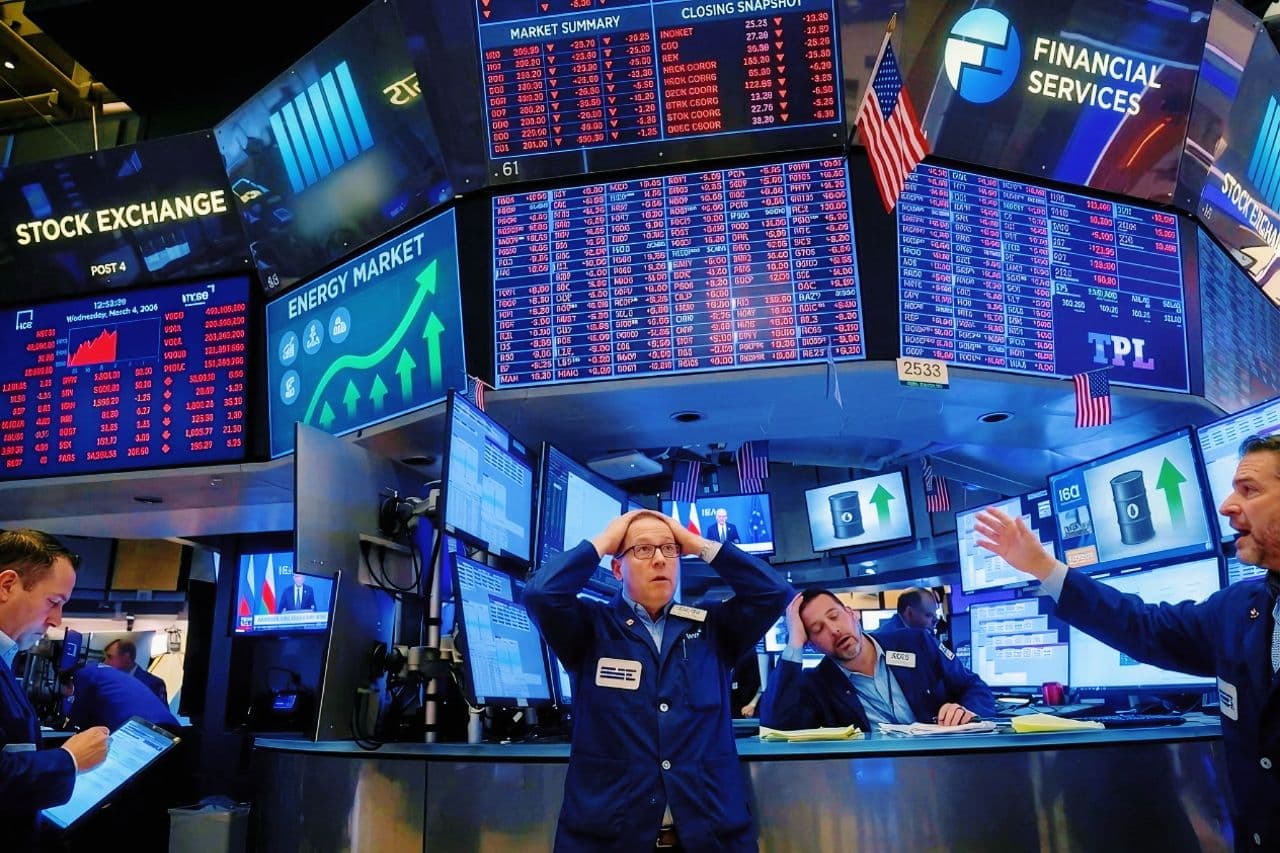
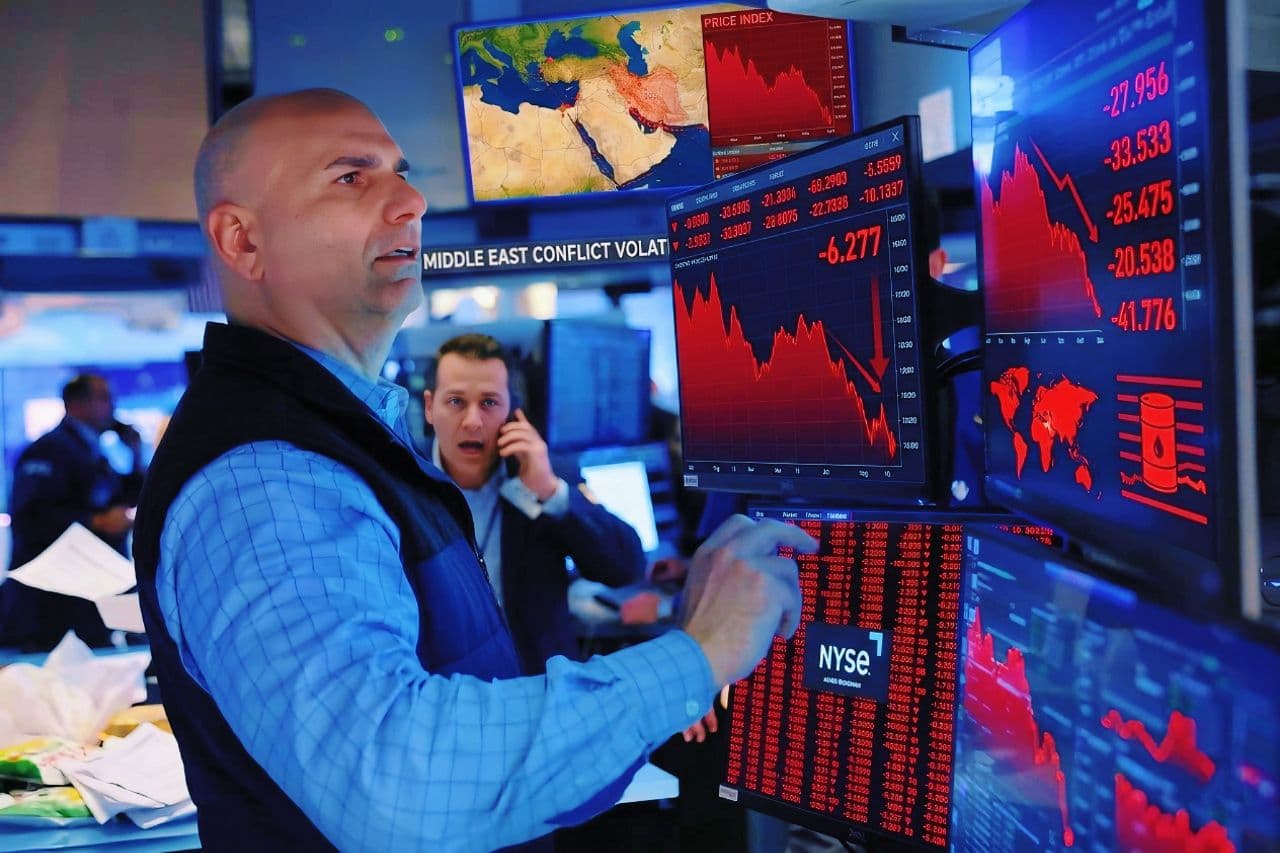
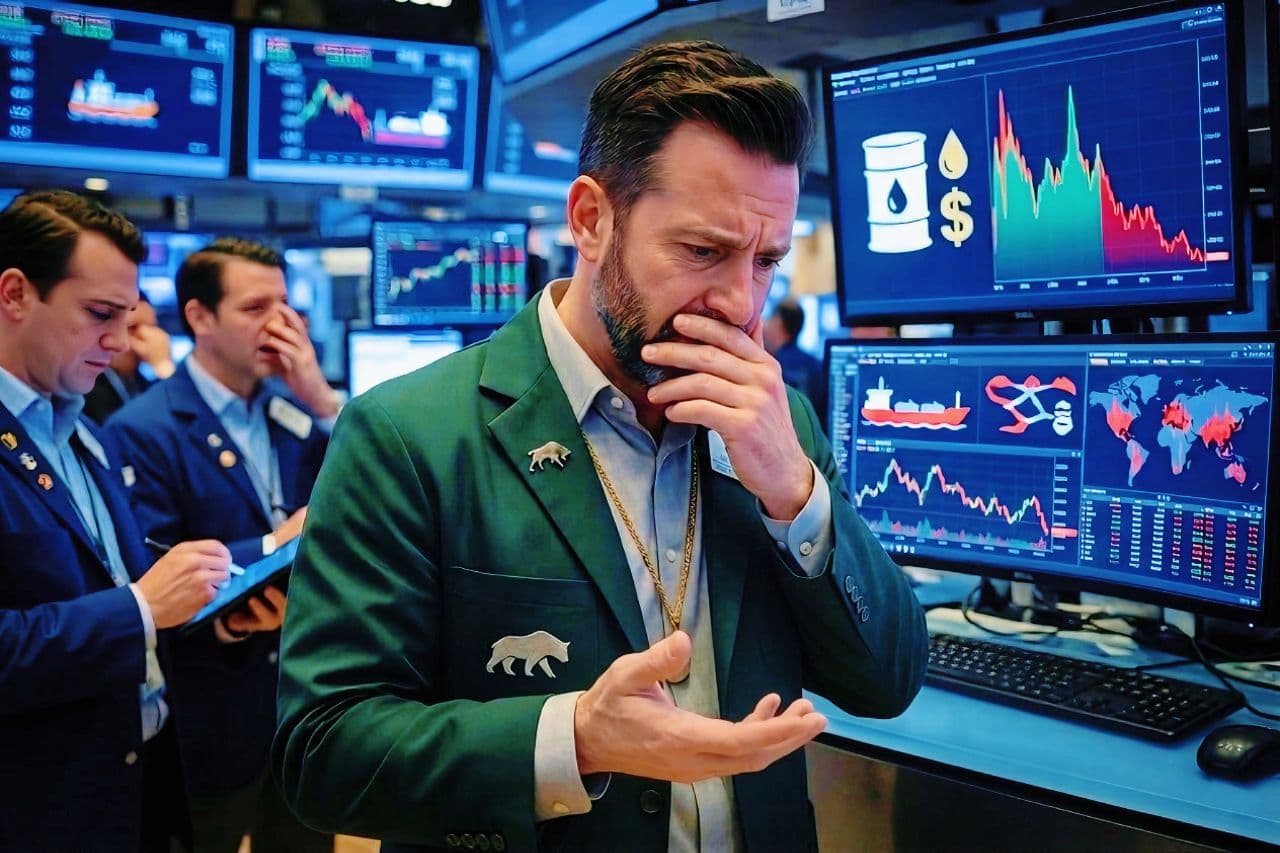
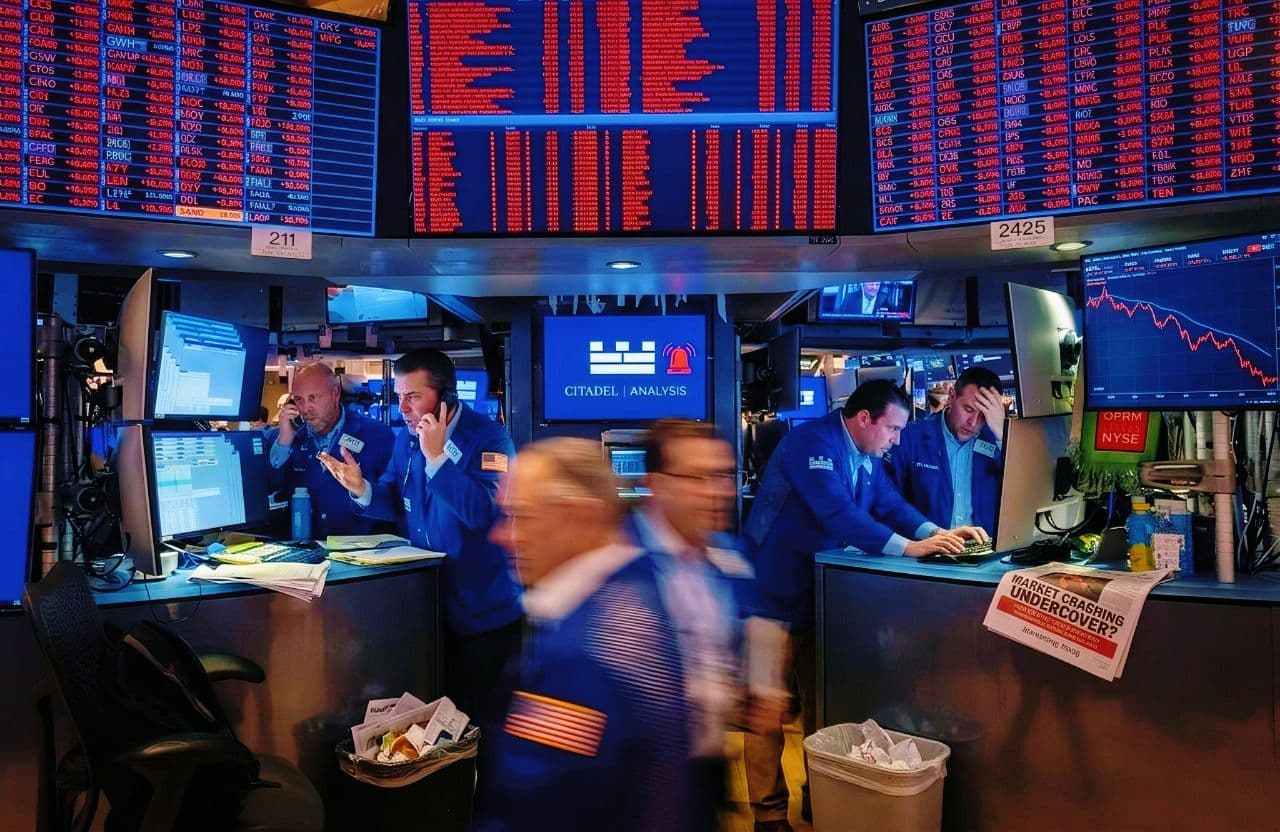
- Major Indexes Slide: The Dow Jones fell nearly 600 points (-1.2%), while the Nasdaq dropped 1.6% and the S&P 500 lost 1.2%, marking their third straight losing session.
- Major Indexes Slide: The Dow Jones fell nearly 600 points (-1.2%), while the Nasdaq dropped 1.6% and the S&P 500 lost 1.2%, marking their third straight losing session.
- Earnings Pressure: Big Tech and consumer names weighed heavily—Qualcomm sank 8.5% on weak guidance, Peloton plunged 28%, Estee Lauder fell 19%, Snap dropped 12%, and Microsoft slid 5%.
- Bright Spots: McKesson (+17%), Tapestry (+10%), Hershey (+9%), and Arm Holdings (+6%) bucked the trend with strong earnings.
- Crypto Crash: Bitcoin tumbled to near $63,000, its lowest since October 2024, losing about 25% this week. Strategy (MSTR) stock fell 17% ahead of earnings.
- Commodities Retreat: Silver futures plunged 13% to ~$73, gold slipped 2% to ~$4,835, and crude oil dropped nearly 3% to $63.30 a barrel.
- Rates & Dollar: The 10-year Treasury yield eased to 4.20%, while the U.S. dollar index rose 0.3% to 97.88.
Key Takeaways
U.S. Markets Tumble: Dow Sheds 600 Points, Nasdaq Falls, Bitcoin Near $63K
Major U.S. stock indexes closed sharply lower Thursday as risk-off sentiment gripped markets. The Nasdaq dropped 1.6% and the S&P 500 fell 1.2%, marking their third straight losing session. The Dow Jones Industrial Average slid nearly 600 points, or 1.2%. Investors digested weak labor data, with jobless claims rising to 231,000 and January layoffs hitting 108,000 the highest for that month since 2009.
Big Tech earnings added pressure. Alphabet slipped 0.8% despite strong results, as its 2026 capex outlook doubled year-over-year, fueling concerns about AI spending. Qualcomm sank 8.5% after missing forecasts due to a global memory shortage. Peloton plunged 28%, Estee Lauder fell 19%, Snap dropped 12%, and Shell declined 5%. Meanwhile, McKesson surged 17%, Tapestry jumped 10%, Hershey gained 9%, and Arm Holdings rose nearly 6%.
Amazon shares fell 4.4% ahead of earnings, while Microsoft dropped 5%, leading losses among the Magnificent Seven. Bitcoin continued its steep decline, sliding to near $63,000 its lowest since October 2024 down 25% this week. Strategy (MSTR) sank 17% ahead of earnings. Silver futures plunged 13% to $73, gold slipped 2% to $4,835, crude oil fell 3% to $63.30 a barrel, and the 10-year Treasury yield eased to 4.20%. The U.S. dollar index rose 0.3% to 97.88.


Yum! Brands announced plans to shut 250 of its 20,000 domestic Pizza Hut restaurants in the first half of the year, citing a strategic review of the brand. While Taco Bell and KFC continue to perform strongly, Pizza Hut has struggled, prompting Yum! to consider a possible sale. Executives declined to provide details about the chain’s future but projected a 15% drop in core operating profit in the first quarter as the company invests in marketing and modernization efforts.
The company’s CFO, Ranjith Roy, highlighted the “Hut Forward” program, designed to accelerate Pizza Hut’s turnaround. The initiative includes new marketing campaigns, updated technology, revised franchise agreements, and targeted closures of underperforming units. Yum! has not disclosed which locations will be affected, leaving franchisees and customers awaiting further clarity.


Pandora Shifts Strategy as Silver Prices Surge, Launches Platinum-Plated Jewelry
Pandora, the world’s largest jeweler, announced Wednesday it will introduce platinum-plated jewelry this year to reduce reliance on silver, which has soared in price over the past 12 months. CEO Berta de Pablos-Barbier said the move allows the company to adapt to rising raw material costs while offering consumers durable, everyday luxury options.
Precious metals have been volatile, with tariffs, geopolitical tensions, and a weaker U.S. dollar fueling demand for safe-haven assets. Silver prices skyrocketed last year, climbing 140%, while gold rose 70%. This week’s sell-off saw silver plunge 13% to $77.50 an ounce and gold slip 2% to $4,880, underscoring the unpredictable swings that pushed Pandora to diversify its portfolio.


Young Americans Reenter Housing Market as Homeownership Rises, But Challenges Persist
Homeownership among Americans under 35 has climbed to its highest level in two years, signaling a rebound after months of bleak headlines about affordability. Census Bureau data shows that 37.9% of households headed by someone under 35 owned their home in the fourth quarter of 2025, up from 36.3% a year earlier the lowest level in five years. Analysts had expected further declines, making the uptick a surprise.
Easing mortgage rates and slightly softer home prices have helped younger buyers step back into the market. Still, nearly two-thirds of young households remain locked out of homeownership, with the rate well below the 43.6% peak seen during the mid‑2000s housing bubble. The gap highlights both progress and persistent barriers facing millennials and Gen Z buyers.


U.S. Job Market Freeze Deepens: Layoffs Surge, Openings Hit 5-Year Low
The U.S. labor market showed clear signs of strain this winter as layoffs rose and job openings fell to their lowest level since 2020. The Bureau of Labor Statistics reported openings dropped to 6.5 million in December, down from 6.9 million in November. Meanwhile, Challenger, Gray & Christmas data revealed 108,000 job cuts in January the highest for that month since 2009 alongside the weakest hiring activity since the firm began tracking.
Economists point to tariffs, immigration restrictions, and the growing impact of AI software as key forces dragging down hiring. While the layoff rate remains relatively low, experts warn that risks are mounting. Cory Stahle of Indeed noted the labor market “spent much of 2025 bending, but not breaking,” but now sits dangerously close to a breaking point. Employers have yet to resort to mass layoffs, but the freeze underscores mounting pressure on both workers and businesses.


Alphabet Stock Falls as AI Spending Doubles, Market Value Drops $170B
Alphabet shares slid more than 5% Thursday after the Google and YouTube parent projected $175 $185 billion in capital expenditures for 2026, nearly double the $91.45 billion spent last year. The announcement triggered a sharp sell-off, erasing $170 billion in market value and pulling Alphabet’s capitalization back below $4 trillion. Despite the drop, shares remain up more than 60% over the past 12 months, though most of this year’s gains have now been wiped out.
Wall Street analysts remain divided. While investors expressed concern over the scale of spending, JPMorgan, Citi, and Wedbush raised their price targets following Alphabet’s earnings report, citing strong signals of AI demand. Citi analysts acknowledged the risks but argued that Google’s aggressive investment is necessary to expand product capacity and meet surging demand in artificial intelligence.


Consumer Staples Lead S&P 500 Gains as Hershey, Costco, Coca-Cola Rally
On a rough day for the broader market, consumer staples stood out as the only S&P 500 sector trading higher Thursday morning, climbing 0.7%. The sector’s resilience contrasted sharply with declines across other industries, including consumer discretionary, which fell nearly 3%.
Hershey surged 8% after posting stronger-than-expected fourth-quarter earnings and offering a bullish 2026 outlook. Costco gained nearly 2% and Coca-Cola rose 1.5%, helping the sector buck the downward trend that pulled most of the index lower.


Fed Struggles With Lingering Inflation as Rates Stay Steady
The Federal Reserve continues to wrestle with the aftershocks of the inflation surge that began in 2021, which still weighs on household budgets and policy decisions. Despite progress December’s Consumer Price Index rose 2.7%, down from the 9% peak in 2022 inflation has remained above the Fed’s 2% target for nearly five years. At its latest meeting, officials held interest rates steady after three consecutive cuts, citing concerns that inflation remains stubbornly elevated.
Chair Jerome Powell has emphasized the Fed’s commitment to preventing inflation from becoming entrenched, while policymakers debate whether rising prices or joblessness pose the greater risk to the economy. Richmond Fed President Thomas Barkin summed up the challenge: “While we’ve made a lot of progress on inflation, it still remains above our target. That’s been the case since 2021.” The balancing act between price stability and employment continues to shape the Fed’s cautious approach to rate cuts in the months ahead.


Qualcomm Stock Plunges as Global Memory Shortage Hits Smartphone Market
Qualcomm shares dropped more than 9% Thursday after the chipmaker issued a disappointing quarterly outlook and warned of tightening memory supply. The company said the shortage is weighing on smartphone demand and could push device prices higher in the months ahead.
With the latest decline, Qualcomm has lost about 20% of its market value since the start of the year. The chipmaker, whose processors power smartphones, laptops, and cars, expects near-term weakness in the smartphone market as manufacturers struggle with component shortages.


Bitcoin Slides Below $70K as Strategy Earnings Take Center Stage
Bitcoin’s price dropped under $70,000 Thursday, marking its lowest level since late 2024 and intensifying investor focus on Strategy (MSTR), formerly MicroStrategy. The cryptocurrency, with a market capitalization of about $1.39 trillion, has retreated sharply from its record highs of $125,000 last fall. The sell-off reflects a broader shift away from risk assets, with investors reallocating toward defensive plays amid heightened volatility.
Market watchers remain split on what comes next. Bulls continue to highlight bitcoin’s long-term potential for recovery and parabolic gains, while bears warn of deeper losses ahead. The trading slump has weighed not only on crypto but also on related equities. Strategy, one of the largest corporate bitcoin holders, is set to report quarterly earnings after today’s close. Earlier this week, the company disclosed another bitcoin purchase, bringing its average acquisition price to roughly $76,000 per coin.


Ciena Joins S&P 500 as Dayforce Exits After Acquisition
Ciena (CIEN) is set to move into the S&P 500 next Monday, Feb. 9, following its promotion from the S&P MidCap 400. The networking systems company will replace Dayforce, which was acquired and taken private by Thoma Bravo in a deal that closed Wednesday. The announcement came after markets closed yesterday from S&P Dow Jones Indices.
The reshuffling will also see Arrowhead Pharmaceuticals (ARWR) replace Ciena in the S&P MidCap 400, while ADT (ADT) will move into the S&P SmallCap 600 to replace Arrowhead. In early trading Thursday, Ciena shares slipped 1%, while ADT gained about 3% and Arrowhead rose 1%.


Treasury Secretary Defends Tariffs, Says U.S. Manufacturing Will Rebound
Treasury Secretary Scott Bessent told Congress Wednesday that critics of the administration’s tariffs should give the policy more time to deliver results. Speaking before the House Financial Services Committee, Bessent addressed concerns about the president’s economic strategy, including tariffs and tensions with the Federal Reserve. He argued that while job losses have been reported, new factories are breaking ground and will eventually strengthen domestic manufacturing.
Lawmakers pressed Bessent on the impact of sweeping import taxes, with Rep. Ritchie Torres noting that thousands of manufacturing jobs have been lost each month since the tariffs were imposed. Bessent countered that the tariffs are designed to shift the balance toward U.S. production, and that the benefits will materialize once new facilities begin operations. The testimony highlighted the divide between supporters who see tariffs as a long-term investment in industrial growth and critics who view them as damaging to employment in the short term.


Peloton Stock Drops on Weak Earnings and Lower Guidance
Peloton Interactive (PTON) shares fell 9% in premarket trading Thursday after the connected fitness company reported weaker-than-expected holiday quarter results. The firm posted a fiscal 2026 second-quarter loss of 9 cents per share on $656.5 million in revenue, down 3% year-over-year. Analysts had forecast a smaller loss of 6 cents per share on $677.2 million in revenue, highlighting the company’s ongoing struggle to meet expectations.
Looking ahead, Peloton projected current-quarter revenue of $624 million and full-year revenue between $2.40 billion and $2.44 billion, both below consensus estimates of $637 million and $2.48 billion. Despite launching a refreshed product line and raising subscription and hardware prices in October, the company’s outlook remains cautious. CEO Peter Stern emphasized growth opportunities in the global wellness economy, citing strong engagement with Peloton IQ and momentum in its commercial business unit.


Amazon, UPS Announce Massive Job Cuts as AI Debate Intensifies
The U.S. labor market entered 2026 under pressure, with major corporations announcing sweeping layoffs that have rattled workers and investors alike. Amazon plans to cut 16,000 corporate roles, UPS is eliminating 30,000 positions after a larger reduction last year, Dow is slashing 4,500 jobs or 12% of its workforce and Home Depot and Nike are trimming hundreds more. These moves underscore the fragility of the job market and raise questions about the forces driving such widespread cuts.
For many employees, the concern isn’t just the scale of layoffs but whether artificial intelligence is to blame. A Reuters/Ipsos poll found that 71% of Americans fear AI could permanently replace their jobs. While AI is frequently cited in corporate earnings calls and restructuring announcements, economists argue the picture is more complex. Tariffs, slowing demand, and broader economic pressures are also weighing heavily on hiring decisions, suggesting that automation is only part of the story.


The Bottom Line
Markets closed sharply lower as risk-off sentiment dominated trading. The Dow shed nearly 600 points, the Nasdaq fell 1.6%, and the S&P 500 dropped 1.2%. Bitcoin plunged to near $63,000, down 25% this week, while silver and gold also tumbled. Weak labor data, rising layoffs, and cautious corporate earnings added to investor anxiety.
The takeaway: Wall Street is grappling with a mix of disappointing tech results, inflation concerns, and commodity volatility. Defensive sectors like consumer staples offered rare gains, but overall sentiment remains fragile, with investors bracing for more turbulence ahead.