Iran Conflict Sparks Market Volatility, Stocks Rebound From Early Lows
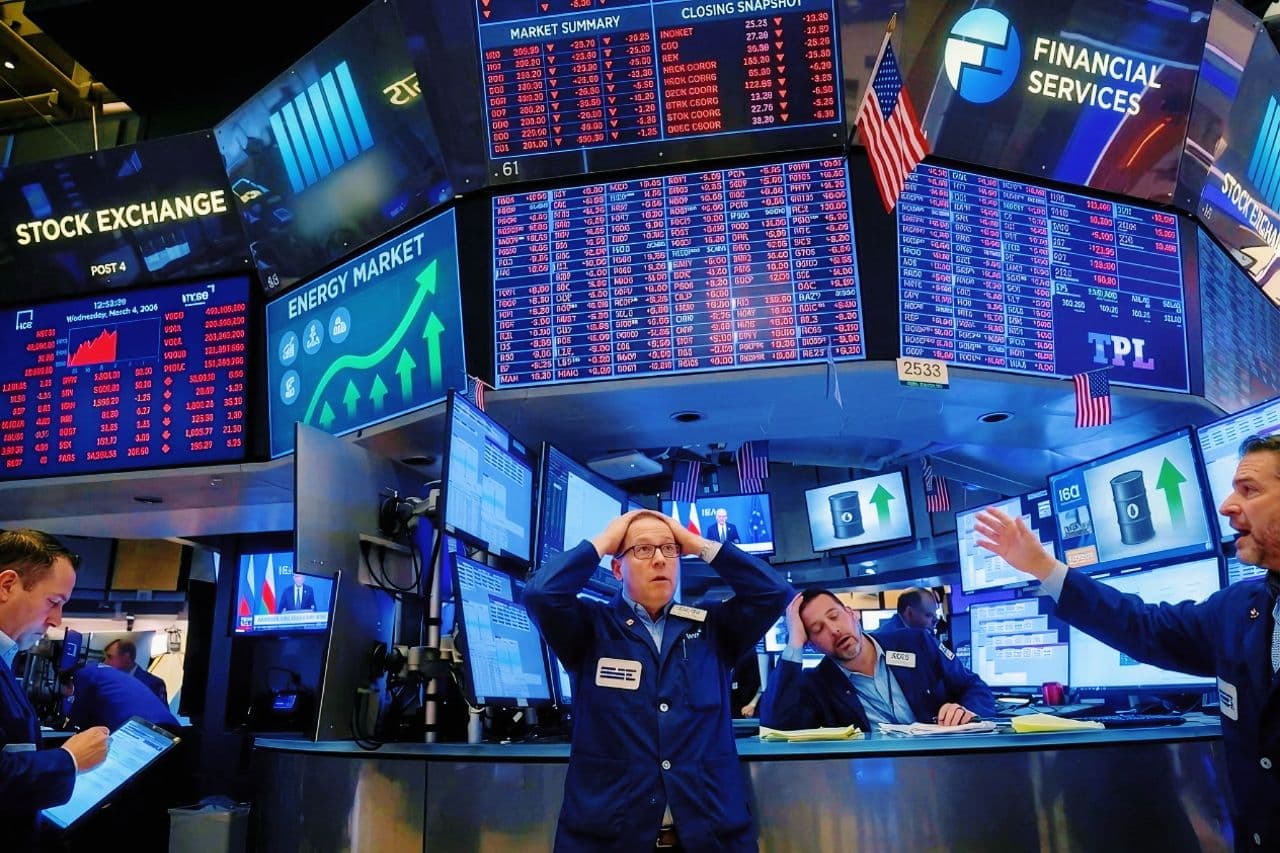
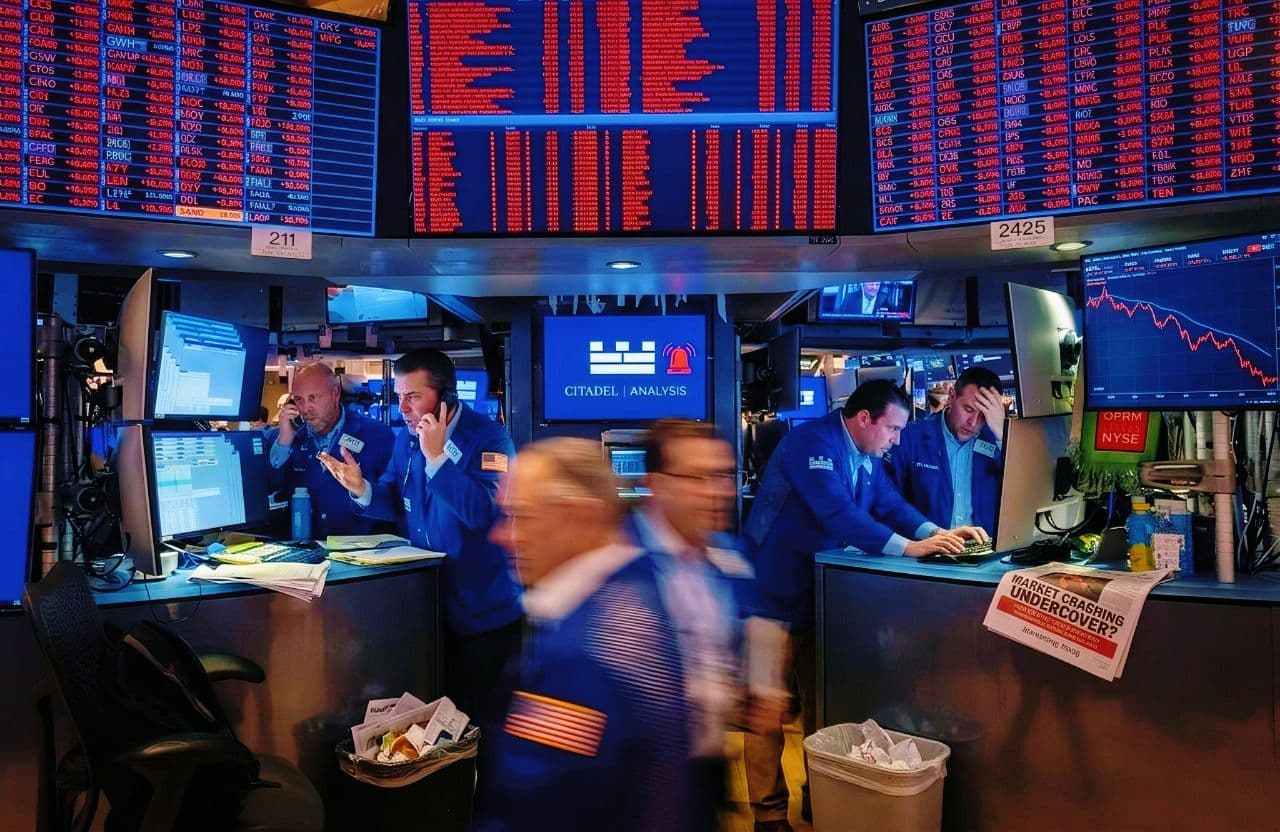
- Major U.S. stock indexes fell sharply on Tuesday as the Iran conflict escalated, but they closed well off their early lows after President Donald Trump announced the U.S. Navy could escort tankers through the Strait of Hormuz if necessary. The Dow shed 400 points, finishing down 0.8% after being down more than 1,200 points earlier in the session. The S&P 500 and Nasdaq also closed lower, down 0.9% and 1.0% respectively, reflecting investor unease but not panic.
- Market analysts noted that the declines were not severe enough to suggest investors expect a long-term crisis. Instead, traders appear to be adjusting expectations from a short-lived conflict to one that could last several weeks. Volatility remains high, with the CBOE Volatility Index (VIX), Wall Street’s “fear gauge,” jumping nearly 20% this week, underscoring investor uncertainty.
- Energy markets were also in focus. West Texas Intermediate crude futures rose 3.6% to $73.80 a barrel, paring bigger gains after Trump’s comments. Oil prices had surged 8% on Monday amid fears Iran would close the Strait of Hormuz. Shares of major oil companies finished mixed, while defense contractors and airlines also saw varied performance as investors weighed geopolitical risks.
- Other sectors showed resilience. Target stock jumped nearly 7% after issuing strong profit guidance, while Plug Power surged 22% and Best Buy rose 7% on earnings beats. Meanwhile, gold and silver retreated sharply after recent gains, and Bitcoin slipped to around $68,400 as investors pulled back from riskier assets.
Key Takeaways
Iran Conflict Drives Market Volatility, Stocks Rebound From Steep Losses
Major U.S. stock indexes closed lower Tuesday as the Middle East conflict escalated, but they pared sharp declines after President Donald Trump said the U.S. Navy would escort tankers through the Strait of Hormuz if necessary. The Dow finished down 400 points, or 0.8%, after being down more than 1,250 points earlier in the session. The S&P 500 fell 0.9% and the Nasdaq dropped 1.0%, reflecting investor unease but not panic.
Market analysts noted that the moves do not suggest investors expect a long-term crisis. Catalyst Funds CIO David Miller explained that declines of 5% or more would signal deeper concerns. Instead, traders appear to be adjusting expectations from a short-lived conflict to one that could last several weeks. Volatility remains high, with investors closely watching developments in the region.
Oil prices surged again, with West Texas Intermediate crude futures up 3.6% to $73.80 a barrel, paring bigger gains after Trump’s comments. Shares of major oil companies finished mixed, while defense contractors and airlines also saw varied performance as investors weighed geopolitical risks.
Other sectors showed resilience. Target stock jumped nearly 7% after issuing strong profit guidance, while Plug Power surged 22% and Best Buy rose 7% on earnings beats. Meanwhile, gold and silver retreated sharply after recent gains, and Bitcoin slipped to around $68,400 as investors pulled back from riskier assets. Treasury yields rose slightly, adding pressure to borrowing costs.






Wall Street’s closely watched fear gauge, the CBOE Volatility Index (VIX), spiked to its highest level of 2026 on Tuesday as the U.S.-Iran conflict entered its fourth day. The VIX climbed as much as 31% intraday to 28.15 before settling nearly 10% higher at 23.57. Since last Friday’s close just before U.S. and Israeli forces launched strikes on Iran the index has surged 19%.
The sharp moves in the VIX mirrored wild swings across major stock indexes. The Dow, S&P 500, and Nasdaq all fell but rebounded from steep early losses, reflecting investor uncertainty rather than outright panic. Analysts noted that traders are scrambling to price in new risks as fears grow that war in the Middle East could disrupt oil supplies, drive inflation higher, and weigh on global economic activity.
Energy markets remain at the center of investor anxiety. Crude oil futures surged earlier in the week amid reports Iran threatened to close the Strait of Hormuz, a critical shipping route for global oil flows. Any prolonged disruption could magnify inflationary pressures and keep volatility elevated across asset classes.
For investors, the jump in the VIX underscores the heightened risk environment. While some analysts view the volatility as a buying opportunity, others caution that the conflict’s duration and severity will determine whether markets stabilize or face deeper turbulence in the weeks ahead.






Iran Conflict Triggers Rapid VIX Surge, Geopolitical Risk Repricing
The VIX’s all-time closing high was 82.69 in March 2020 during the COVID-19 lockdown selloff, while it topped 80 in the 2008 financial crisis and surged near 45 after 9/11. Even last April’s tariff shock pushed the index past 52. Against that backdrop, this week’s spike may look modest, but the speed of the move is what has investors on edge.
The near-20% jump in just two sessions reflects a rapid repricing of risk rather than a slow adjustment to fundamentals. JPMorgan noted in a client report that markets are reacting to an “immediate repricing of geopolitical risk,” underscoring how quickly institutional investors can be caught off guard when volatility accelerates.
This surge in the VIX mirrors the swings in major stock indexes, which fell sharply before rebounding as traders tried to gauge the conflict’s duration and potential impact on oil supplies. The heightened volatility signals that investors are bracing for inflationary pressures and economic disruption if the war drags on.
While the VIX remains far below historic peaks, the pace of its climb is a warning sign. If geopolitical tensions persist, volatility could remain elevated, reshaping investor sentiment and forcing markets to adjust to a new risk environment.






Iran Conflict Pushes Bond Yields Higher, Inflation Risks Mount
The bond market is facing renewed pressure as the U.S.-Iran conflict drives energy prices higher, raising fears of inflation. Analysts warn that oil prices, already up more than 10% since U.S. and Israeli strikes in Iran, could climb further if the war drags on. That would put upward pressure on Treasury yields and borrowing costs across the economy.
The benchmark 10-year U.S. Treasury yield rose to 4.06% Tuesday, up from 4.04% the day before and well above last week’s 3.95%. This shift marks a reversal from recent declines that had briefly pushed mortgage rates below 6% for the first time since September 2022, offering relief to homebuyers. Now, investors are debating whether bonds could face another hit similar to the surge seen in 2022 after Russia’s invasion of Ukraine.
John Canavan of Oxford Economics noted that “the longer the war continues, the greater the risk of further increases in energy prices, which could keep upward pressure on Treasury rates.” His comments highlight the growing concern that inflationary pressures could return just as the Fed was preparing to ease policy later this year.
For households and businesses, higher bond yields translate into more expensive loans, from mortgages to corporate debt. If energy prices continue to rise, the bond market could see sustained volatility, complicating the outlook for both investors and policymakers.






Berkshire Hathaway Seen as Safe Haven Amid Iran Conflict Volatility
Berkshire Hathaway could be positioned for outperformance as geopolitical tensions rise, according to analysts at UBS. In a note to clients, they said they “anticipate BRK’s shares will outperform the broader market given the elevated geopolitical tensions.”
Shares of Berkshire Hathaway (BRK.A, BRK.B) rose slightly Tuesday while major indexes lost ground, as investors sought defensive plays amid worries over the U.S. and Israel’s joint attack on Iran. The conflict has rattled markets, driving volatility higher and pushing investors toward companies with strong balance sheets and diversified earnings.
UBS highlighted that historically, Berkshire Hathaway shares have outperformed during periods of heightened market volatility. The firm pointed to Berkshire’s diversified earnings streams, strong liquidity position, and focus on U.S.-based businesses as key factors that make it resilient in uncertain times.
With markets unsettled by geopolitical risks, Berkshire Hathaway’s reputation as a defensive stock could attract more investors. Its ability to weather volatility and deliver stable performance may help it stand out as a safe haven in the weeks ahead.






Congress Pushes Apartment Construction to Tackle Housing Costs
Congress is moving forward with a plan to address the nation’s housing affordability crisis by boosting apartment construction. The House of Representatives recently passed legislation that changes how banks finance multifamily projects, allowing them to lend more money to developers. Lawmakers believe this will lead to a surge in new apartment buildings, which could help ease rent pressures nationwide.
Housing advocates argue that increasing supply is the most direct way to tackle affordability. Owen Caine, assistant vice president for federal legislative affairs at the National Apartment Association, said, “I think you’re going to see a lot more units come online, and that will have a dramatic impact, we believe, on the abundance of affordable housing.” His comments reflect optimism that the legislation could make a meaningful difference in expanding access to lower-cost rental options.
The move comes at a time when homebuyers and renters alike are struggling with high costs. Rising mortgage rates and limited housing supply have made ownership more expensive, while rents have climbed steadily in many cities. By incentivizing apartment construction, Congress hopes to create downward pressure on rental prices and expand housing opportunities for middle- and lower-income households.
If successful, the legislation could reshape the housing market by encouraging banks to finance more multifamily projects. Analysts note that while the impact won’t be immediate, the long-term effect could be significant, helping stabilize housing costs and improve affordability across the country.






Gold Prices Tumble as Dollar Strengthens Amid Iran Conflict
Gold, often seen as a safe-haven asset, sold off sharply on Tuesday despite intensifying conflict in the Middle East. After surging above $5,400 an ounce in the immediate aftermath of U.S. and Israeli strikes on Iran, the spot price dropped to around $5,130. The decline dragged mining stocks lower, with the SPDR Gold Trust (GLD) down 4% and Newmont (NEM), the world’s largest gold producer, falling more than 8%. Barrick (B) and Freeport-McMoRan (FCX) also tumbled in response.
Commodity experts explained that conflict-driven gains in gold are often short-lived. While investors initially flocked to the metal, the rally quickly reversed as the U.S. dollar strengthened. Historically, gold prices tend to move in the opposite direction of the dollar, and the greenback’s rise added downward pressure on the precious metal.
The sell-off highlights the complexity of safe-haven trading during geopolitical crises. While gold has hit record highs over the past year amid uncertainty, its performance can be volatile when competing forces like a stronger dollar enter the picture. Investors expecting gold to consistently outperform during conflict may find themselves surprised by sudden reversals.
For now, analysts suggest that the dollar’s strength and shifting investor sentiment are outweighing gold’s traditional safe-haven appeal. If the Iran conflict persists, volatility in both gold and mining stocks is likely to continue, leaving traders cautious about relying too heavily on the metal as a hedge.






Gas Prices Climb Above $3, Regional Gaps Widen Amid Iran Conflict
The U.S. national average price of regular gasoline rose nearly 8 cents this week to just over $3 per gallon, ending a 13-week stretch below that mark, according to the Energy Information Administration. The increase comes as oil prices move higher amid the Iran conflict and broader global tensions, though crude market changes typically take time to filter through to retail gas prices.
Drivers are seeing wide regional differences. In some Southern states, gas prices remain about $2 cheaper per gallon compared to the West Coast, where costs are highest. This disparity underscores how local supply, taxes, and refining capacity shape what consumers pay at the pump.
The recent rise follows a period of relief that began in December, when the national average fell below $3 for the first time since May 2021. With geopolitical risks now pushing oil higher, analysts warn that gas prices could continue to climb if the conflict disrupts energy flows for an extended period.
For households, the return above $3 adds pressure to budgets already strained by inflation. If crude prices keep rising, the gap between regions may widen further, leaving drivers in some areas paying significantly more than others.






Fed Meeting March 17–18: Rate Cuts on Hold Amid Inflation Risks
The Federal Reserve’s policy committee will meet March 17 18, with officials widely expected to keep interest rates steady for the second consecutive meeting. The federal funds rate currently sits at 3.5% 3.75%, after three consecutive quarter-point cuts late last year aimed at cushioning the job market slowdown.
Markets are pricing in a 97% chance the Fed will hold rates unchanged, according to CME FedWatch. Officials have largely adopted a “wait-and-see” approach, assessing how the economy responds to recent moves before resuming cuts. The decision comes as the Fed balances its dual mandate: keeping inflation low while supporting employment.
Fed Governor Stephen Miran has pushed for steeper rate cuts, arguing that the slowdown in hiring could worsen without stronger action. But other policymakers remain cautious, noting that inflation has stayed above the Fed’s 2% target and could rise further if energy prices climb amid the Iran conflict.
The fed funds rate influences borrowing costs across the economy from credit cards and auto loans to mortgages. Lower rates encourage spending and growth, while higher rates cool demand and inflation. With the committee split on strategy, the March meeting will be closely watched for signals on whether the Fed leans toward protecting jobs or tightening against inflationary risks.






Target Stock Surges as New CEO Outlines Growth Strategy
Target (TGT) shares jumped more than 6% Tuesday, ranking among the top gainers in the S&P 500, after reporting stronger-than-expected fiscal Q4 earnings and issuing upbeat guidance. The rally comes as new CEO Michael Fiddelke, who took over last month, emphasized confidence in the company’s momentum and its “next chapter of growth.”
Adjusted Q4 earnings came in at $2.44 per share, beating the $2.16 consensus estimate, while net sales of $30.45 billion were slightly below last year but in line with expectations. For fiscal 2026, Target projects adjusted EPS of $7.50 $8.00, with the midpoint above analysts’ forecast of $7.66, and expects sales growth of 2%.
Fiddelke highlighted February’s positive sales increase as a milestone on Target’s path back to growth, reinforcing optimism about the retailer’s trajectory. Including Tuesday’s gains, Target shares have risen nearly 25% since the start of the year, signaling investor confidence in the company’s turnaround strategy.






Nvidia Named Morgan Stanley’s Top Chip Pick Again
Morgan Stanley analysts have once again placed Nvidia (NVDA) at the top of their semiconductor stock recommendations, citing attractive valuation and renewed conviction in the company’s growth prospects. Nvidia, once the poster child of the AI boom, is now seen as poised to regain momentum as investor confidence rebounds.
The firm had previously shifted its top semiconductor pick to Sandisk in September and then to Micron in November, reflecting changing demand trends in data storage and memory chips. But Nvidia’s strong positioning in AI-driven computing and its diversified product pipeline have brought it back to the forefront.
CEO Jensen Huang recently emphasized that investors may be underestimating how large the computing industry could become and how much Nvidia stands to benefit. His comments align with Morgan Stanley’s view that Nvidia’s long-term growth story remains intact, even after recent volatility in the stock.
With geopolitical tensions rattling markets, analysts suggest Nvidia’s leadership in AI and computing infrastructure could make it a standout performer among chipmakers. The renewed endorsement from Morgan Stanley signals confidence that Nvidia is ready to reclaim its role as a sector leader.






Mortgage Rates Hit Lowest Since 2022, State-by-State Costs Revealed
Nationwide mortgage rates have dropped to their lowest level since September 2022, offering homebuyers long-awaited relief. The latest weekly average shows 30-year fixed rates dipping below 6%, a milestone that could make homeownership more affordable across the country.
While rates generally move in the same direction nationwide, what borrowers pay still varies slightly by state. The differences about a quarter point on average may not seem dramatic, but they can add up significantly over the life of a loan.
According to the Energy Information Administration, the decline in rates comes at a time when housing affordability remains a pressing issue. With mortgage costs easing, buyers in certain states may benefit more than others, depending on local lending conditions and housing markets.
This state-by-state breakdown of 30-year fixed mortgage rates highlights where homebuyers are seeing the lowest costs and where loans remain more expensive. For those considering a purchase, the timing may be favorable as borrowing costs continue to trend downward.






Verizon Stands Out as Only Dow Stock in Green Amid Sell-Off
Early trading Tuesday was rough for the Dow Jones Industrial Average, with 29 of its 30 components in the red. The lone exception: Verizon Communications (VZ), which traded up about 1% while the index plunged 2.4%, or 1,150 points.
Chevron (CVX) was the next-best performer, down just 0.2%, but most Dow stocks saw sharper declines as geopolitical tensions rattled markets. Verizon’s resilience highlights its defensive appeal, as investors often turn to telecom stocks for stability during periods of volatility.
With the broader Dow under pressure, Verizon’s modest gain stood out as a rare bright spot, underscoring how sector positioning can make a difference when markets face turbulence.






MongoDB Stock Plunges 30% on Weak Guidance Despite Earnings Beat
MongoDB (MDB) shares dropped nearly 30% Tuesday after the database software company issued disappointing guidance, overshadowing stronger-than-expected quarterly results.
For fiscal Q4 2026, MongoDB reported sales of $695 million, topping analyst expectations of $670 million, and adjusted EPS of $1.65 versus consensus of $1.48. However, its current-quarter forecast rattled investors: revenue guidance of $659 $664 million was in line with estimates, but adjusted EPS of $1.15 $1.19 fell short of the $1.21 consensus.
The weak outlook triggered a sharp sell-off, leaving MongoDB shares down more than 40% year-to-date amid broader weakness in the software sector. Mining stocks and other tech names also faced pressure as investors reassessed growth prospects in a volatile market environment.
Analysts noted that while MongoDB continues to deliver strong top-line growth, margin concerns and cautious guidance are weighing heavily on sentiment. The company’s steep decline underscores how sensitive software stocks remain to earnings outlooks in the current climate.






CrowdStrike Earnings Loom: Traders Brace for 7% Swing
CrowdStrike (CRWD) is set to report earnings after Tuesday’s closing bell, and traders are bracing for a big move. Options pricing suggests the cybersecurity stock could swing as much as 7% in either direction by week’s end. That would push shares back above $412, recovering recent losses or drag them down to about $357.
CrowdStrike shares have already fallen 18% since the start of the year, part of a broader sell-off in software stocks driven by fears of AI disruption. Still, several analysts argue the decline is overdone, pointing to rising demand for cybersecurity amid growing AI-related risks.
The upcoming earnings report will be closely watched for signs of resilience in CrowdStrike’s business model. With volatility priced in, traders are positioning for sharp moves regardless of whether results beat or miss expectations.






Jamie Dimon Sees Overlooked Risk to U.S. Amid War in Iran
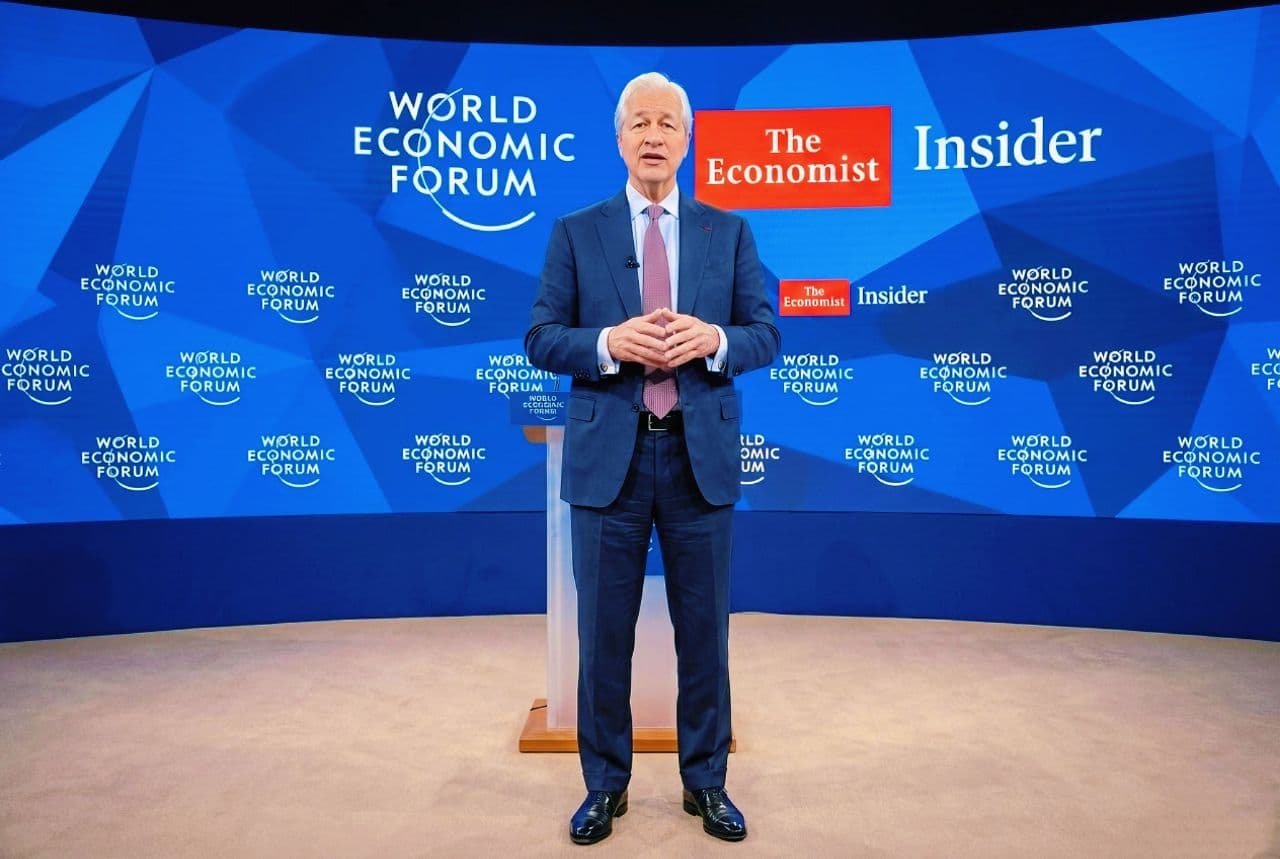
Jamie Dimon’s warning adds another layer to the market’s reaction to the Iran conflict. While he downplayed the inflationary impact for everyday Americans arguing that unless the war is prolonged, oil-driven price spikes won’t be severe he highlighted a different risk: retaliatory cyberattacks on U.S. banks. That’s a vulnerability investors often overlook when focusing on oil and inflation.
His comments came as oil futures surged to an eight-month high, with West Texas Intermediate jumping 8% early Tuesday after Iran threatened ships transiting the Strait of Hormuz, a chokepoint for 20% of global oil flows. The combination of energy supply fears and potential cyber threats underscores how geopolitical conflict can ripple through both the real economy and financial infrastructure.
Markets reflected that tension: stocks fell sharply before rebounding, volatility spiked, and safe-haven assets like gold swung wildly. Dimon’s perspective suggests that beyond inflation, systemic risks like cyberattacks could be just as disruptive if the conflict escalates further.






Investors Eye Energy and Defensive Plays Amid Iran Conflict Volatility
Markets were rattled Monday as strikes on Iran by the U.S. and Israel sent oil prices higher and briefly dragged U.S. stocks lower. Though indexes recovered from steep early-session declines, experts say investors should be thinking carefully about how to adjust portfolios in response to heightened geopolitical risk.
Adrian Helfert, chief investment officer at Westwood, advised investors to “buy the news” in the energy sector. With President Trump signaling that strikes may continue, energy stocks could benefit from sustained geopolitical tension and rising crude prices. This makes energy a potential near-term opportunity for those looking to hedge against volatility.
Jamie Battmer, CIO at Creative Planning, took a different angle, suggesting that near-term volatility could be used as a window to strategically reposition portfolios. He emphasized that investors don’t need to make aggressive bets, but rather use market swings to adjust exposure to sectors that may prove more resilient in uncertain conditions.
The broader lesson is that geopolitical shocks often create both risks and opportunities. By leaning into energy while maintaining diversification across defensive sectors, investors can balance short-term gains with long-term stability. Flexibility and measured positioning remain key to navigating the uncertainty sparked by the Iran conflict.





Pinterest Stock Soars on $1B Elliott Investment and Buyback Plan
Pinterest (PINS) shares surged 9% in pre-market trading Tuesday after Elliott Investment Management announced a $1 billion investment in the company. The move comes as Pinterest unveiled a new $3.5 billion share repurchase program, with plans to buy back about $2 billion worth of stock in the first half of the year.
San Francisco-based Pinterest, which positions itself as a “visual search and discovery platform” for inspiration, ideas, and shopping, said the accelerated buyback reflects confidence in its long-term growth potential. CEO Bill Ready called Elliott’s investment “a strong vote of confidence” in Pinterest’s business strategy and future opportunities.
The company’s stock had lost about a third of its value in 2026 leading into Tuesday’s announcement, making the investment and buyback program a significant turning point. Ready emphasized that the current share price undervalues Pinterest’s business strength and growth prospects, reinforcing management’s belief in the company’s trajectory.
With Elliott’s backing and a large-scale repurchase plan underway, Pinterest is signaling to investors that it sees substantial upside ahead. The combination of institutional support and capital return could help restore momentum for the stock after months of weakness in the tech sector.
Best Buy Stock Jumps 12% on Profit Beat Despite Weak Sales Outlook
Best Buy (BBY) shares soared 12% in pre-market trading Tuesday after the retailer reported stronger-than-expected fiscal Q4 earnings. Adjusted earnings came in at $2.61 per share, topping analyst estimates of $2.46, even as revenue and comparable sales fell short of expectations.
The Minneapolis-based electronics giant posted revenue of $13.81 billion, down from $13.95 billion a year earlier and below the $13.89 billion consensus. Comparable sales declined 0.8%, wider than the 0.1% drop analysts had forecast. CEO Corie Barry acknowledged softer holiday demand but highlighted profitability as a bright spot, noting that overall market share held steady.
Despite the earnings beat, Best Buy’s fiscal 2027 guidance disappointed Wall Street, with projections for revenue, adjusted EPS, and comparable sales all missing consensus estimates. Still, investors cheered the Q4 profit surprise, sending shares sharply higher after months of weakness.
Best Buy stock entered Tuesday down 8% year-to-date and nearly 30% lower over the past 12 months. The latest rally suggests investors are willing to look past weaker sales trends in favor of stronger-than-expected margins, at least in the near term.
The Bottom Line
Major U.S. stock indexes fell sharply Tuesday before recovering some ground, as volatility persisted in the wake of U.S. and Israeli strikes on Iran. The conflict sent oil prices soaring, rattled investor sentiment, and briefly dragged equities lower before a late-session rebound helped limit losses.
The Dow Jones Industrial Average dropped more than 1,100 points early in the day, while the S&P 500 and Nasdaq also slid. Energy stocks benefited from the oil rally, but broader sectors struggled as traders weighed the risk of prolonged geopolitical tension. Analysts noted that while markets clawed back from their lows, volatility remains elevated and could continue as the situation unfolds.
Oil futures surged to an eight-month high after Iran threatened shipping in the Strait of Hormuz, a critical passage for global energy flows. The spike in crude prices added pressure to inflation concerns, even as some investors looked to energy equities as a hedge against geopolitical risk.
The bottom line: markets are caught between short-term shocks and longer-term uncertainty. While indexes managed to close off their worst levels, the Iran conflict has introduced fresh risks that could keep volatility high across stocks, bonds, and commodities in the weeks ahead.