Stock Market Closes Lower as Oil Prices Surge Despite IEA Release
- Major Indexes Slip: The Dow Jones and S&P 500 closed mostly lower, reflecting investor caution.
- Oil Prices Surge: Brent crude rose above $90 and WTI near $85, despite the International Energy Agency’s announcement of a record 400M barrel reserve release.
- Energy Stocks Rally: Oil majors like Exxon and Chevron gained as higher crude prices boosted sector performance.
- Geopolitical Tensions: The Iran conflict and disruptions in the Strait of Hormuz continue to weigh on global supply chains, overshadowing policy interventions.
- Broader Market Pressure: While energy stocks climbed, broader U.S. indexes declined, showing the uneven impact of oil-driven volatility.
Key Takeaways
Dow and S&P Slip as Oil Prices Surge Despite IEA’s Record Reserve Release
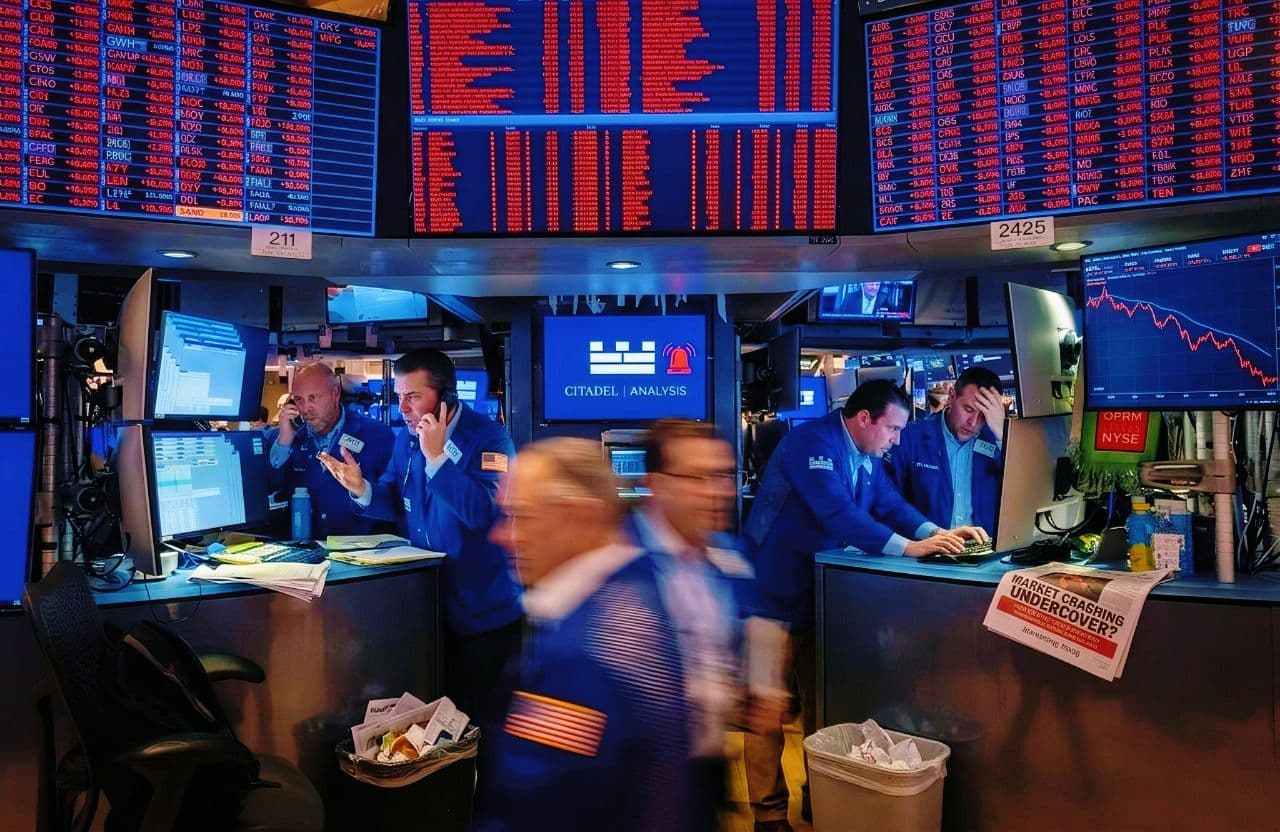
Major U.S. stock indexes ended mostly lower Wednesday as oil futures surged, overshadowing the International Energy Agency’s unprecedented release of 400 million barrels of reserves. The Dow Jones Industrial Average fell 0.6% and the S&P 500 dipped 0.1%, while the Nasdaq managed a modest 0.1% gain.
West Texas Intermediate crude futures jumped 5% to $87.65 a barrel, despite the IEA’s intervention. Geopolitical tensions added fuel to the rally, with U.S. officials reporting that Iran placed mines in the Strait of Hormuz and President Donald Trump threatening retaliation unless they were removed. The conflict has heightened fears of supply disruptions in one of the world’s most critical oil transit routes.
Earlier in the day, the February CPI report showed consumer prices rising 2.4% year-over-year, with core inflation at 2.5%. Both figures matched forecasts, but economists cautioned that the data was backward-looking, failing to capture the inflationary impact of the Iran war. Treasury yields climbed, with the 10-year note rising to 4.22%, reflecting investor concern over inflation and borrowing costs.
Commodities and currencies also saw sharp moves. Gold futures slipped more than 1% to $5,185 an ounce, silver fell 4% to $86, and the U.S. Dollar Index rose 0.4% to 99.23. Bitcoin traded around $70,700, rebounding from overnight lows. In corporate earnings, Oracle surged 9% on strong AI-driven demand, while Campbell’s dropped 7%. Among tech giants, Tesla gained 2.2%, leading the mixed performance of the Magnificent Seven.






Oracle shares jumped Wednesday after the software and cloud giant topped quarterly earnings estimates and raised its long-term revenue guidance. The company’s backlog grew by $29 billion sequentially, reinforcing its position in the AI infrastructure market and reigniting investor interest in the stock. Despite the strong results, the broader market remained cautious, weighed down by geopolitical risks and inflation concerns.
Analysts at Morgan Stanley noted that Oracle’s latest quarter helped restore investor confidence after doubts last year about its ability to execute aggressive targets. Concerns had centered on whether Oracle’s growth was overly dependent on OpenAI and whether the company would need heavy debt financing to convert backlog into revenue. The new results suggest Oracle is better positioned to deliver sustainable growth.
Bank of America analysts highlighted that Oracle’s improved outlook was not tied to a single AI deal but rather multiple contracts across the enterprise segment. This indicates that demand for Oracle’s AI infrastructure is broad-based, benefiting from ramping adoption across industries. The company raised its fiscal 2027 revenue guidance to $90 billion, up from $85 billion in October, underscoring confidence in its growth trajectory.
Oracle’s earnings reassured Wall Street about its AI strategy, but the rally was limited to its own shares. Broader markets remain constrained by risk factors such as surging oil prices, inflation pressures, and geopolitical uncertainty, preventing a wider AI-driven rally.






CF Industries Stock Surges as Strait of Hormuz Disruptions Boost Fertilizer Prices
CF Industries emerged as the top-performing stock in the S&P 500 Wednesday afternoon, soaring 8.5% as shipping disruptions in the Strait of Hormuz rattled global commodity flows. The Northbrook, Illinois based fertilizer producer stands to benefit from rising input costs, with nearly half of global urea and sulfur exports originating west of the strait and typically transiting through the narrow channel.
The Fertilizer Institute noted that fighting in the Middle East has essentially halted shipping through the strait, tightening supply chains and driving up fertilizer prices. Investors responded by pushing CF shares higher, positioning the company as a standout beneficiary of the geopolitical turmoil.
Year-to-date, CF Industries stock has already climbed about 55%, reflecting strong demand and favorable pricing conditions. The latest surge underscores how geopolitical risks can create sector-specific winners even as broader markets remain pressured by oil volatility and inflation concerns.
CF Industries is capitalizing on global supply disruptions, with its stock rally fueled by the Strait of Hormuz crisis. Rising fertilizer prices strengthen its outlook, making it one of the few clear gainers in a market otherwise dominated by uncertainty.






Nebius Stock Surges on $2 Billion Nvidia Investment
Nebius shares soared more than 16% Wednesday after announcing a $2 billion investment from Nvidia, cementing the AI infrastructure firm’s place in the fast-growing cloud market. The deal expands Nebius’ existing partnership with Nvidia to boost cloud capacity for artificial intelligence workloads, a move CEO Jensen Huang described as scaling to meet “surging global demand for intelligence.”
The investment builds on Nvidia’s earlier stake in Nebius, first disclosed in quarterly filings last year. Unlike other tech positions Nvidia has trimmed, its commitment to Nebius has remained steady, signaling confidence in the company’s long-term potential. The latest deal adds to Nvidia’s string of billion-dollar investments in AI-related firms, including Coherent and Lumentum earlier this month.
Nebius’ results have been striking: shares have gained nearly a third in value since the start of 2026 and have quadrupled over the past 12 months. The Nvidia partnership reassures investors that Nebius’ growth is not dependent on a single contract but rather on broad enterprise adoption of AI infrastructure.
Nvidia’s $2 billion vote of confidence has propelled Nebius into the spotlight, reinforcing its role as a key player in AI cloud expansion. While Nvidia’s own shares were little changed, Nebius’ rally highlights how strategic investments can reshape confidence in emerging AI infrastructure stocks.






Oil Prices Surge Despite IEA’s Record 400M Barrel Release
The International Energy Agency announced its largest-ever reserve release Wednesday, pledging 400 million barrels of crude to stabilize markets. Yet oil prices climbed anyway, with Brent crude rising about 5% to $92 per barrel and West Texas Intermediate up to $86. Energy stocks, including Exxon and Chevron, rallied on the news, while broader U.S. indexes slipped into decline.
The market’s reaction underscores how geopolitical risks outweigh supply interventions. Escalating tensions in Iran, attacks on ships in the Strait of Hormuz, and vessels trapped in the Persian Gulf have shaken investor confidence that disruptions will be short-lived. Without progress toward a truce, traders expect crude prices to remain elevated.
Prediction markets reflect this uncertainty. Polymarket bettors see a 78% chance the Iran-U.S./Israel war will continue through June, and a 31% probability that West Texas crude will top $95 by the end of this week. These expectations highlight the likelihood of higher-for-longer oil prices despite historic reserve releases.
Analysts point to parallels with the Ukraine-Russia war, where peak oil prices eventually cooled, but warn that the current conflict’s scale and location could prolong volatility. For now, the IEA’s intervention has failed to cap prices, leaving energy costs as a dominant force shaping both markets and inflation outlooks.






CarMax Stock Rises as Activist Investor Pushes for Lower Prices
CarMax shares gained Wednesday after activist investor Starboard Value nominated two directors to the company’s board and urged management to rethink its pricing strategy. The stock rose as much as 8% earlier in the day before settling up about 2%, reflecting investor interest in the firm’s proposals.
In a letter to incoming CEO Keith Barr, Starboard expressed support for his leadership but criticized CarMax’s recent performance, saying it had “fallen well short of its underlying potential.” The activist firm argued that CarMax’s rigid per-unit profit targets have hurt market share, especially as competitor Carvana’s stock has surged while CarMax remains down more than 40% over the past year.
Starboard’s recommendations included modernizing CarMax’s digital trade-in process, reducing reconditioning costs, and tightening cost controls. But its most direct suggestion was to trim vehicle prices by $100 to $300 per unit, using a data-driven pricing system tailored to local markets. The firm believes more dynamic pricing could help CarMax regain transaction volume without sacrificing long-term profitability.
Starboard’s push highlights investor frustration with CarMax’s strategy. Lower prices could boost sales and market share, but the challenge will be balancing competitive pricing with margin discipline in a highly transparent used-car market.






Fair Isaac Stock Drops on $1B Debt Offering
Fair Isaac (FICO) shares tumbled Wednesday, leading S&P 500 decliners with a 10% pullback after announcing a $1 billion senior notes offering. The credit score issuer said proceeds will be used in part to repay debt under its existing unsecured revolving credit facility, but investors reacted negatively to the move.
The Bozeman, Montana based firm has seen its shares lose more than 30% this year, with a steep 20% drop just this week. Pressure has mounted as rivals Equifax, Experian, and TransUnion cut pricing for their competing VantageScore 4.0 product, intensifying competition in the credit scoring market.
The debt offering signals Fair Isaac’s attempt to shore up its balance sheet, but investors appear worried about profitability and market share erosion. With competitors lowering prices, FICO faces challenges in maintaining its dominance while managing higher financing costs.
Fair Isaac’s debt strategy has rattled investors, sending shares sharply lower. The company must navigate both competitive pricing pressures and investor skepticism as it works to stabilize its financial footing.






Oracle Earnings Spark Relief Across Tech Sector
Oracle shares surged more than 13% Wednesday, leading tech stocks higher after the company posted stronger-than-expected earnings and raised its fiscal 2027 revenue outlook. The results reassured investors that demand for AI infrastructure remains robust, even as broader markets wrestle with geopolitical and inflation risks.
Wedbush analysts described Oracle’s performance as a “huge relief” for the tech sector, noting that recent concerns about whether companies could deliver on heavy AI investments had weighed on sentiment. Oracle’s improved guidance suggests confidence in its ability to convert backlog into revenue and sustain growth.
The rally in Oracle shares also lifted investor optimism across the sector, though analysts cautioned that broader market risks such as surging oil prices and global uncertainty still limit the scope of an AI-driven rebound. For now, Oracle’s results stand out as a stabilizing force in a volatile environment.
Oracle’s strong quarter has injected confidence back into the AI trade, offering reassurance that enterprise demand for AI infrastructure is broad and sustainable. While risks remain, the company’s results highlight the potential for tech leaders to anchor investor sentiment.






Energy Stocks Lead S&P 500 Gains as Oil Prices Climb
The S&P 500 Energy Sector was the clear leader in Wednesday’s early trading, rising 1.8% while most other sectors showed little direction. Valero Energy, Marathon Petroleum, and Phillips 66 paced the rally with gains of about 5%, 4.5%, and 4%, respectively.
The surge in energy shares was fueled by oil prices, which climbed 4% to nearly $87 a barrel. The move reflected ongoing supply concerns tied to Middle East tensions and disruptions in the Strait of Hormuz, which continue to weigh on global shipping and investor sentiment.
While five of the 11 sectors tracked by the index were in positive territory, none came close to matching energy’s strength. Consumer Discretionary was the next-best performer, up just 0.5%, underscoring how oil-driven momentum is dominating sector performance.
Energy stocks are benefiting directly from rising crude prices, making them the standout performers in an otherwise muted market session. With geopolitical risks keeping oil elevated, the sector remains positioned as a defensive play amid broader uncertainty.






Gas Prices Surge After Iran War, But Impact on Driving Habits Limited
Gasoline prices have jumped since the Iran war began, but experts say they remain too low to significantly alter consumer behavior. Casey’s General Store reported its average fuel price has risen about 30 cents, putting it in the low $3 per gallon range. CEO Darren Rebelez noted that this level is still below the starting point when the Ukraine war began, suggesting Americans are unlikely to cancel road trips or trade SUVs for EVs just yet.
Oil and gas markets have been volatile since the U.S. and Israel launched strikes against Iran late last month. Crude briefly spiked above $100 per barrel on Sunday the highest since Russia’s invasion of Ukraine in 2022 before moderating earlier this week. Prices fell 8% Tuesday as world leaders discussed ways to ease the supply crunch caused by Iran’s closure of the Strait of Hormuz, a critical global energy corridor.
The surge in fuel costs highlights the fragility of energy markets under geopolitical stress. While the recent jump has added pressure to household budgets, analysts argue that prices would need to climb much higher before Americans make significant lifestyle changes, such as reducing travel or shifting vehicle preferences.
Gas prices are rising, but not yet at levels that force behavioral shifts. Unless crude oil sustains triple-digit prices, consumer demand for driving and larger vehicles is likely to remain resilient despite the war-driven supply disruptions.






Inflation Holds Steady Before Iran War Drives Gas Prices Higher
Inflation remained stable in February, with the Consumer Price Index rising 2.4% year-over-year, matching January’s pace and economist forecasts. Core inflation, which excludes food and energy, also held at 2.5%, underscoring a steady trajectory before geopolitical shocks reshaped the outlook.
The report came just ahead of the Iran war, which has already driven national gasoline prices up more than 50 cents per gallon in the past two weeks. Disruptions in shipping from the oil-producing region have pushed crude higher, fueling concerns that March inflation will reflect a sharp energy-driven spike.
Despite cooling housing inflation, tariffs continue to keep prices elevated for certain goods, leaving overall inflation stubbornly above the Federal Reserve’s 2% target. Economists note that while February’s data looked tame, it is backward-looking and does not capture the war’s impact on energy markets.
Inflation was steady before the conflict, but the war in Iran has already altered the trajectory. With gas prices surging and supply chains disrupted, headline inflation is expected to climb in March, complicating the Fed’s path forward.






Apple Expands Budget Lineup With MacBook Neo and iPhone 17e
Apple’s latest strategy is less about cutting-edge innovation and more about affordability. The company introduced the MacBook Neo and iPhone 17e last week, both positioned as budget-friendly options aimed at attracting new users. Analysts say the move could help Apple capture market share from PC rivals like Dell, Lenovo, and HP, many of which have raised prices in recent months.
The MacBook Neo, starting at $599, is Apple’s most affordable laptop to date. Early reviews suggest it could challenge competitors in the entry-level PC market, offering consumers a lower-cost gateway into Apple’s ecosystem. Alongside the Neo, Apple also refreshed its MacBook Air and Pro lineups, as well as the iPad Air, but the budget devices have drawn the most attention.
Bloomberg reported over the weekend that Apple is also working on premium products that could follow this budget wave. While details remain limited, the company appears to be balancing affordability with its traditional high-end positioning, signaling a two-pronged approach to growth.
Apple’s budget-friendly devices are designed to broaden its customer base while premium offerings remain in the pipeline. By lowering entry costs, Apple could expand its reach without abandoning its reputation for high-end products.






Oracle Stock Surges on AI-Driven Outlook Boost
Oracle delivered an exceptional fiscal third quarter, reporting adjusted earnings per share of $1.79 and a 22% year-over-year revenue jump to a record $17.2 billion. Both figures topped analyst estimates, sparking a sharp rally in extended trading. Shares climbed about 9% as investors welcomed signs of momentum after a period of weakness.
The company’s backlog more than quadrupled to $553 billion, with most of the growth tied to large-scale AI contracts. Oracle emphasized that it does not expect to raise incremental funds to service these agreements, easing concerns about financing risks. The surge in backlog highlights the scale of enterprise demand for AI infrastructure and Oracle’s positioning as a key supplier.
Looking ahead, Oracle raised its fiscal 2027 revenue outlook to $90 billion, up from $85 billion previously, while keeping its 2026 guidance steady at $67 billion. The improved forecast underscores confidence in sustained AI-driven growth, even as broader markets remain volatile.
Oracle’s strong quarter and upgraded guidance have reignited investor optimism. With AI demand fueling record backlog growth, the company appears well-positioned to reverse its recent slump and strengthen its role in the enterprise technology landscape.






Campbell’s Stock Falls as Snacks Weakness Hits Outlook
Campbell’s shares dropped 4% in premarket trading Wednesday after the company reported weaker-than-expected fiscal Q2 results and lowered its full-year guidance. The Camden-based food giant posted adjusted earnings of $0.51 per share on $2.56 billion in net sales, missing analyst estimates of $0.57 and $2.61 billion.
CEO Mick Beekhuizen acknowledged that storm-related shipment disruptions and underperformance in the Snacks division weighed on results. He emphasized that Campbell’s is taking “decisive action” to stabilize Snacks, including sharpening value propositions, accelerating product innovation, and tightening in-market execution. Cost-saving initiatives are also being expanded to offset headwinds and preserve investment in core brands.
The company lowered its full-year outlook, citing near-term weakness in Snacks and incremental trade investments. Campbell’s now expects adjusted EPS of $2.15 to $2.25, down from its prior range of $2.40 to $2.55. Organic net sales are projected to decline 2% to 1%, compared with earlier guidance of down 1% to up 1%.
Shares have already fallen 40% over the past 12 months, including an 11% drop since the start of the year. The latest guidance cut underscores investor concerns about Campbell’s ability to stabilize its Snacks business while maintaining profitability in a competitive packaged food market.






Cintas to Acquire UniFirst in $5.5B Deal
Cintas announced Wednesday that it will acquire workplace-uniform rival UniFirst in a cash-and-stock transaction valued at $310 per share, or about $5.5 billion in enterprise value. The deal is expected to close in the second half of 2026, pending regulatory approvals.
Shares of UniFirst surged 9% in premarket trading on the news, reflecting investor enthusiasm for the premium offer. Board chair Joseph Nowicki said the agreement “maximizes value for our shareholders and provides the opportunity to participate in the compelling future upside of the combined company.”
Cintas had pursued UniFirst for years, including a $275 per share proposal in early 2025 that was ultimately withdrawn after negotiations stalled. The new agreement marks a breakthrough in consolidation within the uniform services industry, positioning the combined company to expand market share and streamline operations.
UniFirst shares, which closed near $258 yesterday, have already gained a third of their value year-to-date. Cintas shares slipped 2% before the bell but remain up about 4% for the year, suggesting investors are weighing near-term costs against long-term strategic benefits.


The Bottom Line
- Markets: The Dow fell 0.6% and the S&P 500 slipped 0.1%, while the Nasdaq eked out a 0.1% gain.
- Oil: WTI crude surged 5% to $87.65 despite the IEA’s record 400M barrel reserve release. Geopolitical tensions in Iran and the Strait of Hormuz kept prices elevated.
- Inflation & Rates: February CPI came in steady at 2.4% headline and 2.5% core, matching forecasts. The 10-year Treasury yield rose to 4.22%.
- Commodities & Currency: Gold fell 1% to $5,185, silver dropped 4% to $86, and the U.S. Dollar Index rose 0.4%. Bitcoin rebounded to ~$70,700.
Corporate Moves:
- Oracle jumped 9% after raising its long-term outlook on strong AI demand.
- Campbell’s dropped 7% on weaker Snacks performance and lowered guidance.
- Tesla gained 2.2%, leading mixed results among the Magnificent Seven tech stocks.