Federal Reserve Interest Rate Forecast 2026 – What Investors Should Expect
- The Federal Reserve is expected to lower interest rates in 2026, though the pace and scope of cuts may be constrained by internal divisions and conflicting economic signals.
- Even with a new Fed chair appointed by President Donald Trump, monetary policy decisions will continue to hinge on Federal Open Market Committee consensus, underscoring that leadership changes alone won’t dictate outcomes.
Key Takeaways
Federal Reserve Interest Rate Outlook 2026 – Analysts Warn of Divisions Ahead
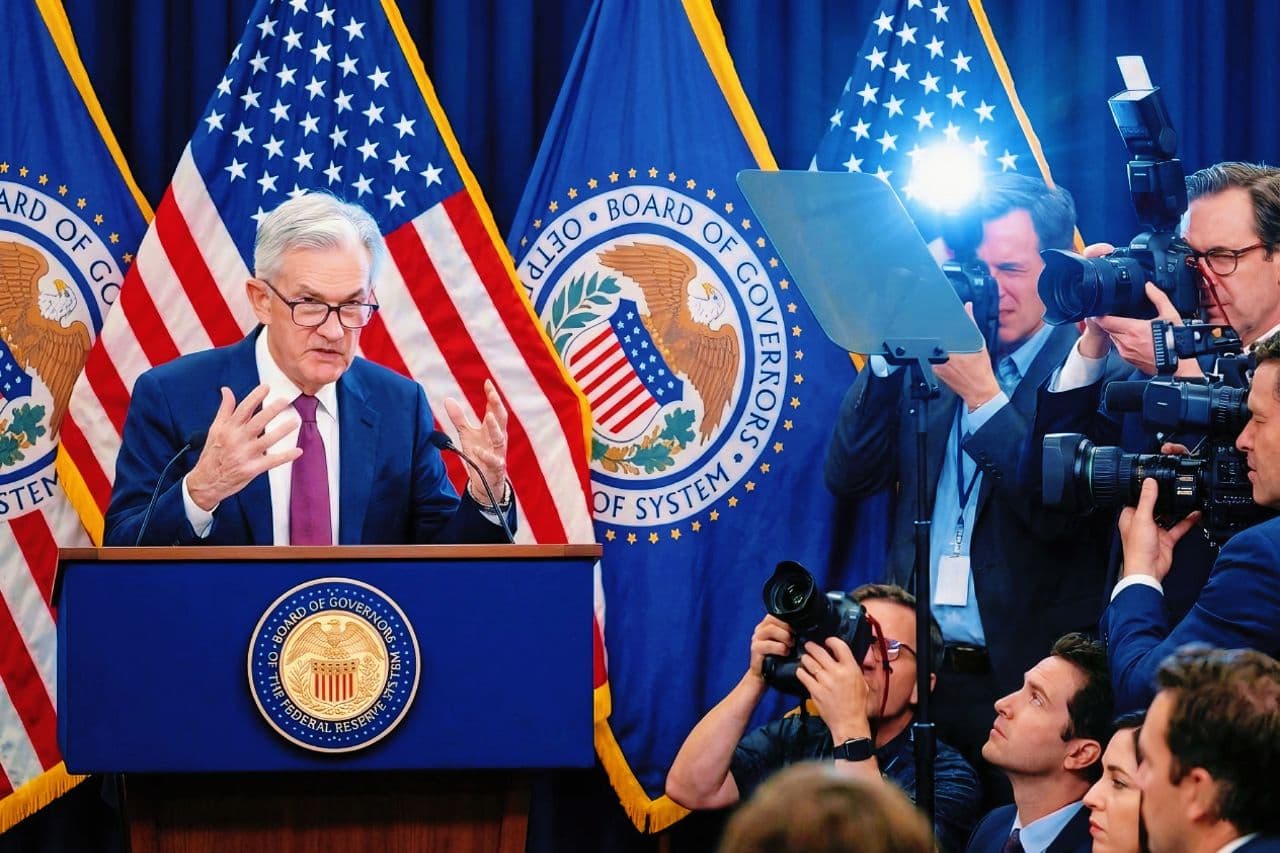
The Federal Reserve faces a complicated year in 2026 as policymakers weigh mixed economic signals while President Donald Trump prepares to appoint a new Fed chair.
Analysts expect the central bank to cut interest rates a few times, citing November’s weak jobs report as evidence of a slowing economy. Still, uncertainty remains over whether Trump’s nominee will push for aggressive easing and whether the 18 voting members of the Federal Open Market Committee (FOMC) will align on the strategy.
As Deutsche Bank’s chief U.S. economist Matthew Luzzetti noted, “The Chair does not have unbounded power to push the Committee in whatever direction he chooses,” underscoring that consensus will remain critical in shaping monetary policy.
Interest rate decisions ripple through nearly every corner of personal finance, shaping mortgage costs, credit card rates, and savings account returns. With the Federal Reserve facing internal divisions and a leadership transition under President Donald Trump, borrowers and investors could encounter heightened uncertainty in 2026, making financial planning more complex.






Federal Reserve Rate Debate 2026 – Hawkish Voices and Economic Crosscurrents
The FOMC’s voting record in 2025 highlights the challenges ahead, with Fed Chair Jerome Powell struggling to secure support from hawkish members for three rate cuts. In 2026, those hawks will again play a pivotal role as some of their most vocal representatives rotate into voting positions, potentially limiting the scope of easing.
By mid-2026, economic data may not favor lower rates. Unemployment climbed to 4.6% in November, with only 64,000 jobs added, signaling labor market weakness. Yet strong consumer spending and rising investments in artificial intelligence continue to drive GDP growth, reducing downside risks and weakening the case for aggressive cuts.
This mix of soft labor conditions and resilient growth sets the stage for a contentious policy debate. Analysts warn that even with President Donald Trump’s new Fed chair nominee, consensus may be elusive. As Andrew Brenner of NatAlliance Securities noted, “The Fed is a process, not a one-man show,” underscoring the collective nature of monetary policy decisions.






Federal Reserve Chair Candidates 2026 – Trump’s Shortlist and Market Reaction
The Federal Reserve is set for a major leadership shift in 2026 as President Donald Trump prepares to nominate a new chair, with Jerome Powell’s four-year term ending in May.
Among the frontrunners is Fed Governor Chris Waller, a veteran economist appointed by Trump in 2020. Also in contention are the “two Kevins”: Kevin Warsh, former Fed Governor and Hoover Institution fellow, and Kevin Hassett, a former White House economist.
Betting markets currently favor Hassett as the likely nominee. His close ties to Trump raise investor concerns that he may support aggressive interest rate cuts, even if economic conditions don’t warrant them, potentially adding uncertainty to monetary policy.






Federal Reserve Independence and Senate Confirmation – 2026 Chair Nomination Outlook
Investors continue to emphasize the importance of the Federal Reserve’s independence, with interest rate decisions expected to be guided by economic data rather than presidential pressure. Barclays economist Jonathan Millar described Trump’s potential nominee as a pragmatist, noting that he must remain mindful of market perceptions and ultimately secure consensus within the Fed.
Any nominee will require U.S. Senate confirmation, where Republicans currently hold a 53-seat majority. Historically, Fed chair votes have seen strong bipartisan support Jerome Powell received at least 80 votes in both his 2017 appointment by Trump and his later reappointment by President Joe Biden suggesting the confirmation process could follow a similar path.






Federal Reserve Board Openings 2026 – Trump’s Potential Influence and Powell’s Decision
President Donald Trump may gain additional openings on the Federal Reserve’s Board of Governors in 2026, which could allow him to further shape the FOMC’s policy direction. Of the seven-member board, Trump has already appointed three, while the remaining seats belong to Biden appointees. Any new vacancies would give Trump a clearer imprint on the Fed’s leadership.
Analysts warn that the administration’s influence is entering “uncharted waters” as 2026 approaches. Trump has attempted to remove Fed Governor Lisa Cook, a Biden appointee, though she remains in place as the legal battle continues. The Supreme Court is scheduled to hear arguments in January, which could determine her future on the board.
Meanwhile, Jerome Powell faces a pivotal choice. His four-year term as Fed chair ends in May 2026, but his board membership runs until 2028. Powell could remain on the Fed even without the chairmanship, a move that would reinforce the institution’s independence but be nearly unprecedented the last example dating back to 1948. Analysts caution such a decision could also be viewed as politically charged.






Regional Voting Power – Federal Reserve Independence Strengthened for 2026
Even with President Donald Trump expected to appoint more members to the Federal Reserve’s Board, the FOMC’s regional structure ensures balance. Each year, five voting members come from the heads of the Fed’s 12 regional districts, designed to bring local perspectives into national monetary policy. Four regional presidents rotate into voting roles annually, while the New York Fed president holds a permanent vote.
To ease investor concerns, the Fed’s Board of Governors recently approved the regional presidents’ appointments for the next five years, securing their rotating roles unless they resign. Analysts note this decision offsets fears that Trump appointees could block regional participation. As Ian Lyngen of BMO Capital Markets explained, the move has enhanced perceptions of Fed independence, reinforcing confidence in the institution’s balance of power.






The Bottom Line
The Federal Reserve’s path in 2026 is set to be uncertain and highly contested, with internal divisions, shifting economic data, and President Donald Trump’s upcoming Fed chair nomination all shaping the debate. While some analysts expect limited rate cuts, hawkish voices, resilient consumer spending, and AI-driven growth could restrain aggressive easing. Regional voting power and Senate confirmation dynamics will further reinforce that the Fed remains a consensus-driven institution, not a one-man show.