Federal Reserve Leadership Outlook: Could Jerome Powell Stay On as Chair?
- Once seen as unlikely, some Federal Reserve analysts now view seriously the possibility that Jerome Powell could remain as a central bank governor after his chair term ends in May.
- President Donald Trump’s push to pressure the Fed into lowering interest rates could backfire, potentially keeping Powell on the board through the remainder of Trump’s presidency.
- Technically, Powell could even continue as chair of the Federal Open Market Committee, the powerful body responsible for setting U.S. monetary policy.
Key Takeaways
Powell’s Future at the Fed Becomes Central to Trump’s Campaign Against Rate Policy
President Donald Trump’s public push to pressure the Federal Reserve into lowering interest rates could have unintended consequences potentially keeping Jerome Powell, a central banker he has often criticized, in a key policy role beyond his term as chair.
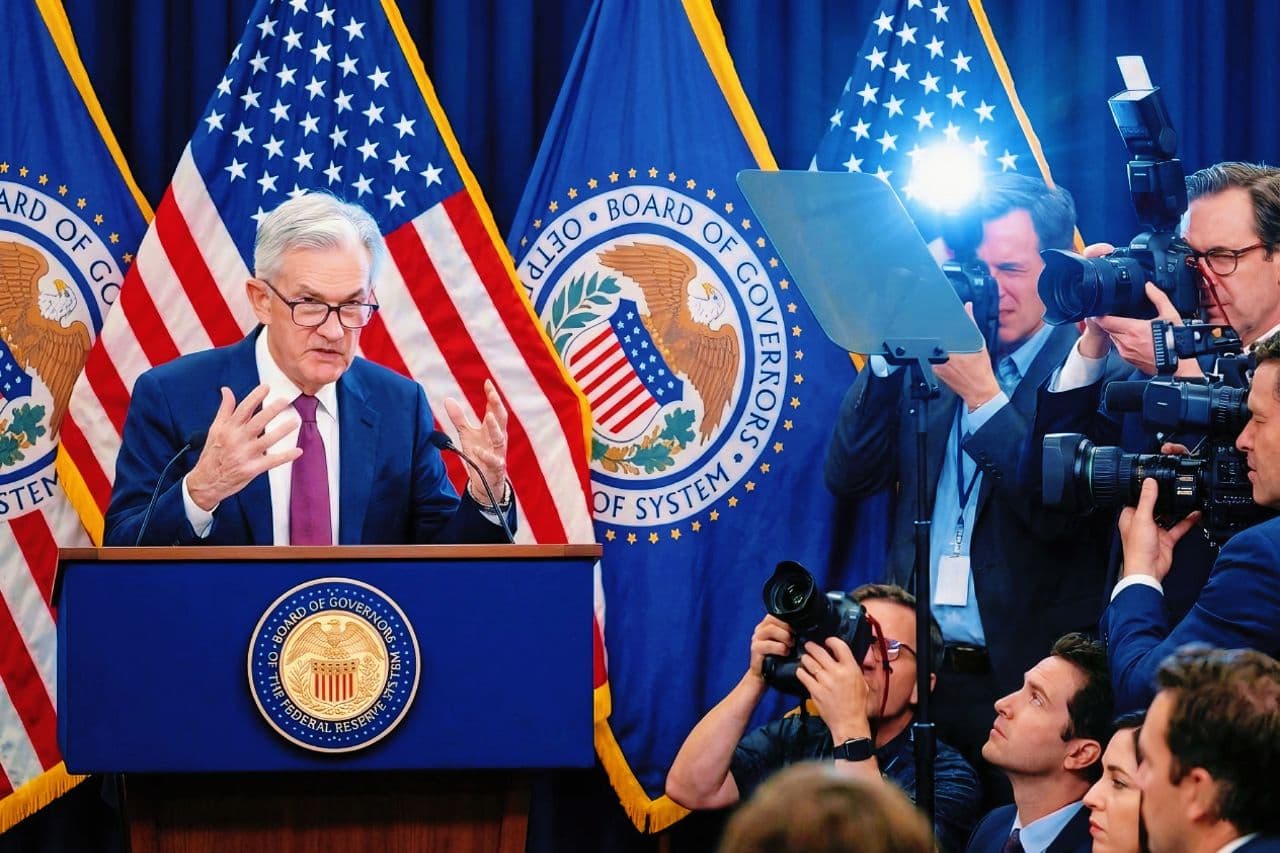
Powell’s chairmanship officially ends in May, but legally he could remain on the Federal Open Market Committee (FOMC) as a governor, or even continue as chair. While Fed watchers once viewed this scenario as unlikely, recent tensions between Trump and Powell have fueled speculation that Powell’s tenure may extend.
With Trump actively seeking the next Fed chair, Powell’s future is expected to be a major topic at his post-FOMC press conference next week. Krishna Guha, vice chair of Evercore ISI, noted in a research report: “We think it is now more likely that Powell will stay on as a governor to help protect the Fed after his term as chair ends.”


Economic Implications: Powell’s Possible Continuation Signals Independence but Heightens Political Tensions
If Jerome Powell remains on as a Fed governor after his chair term ends, it would be an unusual move in the history of the Federal Reserve. Such a decision would underscore the central bank’s commitment to independence from White House influence, reinforcing its credibility in setting monetary policy without direct political pressure.
At the same time, Powell’s continued presence would keep the political conflict between the Fed and President Trump in the spotlight. That ongoing tension could inject uncertainty into financial markets, complicating expectations for interest rates and economic stability. Investors, businesses, and households may face heightened volatility as they weigh the Fed’s independence against the risk of prolonged political battles.


Fed’s Independence at Risk Amid Trump Pressure and Legal Battles
Congress deliberately designed the Federal Reserve to operate outside direct White House control, ensuring monetary policy decisions are made independently of political influence. In countries where central banks lack independence, governments often push interest rates lower to stimulate short-term growth at the cost of higher inflation later.
Since taking office, President Trump has publicly pressured the Fed to cut rates sharply, arguing that lower borrowing costs would ease household budgets and reduce federal debt payments. The Fed has already cut rates three times to support the slowing job market, but officials are expected to hold steady for now, citing inflation that remains above the 2% target and limited progress in 2025.
Tensions have escalated further as the administration pursued legal actions against Fed leaders. While the White House frames these moves as rooted in legal and ethical concerns, critics warn they risk undermining the Fed’s independence and fueling uncertainty in financial markets.


Fed Chair Powell, Part 2: What’s at Stake
Jerome Powell’s term as chair of the Federal Reserve ends in May, but his governorship runs until 2028. While most Fed chairs historically step down once their leadership term expires, Powell could legally remain on the board and even continue to play a central role in monetary policy.
There’s precedent: Marriner S. Eccles, for whom the Fed’s headquarters is named, stayed on as a governor after being replaced as chair in 1951. Powell currently holds two roles chair of the Fed’s governing board (appointed by the president and confirmed by the Senate) and chair of the Federal Open Market Committee (FOMC), which sets interest rates. Technically, the FOMC votes for its own chair, though it has always chosen the board chair.
If the Senate fails to confirm Trump’s nominee, the FOMC could vote to keep Powell as chair, a scenario Deutsche Bank economists say is increasingly plausible. Political tensions are high: at least one Republican lawmaker has threatened to block Trump’s nominee unless the president drops his legal campaign against Powell.
Trump, who appointed Powell in 2018, has often criticized him and recently dismissed concerns about Powell staying on, telling CNBC: “If that happens, his life won’t be very happy.”


The Bottom Line
Jerome Powell’s possible continuation as a Fed governor or even as FOMC chair would be rare but legally permissible. It underscores the central bank’s determination to protect its independence from White House influence, yet it also ensures political conflict over the Fed remains front and center. For markets and households, that means more uncertainty around interest rate policy and economic stability in the months ahead.