Gold Market Sell-Off Explained: Investor Trends and Inflation Risks
- Mining stocks including Newmont, Barrick, and Freeport McMoRan are taking heavy losses as gold prices retreat from gains posted after the outbreak of armed conflict in the Middle East. The initial surge in gold reflected investor demand for safe-haven assets, but that momentum has quickly reversed, leaving mining equities exposed to sharp declines.
- Research indicates that boosts in metal prices during large-scale conflicts often dissipate once uncertainty begins to clear. This pattern suggests that while gold may benefit in the short term from geopolitical shocks, its long-term trajectory depends more on broader inflation trends, interest rates, and investor sentiment.
- The sell-off highlights the volatility of commodity-linked equities, particularly when safe-haven demand proves temporary. Investors who rushed into gold and mining stocks at the onset of conflict are now reassessing positions, as markets stabilize and attention shifts back to fundamentals.
- For traders, the lesson is clear: geopolitical events can spark short-lived rallies in metals, but sustained gains require deeper economic drivers. Monitoring Treasury yields, inflation expectations, and Federal Reserve policy will be critical in determining whether gold regains momentum or continues to face pressure.
Key Takeaways
Gold Prices Plunge as Dollar Strength and Middle East Conflict Pressure Mining Stocks
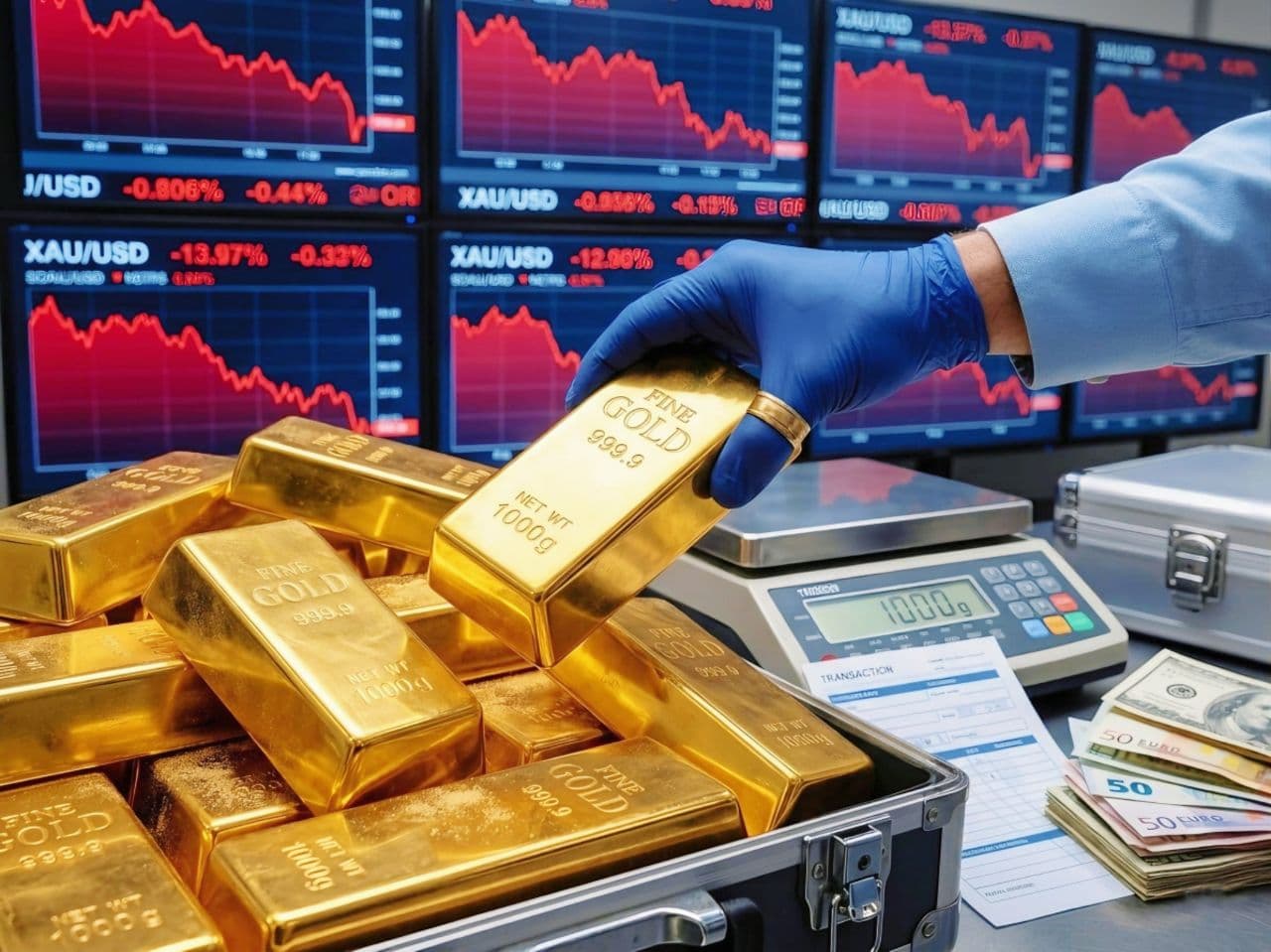
Intensifying conflict in the Middle East is rattling global markets, driving stocks, bonds, and even traditional safe-haven assets lower. Gold, which initially surged after the weekend’s strikes on Iran, fell sharply on Tuesday, dragging mining stocks down with it. The SPDR Gold Trust (GLD), a widely followed ETF tied to gold prices, dropped 4% as spot prices slid to around $5,130 an ounce, down from highs above $5,400 just a day earlier.
Shares of major miners mirrored the decline, with Newmont (NEM) plunging more than 8% to lead S&P 500 decliners. Barrick (B) and Freeport-McMoRan (FCX) also tumbled, reflecting the close correlation between mining equities and commodity prices. The sell-off underscores how quickly investor sentiment can shift, even for assets traditionally viewed as safe havens during geopolitical turmoil.
Commodity experts note that conflict-driven gains in metals are often short-lived. Gold’s retreat highlights the “easy come, easy go” nature of such rallies, especially when broader macroeconomic forces are at play. One key factor is the U.S. dollar, another safe-haven asset, which tends to move inversely to gold. With the greenback strengthening, gold prices faced additional downward pressure.
For investors, the latest moves serve as a reminder that safe-haven assets are not immune to volatility. While gold can provide protection in times of uncertainty, its performance is heavily influenced by competing forces such as Treasury yields, inflation expectations, and currency strength. Diversification remains essential as markets navigate the dual challenges of geopolitical conflict and shifting macroeconomic conditions.






Gold is often viewed as a hedge against market volatility, especially during geopolitical conflicts. However, history shows that price gains at the start of major conflicts rarely sustain momentum. The sharp rally in gold following the initial strikes in the Middle East has already faded, underscoring how quickly investor sentiment can shift.
Commodity experts point out that conflict-driven surges in metals tend to dissipate once uncertainty begins to clear. This pattern has repeated across past crises, from the Gulf War to Russia’s invasion of Ukraine, where gold initially spiked but later retreated as markets adjusted.
For investors, this means relying solely on gold as a safe-haven strategy can be risky. While it may provide short-term protection, its performance is heavily influenced by competing forces such as Treasury yields, inflation expectations, and the strength of the U.S. dollar.
The bottom line is that diversification remains essential. Gold can play a role in hedging against volatility, but its gains are often temporary when driven by conflict alone. Monitoring broader economic signals and central bank policy is critical for building a resilient investment strategy.






Gold Price Volatility: Conflict Premiums and JPMorgan’s Bullish Outlook
JPMorgan’s global commodities research team, led by Gregory Shearer, noted that “conflict-driven risk premiums in gold can be sharp but hard to sustain.” Their report highlights how gold prices often surge during large-scale conflicts in the Middle East and North Africa but ultimately prove fleeting once more certainty emerges. Historical examples include the 1980 Iran-Iraq War, the 1990 1991 Gulf War, and the 2003 Iraq War, where initial rallies in gold prices faded as geopolitical risks stabilized.
Despite this pattern, JPMorgan remains bullish on gold’s long-term trajectory. The firm has set a year-end price target of $6,300, reflecting expectations that broader macroeconomic factors such as inflation risks, monetary policy shifts, and global demand for safe-haven assets will support higher prices.
The current sell-off in gold, triggered by Middle East tensions and a stronger U.S. dollar, underscores the volatility of conflict-driven gains. While short-term rallies may dissipate, analysts believe structural drivers like inflation and currency trends will continue to underpin gold’s appeal.
For investors, the takeaway is clear: gold’s safe-haven role is most effective when paired with broader diversification strategies. Temporary surges tied to geopolitical shocks may fade, but long-term fundamentals suggest gold remains a valuable hedge against inflation and financial instability.






Dollar Strength Pressures Gold and Precious Metals Amid Middle East Conflict
The U.S. dollar is strengthening against major foreign currencies, weighing heavily on gold prices as the precious metal typically moves inversely to the greenback. On Tuesday, the U.S. dollar index which tracks the buck against a basket of six currencies including the euro, pound, and yen rose nearly 1%, reaching its highest level since mid-January. This surge in dollar demand has amplified selling pressure in gold, which had previously spiked following the weekend’s strikes on Iran.
Jamie Cox, managing partner at Harris Financial Group, explained that “a major reversal in the currency markets is reverberating across the world as the US dollar safe haven trade is in full force.” His comments highlight how investors are flocking to the dollar amid geopolitical uncertainty, reducing demand for gold and other metals.
Other precious metals also suffered steep declines. Spot silver prices dropped about 7%, while platinum and palladium tumbled as well. These moves underscore the broader impact of currency strength on commodities, particularly when safe-haven flows shift toward the dollar instead of metals.
For investors, the latest sell-off illustrates the delicate balance between safe-haven assets. While gold often benefits during geopolitical turmoil, its inverse relationship with the dollar means that a strong greenback can quickly erode gains. Diversification across asset classes remains essential as markets navigate the dual pressures of conflict-driven volatility and currency market dynamics.






The Bottom Line
The strengthening U.S. dollar is exerting significant downward pressure on gold and other precious metals, despite ongoing geopolitical tensions in the Middle East. Gold, which surged briefly after the initial strikes on Iran, has since retreated as investors flock to the dollar’s safe-haven appeal. This inverse relationship between the greenback and gold underscores how currency markets can quickly reshape commodity trends.
The SPDR Gold Trust (GLD) fell sharply, alongside major mining stocks like Newmont, Barrick, and Freeport-McMoRan, reflecting the close correlation between metal prices and mining equities. Silver, platinum, and palladium also tumbled, highlighting the broad impact of dollar strength across the precious metals sector.
For investors, the key takeaway is that safe-haven assets are not immune to volatility. While gold often benefits during geopolitical turmoil, its performance is heavily influenced by competing forces such as Treasury yields, inflation expectations, and currency strength. The dollar’s rally has shifted safe-haven demand away from metals, limiting their ability to sustain conflict-driven gains.
Ultimately, diversification remains essential. Relying solely on gold as a hedge against uncertainty can be risky when currency markets are in flux. Monitoring both the dollar’s trajectory and Federal Reserve policy will be critical for navigating the evolving financial landscape.